
Description
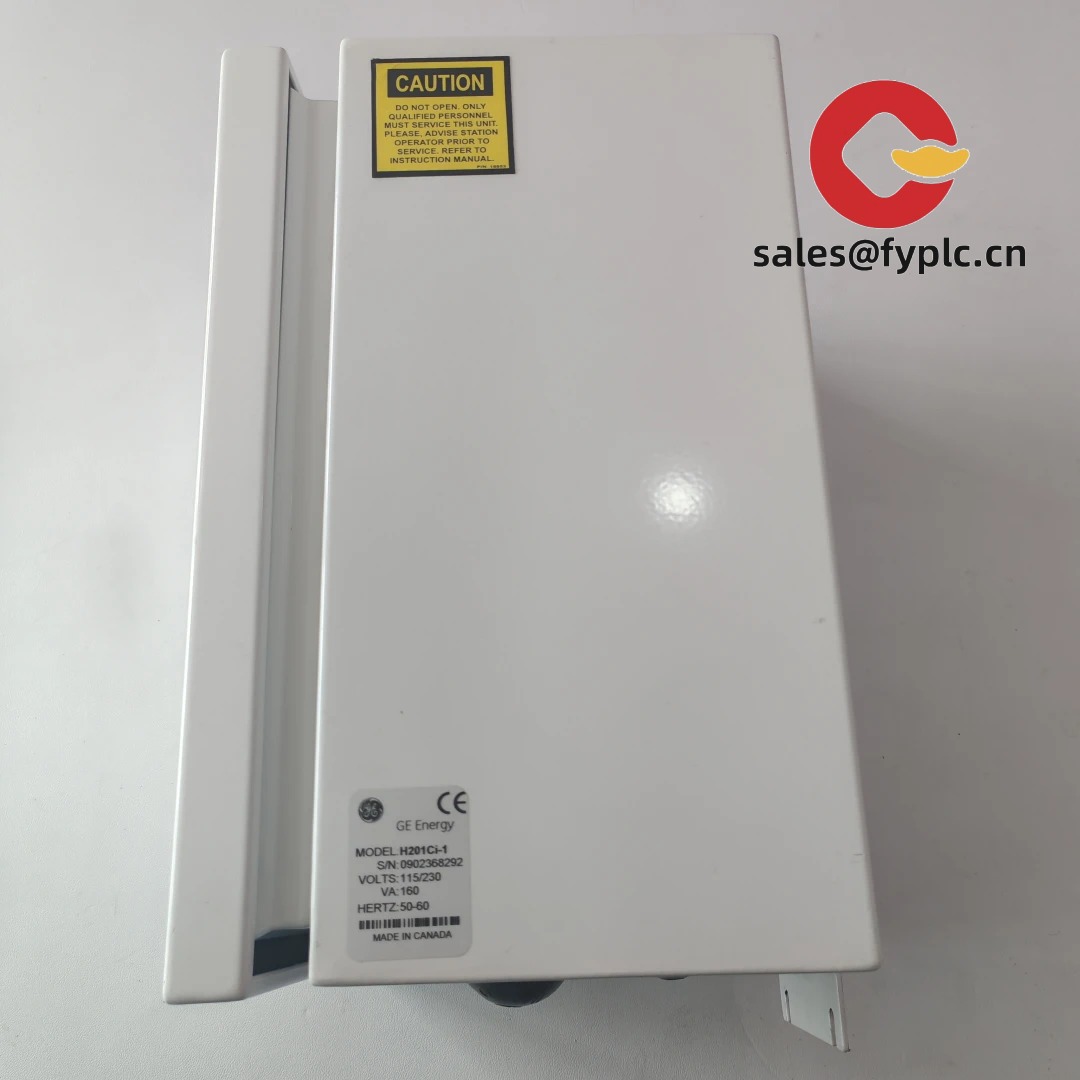
GE Grid Solutions HYDRAN H201Ci-1 – Online Composite Gas Monitor for Power Transformers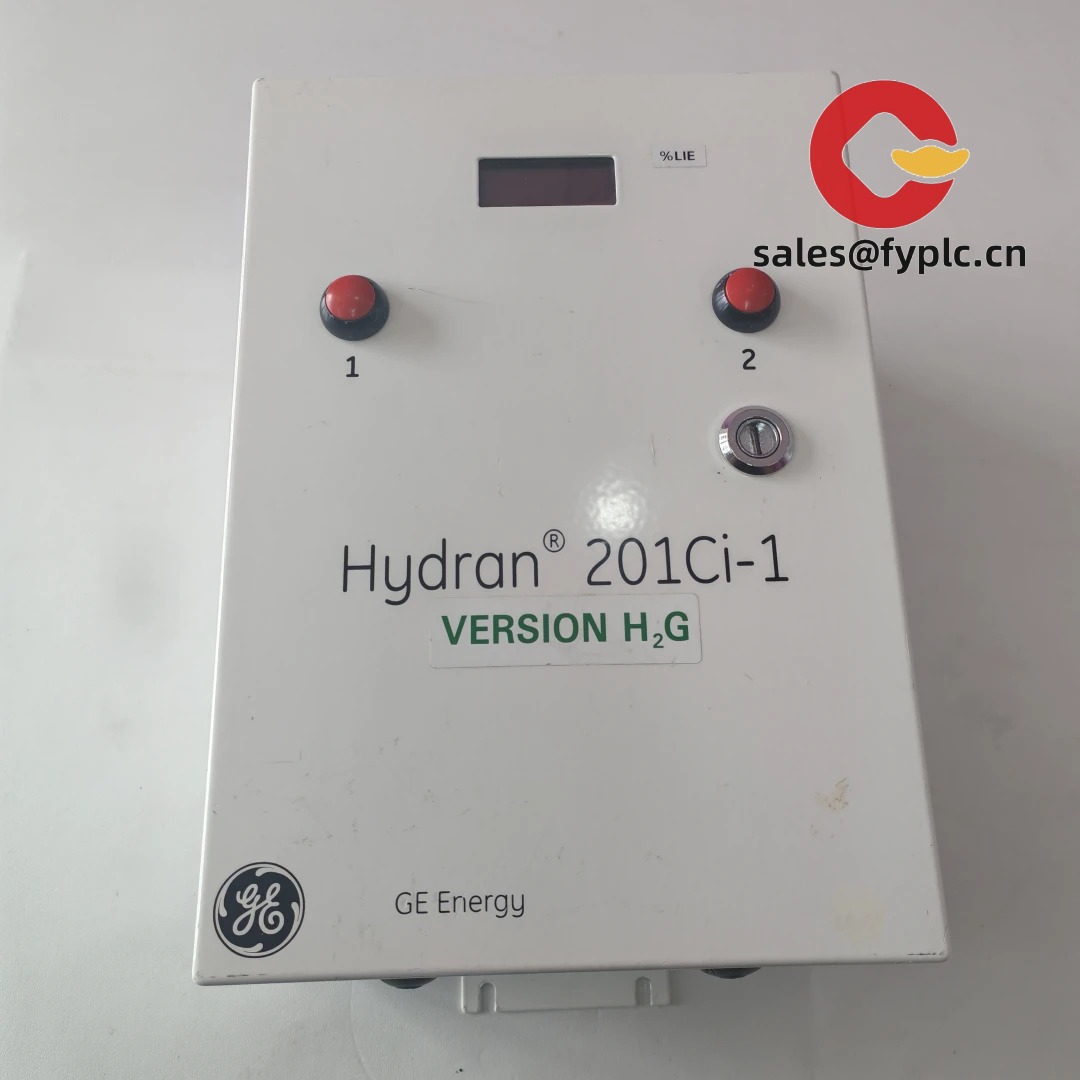
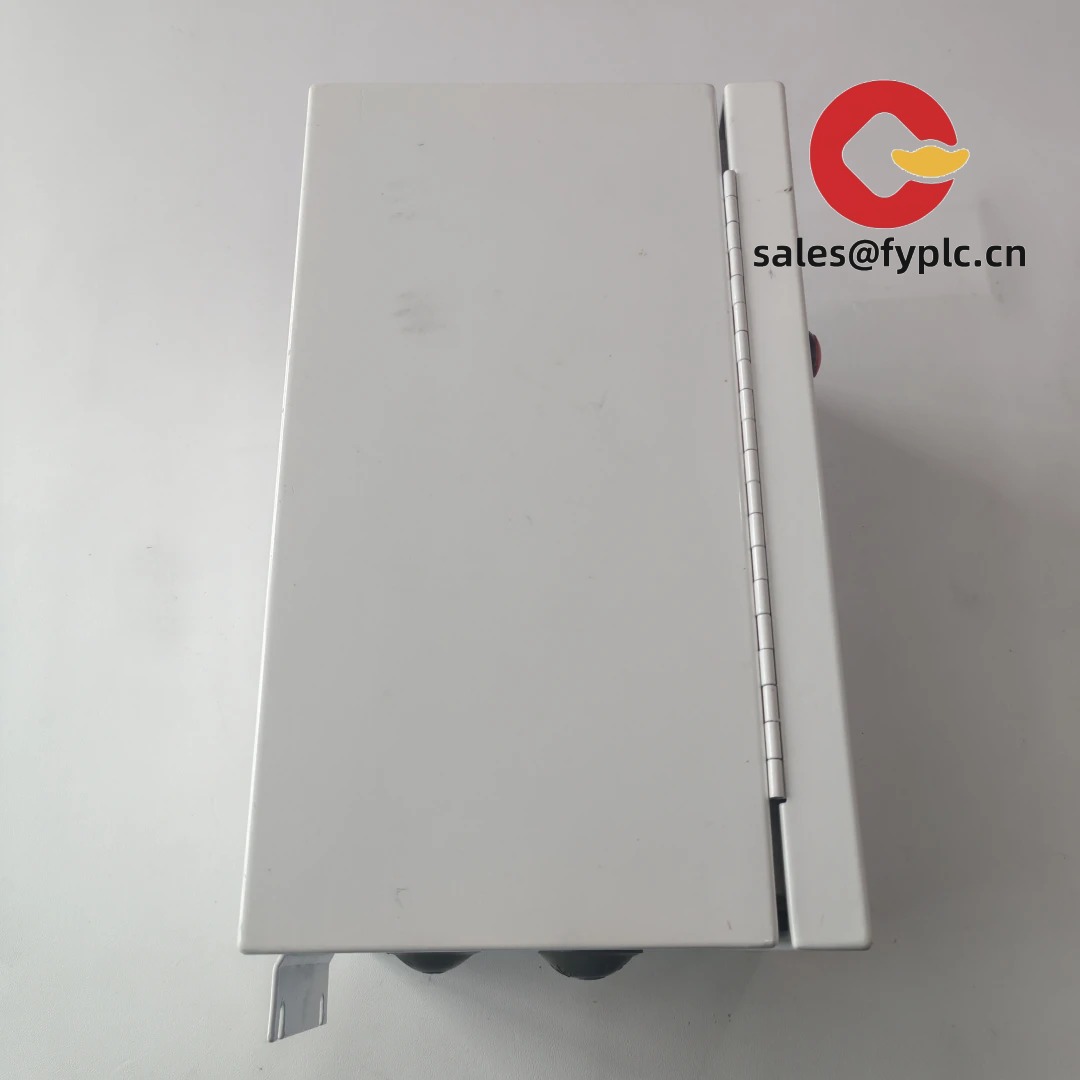
The HYDRAN H201Ci-1 is a practical, field-proven online DGA monitor designed for continuous detection of dissolved combustible gases in transformer oil. From my experience, utilities use it as an early-warning layer—especially on high-value distribution and transmission transformers—where you want something dependable watching gas trends without the cost and complexity of full multi-gas analyzers. You might notice that it also typically includes moisture-in-oil and oil temperature measurement, which makes day-to-day condition assessment faster and more consistent.
Company’s Order Placement Process and Guarantees
- Warranty: 365 days
- Delivery time: 1 week for in-stock; no more than one month at the latest
- Payment: 50% advance payment; full payment before delivery
- Express delivery: FedEx, UPS, DHL
Key Features
- Real-time composite gas monitoring – Tracks total dissolved combustible gases (TDCG proxy) to flag fault development early, typically faster than periodic lab sampling.
- Built-in moisture and temperature sensing – Gives a clearer picture of insulation health and loading conditions without extra probes.
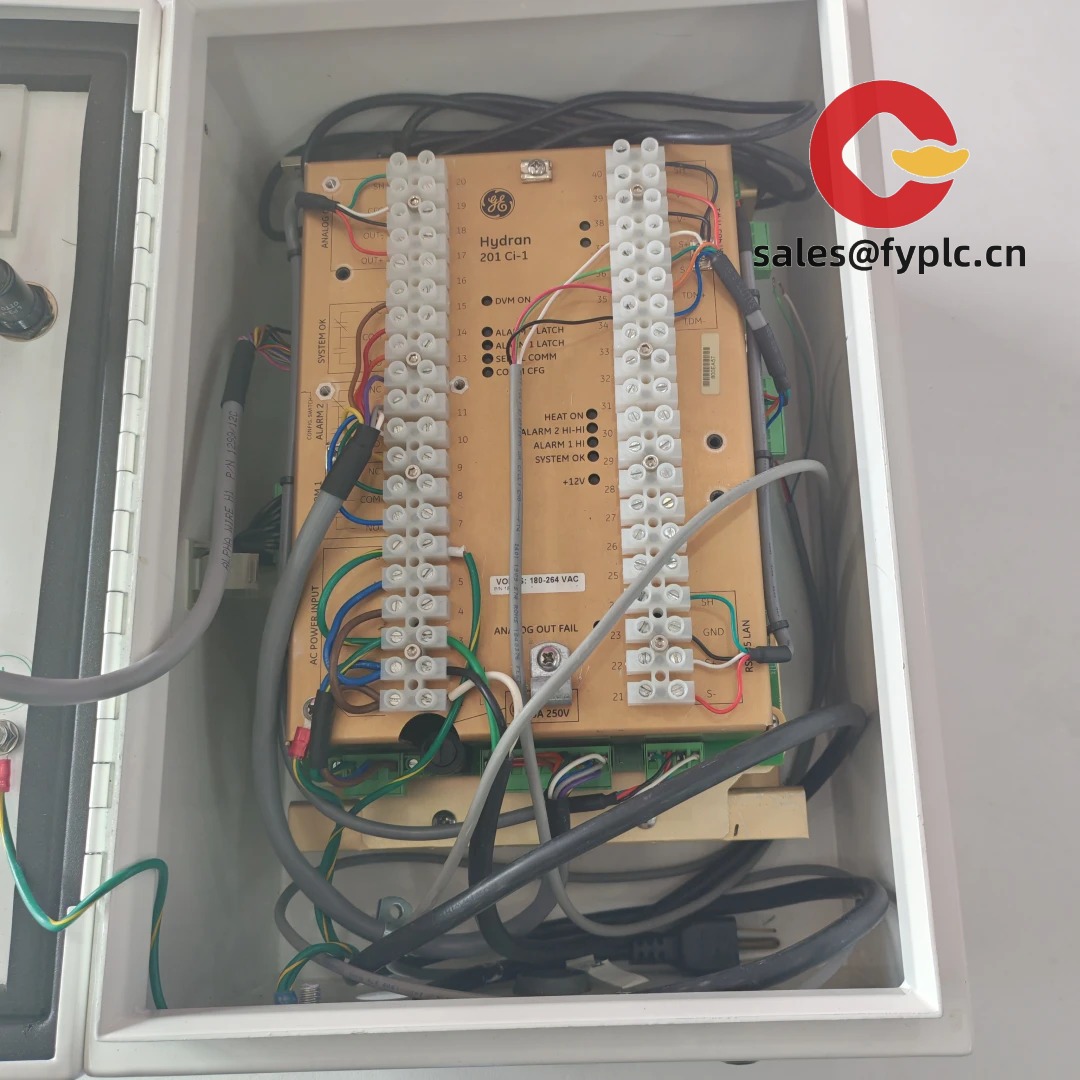
- Simple outputs for SCADA – 4–20 mA analog channels and dry-contact relays make integration straightforward in most cases.
- Modbus RTU over RS‑485 – A reliable, widely supported protocol for trending and alarm data retrieval.
- Valve-mounted installation – Designed to fit standard transformer oil valves with an isolation valve, minimizing outage time during installation.
- Rugged outdoor enclosure – Typically weatherproof (utility-grade), suitable for substation environments with dust, UV, and temperature swings.
- Trend and alarm management – Thresholds are usually settable so protection and maintenance teams can align alarms with fleet policies.
Technical Specifications
| Parameter | Details |
|---|---|
| Brand / Model | GE Grid Solutions – HYDRAN H201Ci-1 |
| HS Code | 9027.80 (Instruments for physical or chemical analysis – other) |
| Power Requirements | 100–240 VAC, 50/60 Hz (typical); power draw is low for continuous operation |
| Dimensions & Weight | Compact valve-mounted assembly; approx. 5–8 kg depending on valve kit and options |
| Operating Temperature | Typically −40 to +55 °C for outdoor substation environments |
| Signal Input/Output Types | Internal composite gas sensor; moisture-in-oil and oil temperature; 4–20 mA outputs; alarm/warning dry-contact relays |
| Communication Interfaces | RS‑485 (Modbus RTU) for SCADA/DCS trending and configuration |
| Installation Method | Direct transformer oil valve mounting with isolation valve; outdoor-rated enclosure |
Application Fields
This model is used on medium-to-large power and distribution transformers where continuous trending of dissolved gases has a strong ROI. It’s commonly deployed by:
- Transmission and distribution utilities watching critical substations and remote renewable interconnects
- Industrial plants (steel, mining, chemicals) seeking condition-based maintenance for main step-down transformers
- Independent power producers and data center operators needing early fault visibility to avoid forced outages
- Wind and solar collector substations where site access is limited and online monitoring saves crew time
A substation engineer told us, “We use H201 units to flag gassing trends before they hit our alarm curves; it’s not overcomplicated and it keeps our lab sampling focused.”
Advantages & Value
- Proven reliability – HYDRAN monitors have been on fleets for years; it appears that long-term drift is predictable and manageable with routine checks.
- Lower total cost – In many cases, a composite gas monitor is enough to trigger timely investigations without the price tag of full multi-gas systems.
- Easy integration – RS‑485 Modbus and analog outputs slot into existing substation RTUs or bay controllers with minimal programming.
- Compatibility – Valve-mounted design and isolation valve make installation faster on typical NPT/DIN transformer valves.
- Supportability – Straightforward firmware and parameter setup helps maintenance teams standardize across sites.
Installation & Maintenance
- Cabinet/environment – Mount on a stable transformer valve location with proper sun/rain shielding; maintain ventilation around the electronics.
- Wiring – Use shielded twisted pair for RS‑485; segregate signal and power; bond the chassis to the station earth grid.
- Oil handling – Fit with an isolation valve; purge carefully to remove air; follow site oil-handling procedures to avoid contamination.
- Safety – De-energize circuits before wiring; lock-out/tag-out; observe arc-flash boundaries and site PPE rules.
- Routine maintenance – Check trend baselines quarterly; verify analog scaling; inspect cable glands and seals annually; apply firmware updates when available.
- Calibration/validation – Compare readings with periodic lab DGA and moisture tests; adjust alarm thresholds to fleet policies if needed.
Recommended Accessories & Supporting Components
- Isolation valve kit – Enables safe removal or service without draining the transformer.
- Valve adapters – NPT/DIN adapter rings to match 1.5″ or 2″ transformer valves.
- Sun shield / rain hood – Reduces thermal swings and UV exposure in harsh yards.
- RS‑485 surge protection – Adds resilience against lightning and switching transients.
- SCADA gateway – Modbus RTU to Ethernet gateway when an IP interface is preferred.
Quality & Certifications
- Certifications – CE marked; RoHS compliant (typical for this product class)
- Enclosure – Utility-grade weatherproof construction suitable for outdoor substations
- Manufacturer’s warranty – Backed by the original manufacturer; sales warranty from us is 365 days as noted above




Reviews
There are no reviews yet.