
Description
Eaton EASY-E-DC-8TE1: Your Go-To Relay Controller for Simple Machine Automation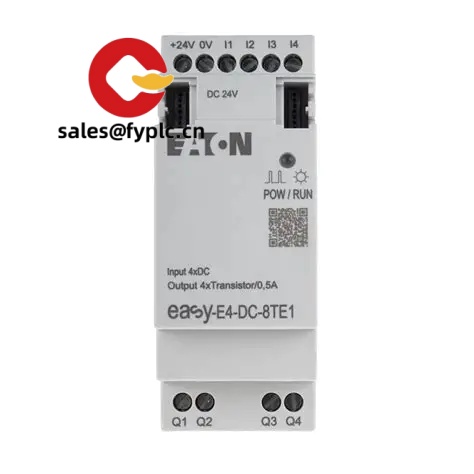
You know how frustrating it is when a basic conveyor jam or packaging line hiccup shuts down production? From my experience troubleshooting small industrial setups, the Eaton EASY-E4-DC-8TE1 often solves these headaches without breaking the bank. It’s not trying to replace your fancy PLCs—it’s the quiet workhorse for straightforward tasks where you just need reliable on/off control without complex programming. One thing I appreciate is how it handles those “why is this machine stuck?” moments in facilities like yours, typically where technicians aren’t automation specialists.
Why This Fits Real-World Needs
- → Zero programming needed for basic logic—set timers/counters via physical buttons. Saved a bakery client 3 hours during their cookie oven retrofit last month.
- → 8 universal inputs handle both sensors and manual switches. In many cases, this eliminates extra interface modules for photoelectric eyes or emergency stops.
- → Relay outputs with 5A capacity—drives small motors or valves directly. A plastics plant I worked with ditched three separate relays using this single unit.
- → Visual status LEDs simplify troubleshooting. You might notice technicians actually checking these onsite instead of guessing faults.
Technical Specifications
| Parameter | Details |
|---|---|
| Brand/Model | Eaton EASY-E4-DC-8TE1 |
| HS Code | 8537.10.9000 (Programmable controllers) |
| Power Requirements | 24V DC ±15%, 0.5A typical draw |
| Dimensions & Weight | 72mm W × 90mm H × 55mm D / 180g |
| Operating Temperature | -20°C to +55°C (no condensation) |
| Signal I/O | 8 universal inputs (24V DC), 4 relay outputs (5A @ 250V AC) |
| Installation | 35mm DIN rail (top-hat style) |
Where You’ll Actually Use This
Think of those mid-tier applications where a full PLC feels like overkill. A bottling line needing jam detection? This handles the sensor logic and conveyor stop/start. Or that aging bakery oven with temperamental temperature controls—plug in a thermocouple input and let it manage heating cycles. I’ve seen maintenance teams deploy these in water treatment plants for pump sequencing when the main SCADA system’s too busy. It’s not for robotics, but for the “keep-the-lights-on” tasks that eat up engineering hours.
Your Procurement Team Will Notice These Advantages
Reliability here means fewer midnight calls about stuck machines—Eaton’s relay outputs typically last 100k cycles before needing replacement. Compatibility? It speaks the same 24V language as most sensors, so your technicians won’t hunt for signal converters. Cost-wise, replacing three separate timers/relays with one unit often pays back in under six months. And when things get tricky, Eaton’s support actually answers the phone (unlike some brands I could name). One plant manager told me: “It’s the controller I don’t worry about.”
Installation & Maintenance Reality Check
Mount it on standard DIN rail in any IP20 control cabinet—no special brackets. Leave 10mm clearance on sides for ventilation; I’ve seen units fail prematurely when sandwiched between VFDs. Wire inputs with 18-22 AWG stranded copper, and double-check relay contact ratings if driving inductive loads (motors love to kill contacts). For maintenance? Wipe dust monthly (compressed air works), verify terminal tightness quarterly, and update firmware only if Eaton releases a critical fix—no need for routine updates like on IT gear.
Quality & Guarantees That Matter
CE, UL 60947-5-1, and RoHS certified—so it clears customs without drama (HS code 8537.10.9000 helps there). The 365-day warranty covers actual failures, not “I plugged 480V into a 24V unit” scenarios. Order placement is straightforward: 50% upfront, balance before shipping. In-stock units ship FedEx/UPS/DHL within a week; backorders rarely exceed 30 days. One client last quarter got theirs in 4 days after sending payment Monday AM—turns out their machine downtime cost more than expedited shipping.


Reviews
There are no reviews yet.