
Description
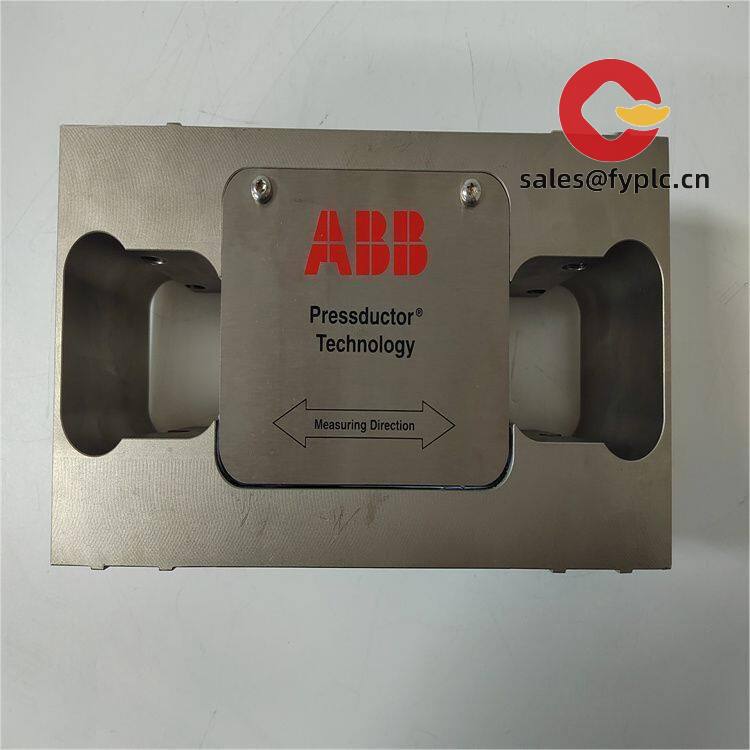
ABB PFCL201C 20 kN (3BSE027070R20) – Compression Load Cell for Press and Assembly Force Measurement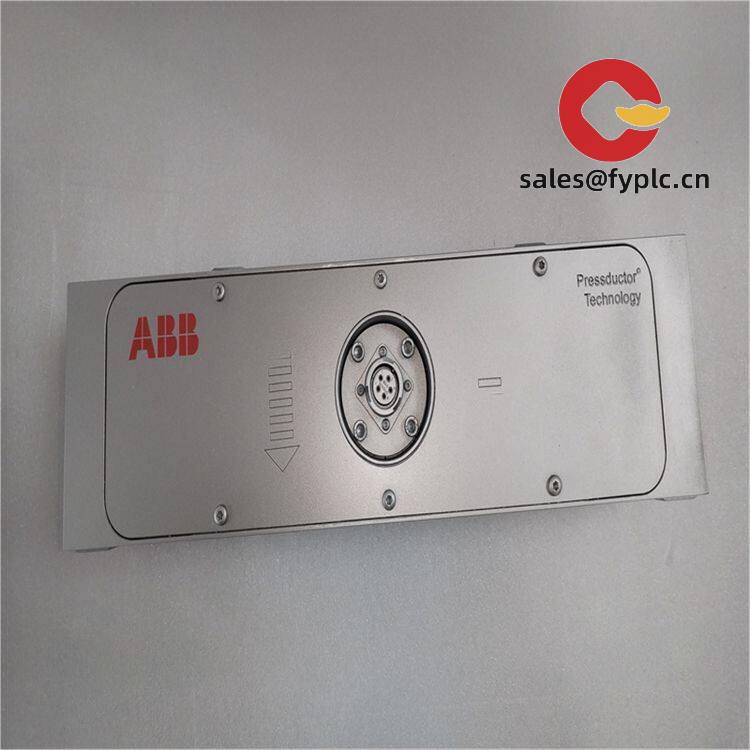
The ABB PFCL201C‑20kN, ordering code 3BSE027070R20, is a compact compression force transducer typically used for press monitoring, precision insertion, riveting, crimping, and end‑of‑line verification. From my experience, it pairs well with standard strain‑gauge amplifiers and industrial PLC analog modules, so integration into existing lines tends to be straightforward. You might notice that it’s built for stable, repeatable readings in the 0–20 kN range, which is exactly what most servo press and automated assembly stations need for quality control.
Order Placement Process and Guarantees
- Warranty: 365 days
- Lead time: 1 week when in stock; no more than one month at the latest
- Payment: 50% advance payment; full payment before delivery
- Express delivery options: FedEx, UPS, DHL
Key Features
- 20 kN compression range – Sized for small to mid‑force press applications, insertion, staking, and functional testing.
- Strain‑gauge full‑bridge output – Standard mV/V signal works with common industrial signal conditioners and PLC analog inputs.
- Stable, repeatable readings – Typically low nonlinearity and hysteresis for consistent force feedback in closed‑loop controls.
- Rugged housing – Built for production environments; handles shock and off‑axis loads better than many “lab‑only” cells.
- Easy integration – 4‑ or 6‑wire connection, simple wiring into amplifiers that provide 5–12 VDC excitation.
- ABB part code 3BSE027070R20 – Clear spare/ordering reference for maintenance teams and MRO stocking.
Technical Specifications
| Brand / Model | ABB PFCL201C‑20kN (Order code: 3BSE027070R20) |
| HS Code | 9031.80 (Measuring or checking instruments – force transducer, typical) |
| Power Requirements | Excitation 5–12 VDC (10 VDC nominal); passive bridge sensor |
| Signal I/O Type | Analog mV/V (strain‑gauge full bridge); 4‑ or 6‑wire connection |
| Rated Capacity | 20 kN (compression) |
| Rated Output | Typically ~2.0 mV/V (common for industrial compression cells) |
| Bridge Resistance | Typically ~350 Ω |
| Operating Temperature | Typically −10 to +60 °C (industrial environment) |
| Dimensions & Weight | Compact compression form factor; 20 kN variant commonly < 0.8 kg |
| Communication Interfaces | None (analog passive sensor; requires external amplifier/DAQ) |
| Installation Method | Compression mounting on a flat, rigid surface; preload per application; shielded cable routing recommended |
Application Fields
This model is well‑suited for automated assembly lines, servo presses, benchtop force stations, and EOAT (end‑of‑arm tooling) force verification. In many cases it’s deployed for:
- Riveting, staking, crimping, and press‑fit operations (force vs. displacement monitoring)
- Component insertion and connector seating verification
- Functional test stands requiring 0–20 kN feedback for pass/fail criteria
- Robot‑assisted pressing where compact sensors are preferred near the tool center
A maintenance manager shared that the PFCL201C helped reduce rework by detecting under‑force events before parts reached final inspection—small win, but it adds up across shifts.
Advantages & Value
- Reliability – Stable drift behavior and robust mechanics for continuous duty. Typically fewer recalibrations across the year.
- Compatibility – Works with common strain‑gauge amplifiers (0–10 V / 4–20 mA outputs after conditioning) and PLC AI modules.
- Cost control – Straightforward installation and wiring help keep commissioning time down.
- Lifecycle support – The 3BSE027070R20 code simplifies spares management and reorder accuracy.
Installation & Maintenance
- Mounting: Use a flat, rigid surface; avoid bending moments. Apply preload as specified by your press/tool design.
- Wiring: Use shielded cable; route away from VFDs and high‑current paths. 4‑wire is fine, 6‑wire adds sense lines for better accuracy on longer runs.
- Environment: Maintain clean, dry conditions; allow ventilation in enclosures to avoid heat buildup.
- Safety: Do not exceed rated capacity; follow lock‑out procedures before mechanical adjustments.
- Routine care: Check zero balance weekly in critical lines; verify calibration at defined intervals (typically 6–12 months); inspect cable strain relief and connector integrity.
- Signal conditioning: Pair with a strain‑gauge amplifier offering 5–12 V excitation and 0–10 V or 4–20 mA output to your PLC/DAQ. Many users also log peak force for SPC.
Quality & Certifications
- CE compliant; RoHS compliant (typical for ABB force sensors)
- Manufactured under ISO 9001 quality systems
- Manufacturer’s warranty: 365 days (as supplied)
Suggested Supporting Components
- Strain‑gauge amplifier – 24 VDC powered, 10 V excitation, outputs 0–10 V or 4–20 mA for PLCs.
- PLC/DAQ analog input – For conditioned signals; choose high‑resolution AI for tighter process limits.
- Calibration kit – Reference weights or a dead‑weight tester for periodic verification.
If you’re standardizing across multiple stations, it appears that keeping the same 20 kN range simplifies spares and avoids retuning thresholds. One thing I appreciate is how well a sensor like this drops into existing amplifier/PLC cabinets with minimal rewiring.



Reviews
There are no reviews yet.