
Description
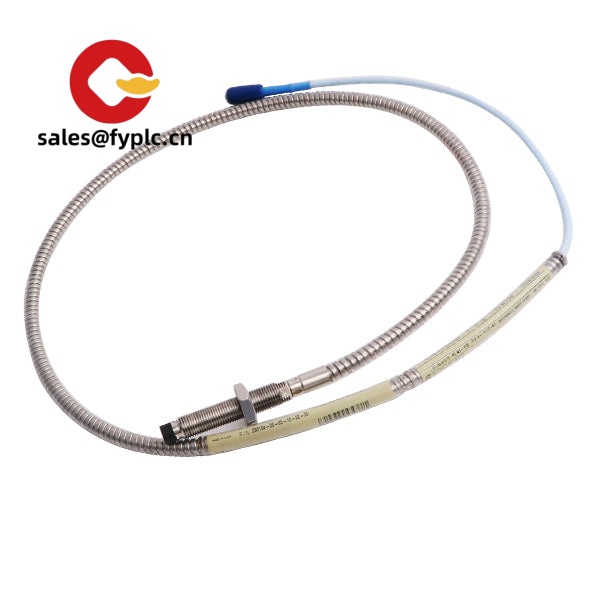
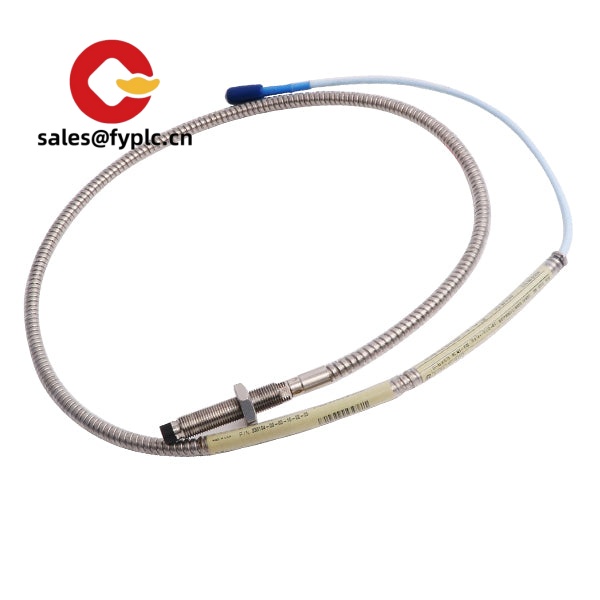
Bently Nevada 330104-00-18-05-02-CN05 – 3300 XL 8 mm Proximity Probe for Shaft Vibration and Position Monitoring
The 330104-00-18-05-02-CN05 sits in Bently Nevada’s 3300 XL 8 mm proximity probe family, typically paired with a matching 3300 XL Proximitor Sensor for non-contact measurement of shaft vibration, radial position, and thrust position. From my experience, this series is chosen because it’s stable in harsh environments and stays compatible with existing 3300/3500 monitoring systems. The “-18” option usually indicates a 1.8 m probe lead, making it a convenient match to standard extension cable lengths and cabinet layouts. You might notice the “CN05” suffix—this appears to be a localized variant, often tied to documentation or regional approvals.
Our Order Process and Guarantees
- Warranty: 365 days
- Lead time: 1 week for in-stock; no more than one month at the latest
- Payment: 50% advance payment, full payment before delivery
- Express delivery: FedEx, UPS, DHL
Key Features
- Non-contact eddy-current sensing – Measures shaft motion without physical contact, reducing wear and drift.
- 3300 XL system compatibility – Works with the matching 3300 XL Proximitor Sensor and mainstream Bently Nevada monitors (e.g., 3500/3300 racks).
- 8 mm tip for standard industrial targets – A practical choice for common turbomachinery installations and brackets.
- Stable scale with matching Proximitor – Typically 200 mV/mil (≈7.87 mV/µm) at system output, making it easy to trend across assets.
- Rugged probe lead – Designed to route through machine conduits with good resistance to oil, heat, and vibration.
- Option set aimed at field fit-up – The -18 lead length is handy when panel-to-machine runs are tight and you want to minimize slack.
Technical Specifications
| Brand / Model | Bently Nevada 330104-00-18-05-02-CN05 (3300 XL 8 mm proximity probe series) |
| HS Code | 9031.80 (Measuring or checking instruments – industrial sensors) |
| Power Requirements | Passive probe; powered via matching 3300 XL Proximitor Sensor (no direct power to probe) |
| Dimensions & Weight | 8 mm probe tip; probe lead typically 1.8 m (per “-18” option). Weight varies with lead and armor; contact us if you need an exact figure. |
| Operating Temperature | Typically -51°C to +177°C for the probe assembly in the 3300 XL family |
| Signal Input/Output Types | Eddy-current probe signal to Proximitor; system output commonly 200 mV/mil (≈7.87 mV/µm) with correct matching |
| Communication Interfaces | None (analog output provided by the Proximitor Sensor) |
| Installation Method | Threaded probe with locknuts; routed to extension cable then to 3300 XL Proximitor Sensor; typical gap set around 1.0 mm (40 mil) depending on target and system calibration |
| System Compatibility | Bently Nevada 3300 XL Proximitor Sensors and most 3500/3300 monitoring racks (when ordered as an 8 mm system) |
Application Fields
This probe is widely adopted on rotating equipment where reliability is non-negotiable: steam and gas turbines, compressors, critical pumps, gearboxes, and large motors. In many cases it’s used for:
- Radial shaft vibration on bearings
- Radial shaft position (centering) trending
- Thrust position on thrust bearings (with proper mounting hardware)
- Casing proximity and runout checks during commissioning
A maintenance lead at a petrochemical site told us they swapped in this exact series during a turnaround—kept their existing 3300 XL cabling and Proximitor, and the channel came up in spec without rework. That’s typically the appeal.
Advantages & Value
- Reliability under heat and oil – The 3300 XL family is known for long-term stability around bearings and seals.
- Drop-in system compatibility – Plays nicely with existing 3300/3500 channels and historian scaling, reducing engineering effort.
- Reduced downtime risk – Non-contact design and consistent scale help maintenance teams validate channels faster.
- Procurement predictability – Standard options (like the “-18” lead) make spares planning simpler across units.
- Responsive support – From my experience, quick checks on gap, bias voltage, and cable integrity resolve most field issues.
Installation & Maintenance
- Mounting – Install the probe in a rigid bracket or bearing housing. Use locknuts and set the nominal gap (often ~1.0 mm / 40 mil for steel targets) per your Proximitor’s manual.
- Cabling – Route the probe lead to the extension cable, then to the Proximitor in a ventilated cabinet. Observe bend radius and avoid tight clamps or sharp edges.
- Grounding & shielding – Bond shields per Bently Nevada guidance to minimize electrical noise; keep power and sensor cables separated where practical.
- Environment – Proximitor enclosures should be dry, with reasonable ventilation. The probe itself handles high temperatures typical of bearing areas, but avoid crushing or kinking the lead.
- Routine checks – Verify gap and bias voltage during outages, clean tip faces if fouled, and confirm 200 mV/mil scale via the monitor or test equipment.
- Firmware/monitor updates – If you’re running a 3500 rack, keep module firmware aligned with site standards to maintain trending and alarms stability.
Common Supporting Components
- Bently Nevada 3300 XL Proximitor Sensor (8 mm) – The required driver that powers the probe and provides the conditioned analog output to your monitor (commonly 200 mV/mil). Mounts in a cabinet near the machine.
- Bently Nevada 330130 Extension Cable – Connects the probe to the Proximitor. Available in multiple lengths to match your machine-to-cabinet run; often paired with a 1.8 m probe lead for neat routing.
- Mounting hardware and brackets – Rigid probe brackets, protective conduits, and locknuts help maintain gap stability and protect the lead in high-vibration zones.
Quality & Certifications
- Certifications – Typically CE and RoHS for the 3300 XL family; regional markings may apply for the CN variant. Specific hazardous-area approvals depend on exact order options.
- Warranty – 365-day warranty from shipment.


Reviews
There are no reviews yet.