
Description
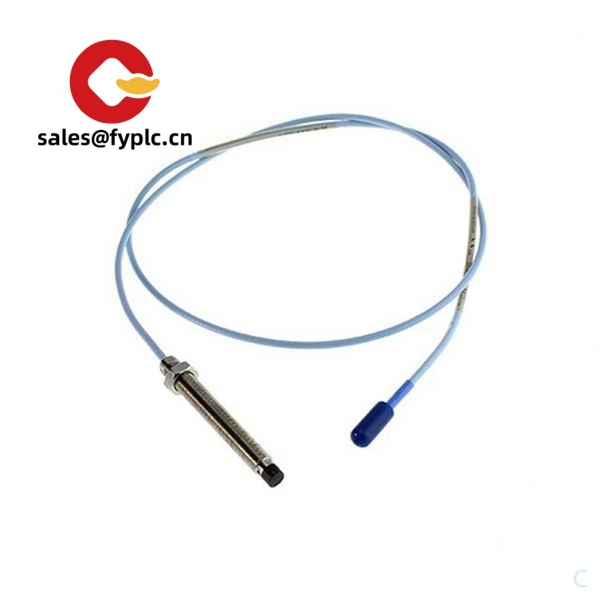
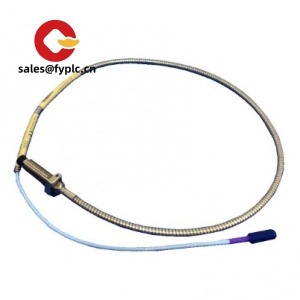
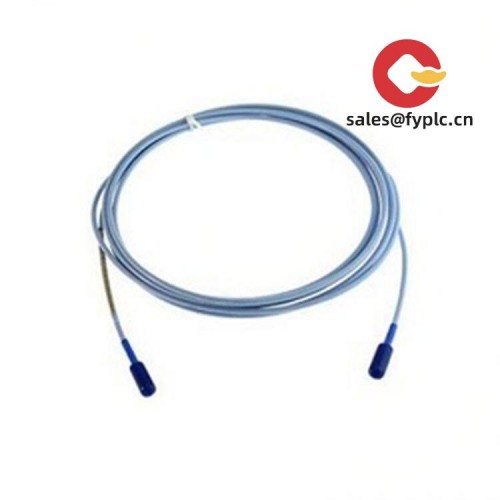
Bently Nevada 330703-00-060-10-02-00 – Proximity Probe for precise shaft vibration and position monitoring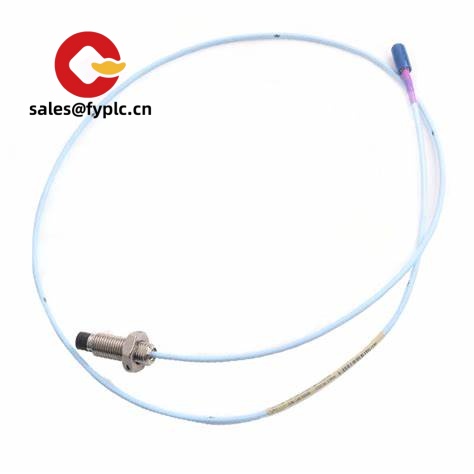
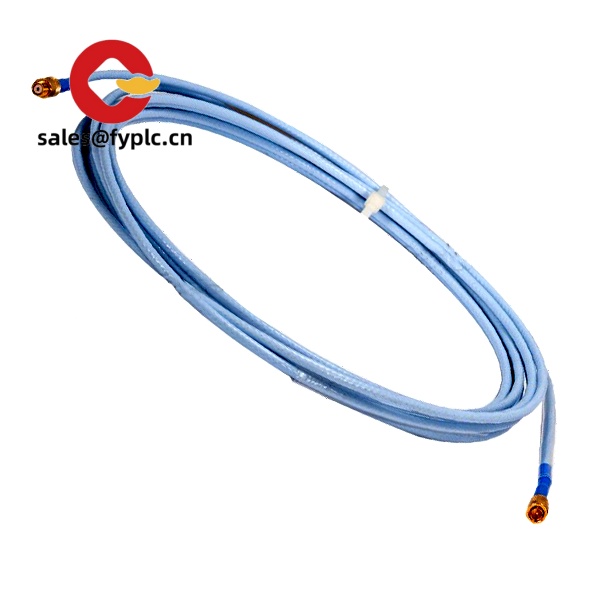
The Bently Nevada 330703-00-060-10-02-00 is part of the 3300 XL proximity transducer system used across rotating machinery to measure shaft vibration, radial position, and thrust. From my experience, it’s chosen when teams want stable eddy-current measurement on steel targets and drop‑in compatibility with existing Bently Nevada monitors. The “-060” configuration typically denotes a 6.0 m integral probe cable, which pairs with an extension cable and a Proximitor sensor to achieve the required system length (commonly 5 m, 7 m, or 9 m total).
You might notice the option “-10” in the code—this usually corresponds to a common threaded mount style (often 3/8-24 UNF), while “-02” tends to indicate a standard (non-agency) configuration. In many cases, this setup is used on gas turbines, steam turbines, compressors, and large pumps where 24/7 condition monitoring is critical.
Our Order Placement Process and Guarantees
- Warranty period: 365 days
- Delivery time: 1 week if in stock; no more than one month at the latest
- Payment terms: 50% advance payment; full payment before delivery
- Express options: FedEx, UPS, DHL
Key Features
- 3300 XL system compatibility – Works with Bently Nevada Proximitor sensors and monitors commonly used on turbomachinery.
- Stable eddy-current measurement – Typically provides 200 mV/mil (≈7.87 mV/µm) scale factor via the Proximitor for dependable displacement readings.
- -060 integral cable length – 6.0 m probe cable for flexible routing; pairs with extension cable to meet total system length.
- Threaded mounting (code -10) – Commonly a 3/8-24 UNF probe thread for secure and repeatable positioning near the target.
- Rugged construction – Designed for industrial environments with oil, vibration, and thermal cycling.
- Proven in the field – In most cases, users report stable long-term bias voltages and clean dynamic signals when installed and routed correctly.
Technical Specifications
| Brand / Model | Bently Nevada 330703-00-060-10-02-00 (3300 XL proximity probe) |
| HS Code | 9031.80 (Measuring/Checking instruments, other) |
| Power Requirements | Powered via the matched Proximitor sensor (monitor supply typically around −24 VDC to Proximitor); probe itself is passive. |
| Signal Input/Output Types | Probe to Proximitor: mini-coax connection; Proximitor to monitor: DC gap voltage with dynamic AC vibration (nominal 200 mV/mil scale factor). |
| Communication Interfaces | None (analog transducer system; no digital comms on the probe). |
| Integral Cable Length | 6.0 m (code “-060”), integral to probe; used with extension cable to achieve total system length. |
| Mounting / Thread (code “-10”) | Typically 3/8-24 UNF threaded body with jam nut (common for this option code). |
| Operating Temperature | Probe section typically suitable for high-temp machinery areas; Proximitor module usually 0 to +65°C. Exact limits depend on specific cable/jacket selection. |
| Dimensions & Weight | Threaded probe body with integral cable (6.0 m). Weight varies with cable armor and options; generally light for cabinet and conduit routing. |
| Installation Method | Threaded tip into a rigid bracket or machine case; gap set with feeler gauges; route cable to junction box then to Proximitor. |
Application Fields
This probe is typically used with a matching Proximitor and monitor for:
- Radial vibration and position on turbine and compressor shafts
- Thrust position on thrust bearings
- Shaft runout checks during startup and coast‑down
- Condition monitoring and protection in API 670 style systems
One thing I appreciate is how well it integrates on mixed fleets—older trains with new racks, or vice versa—so engineering teams don’t have to redesign brackets or switch signal scaling.
Advantages & Value
- Reliability in harsh environments – Designed for oil & gas and power applications where temperature swings and vibration are routine.
- Compatibility – Works with established Bently Nevada 3300 XL Proximitor/monitor chains, reducing retrofit risk.
- Procurement convenience – Standard option codes simplify matching existing plant BOMs and spares.
- Lifecycle savings – Stable bias and scaling typically mean fewer nuisance alarms and less time spent chasing signal issues.
- Technical support – We can help verify option codes against your installed base to avoid mismatches.
Installation & Maintenance
- Mounting: Use a rigid, vibration-free bracket; tighten jam nut to spec; set the probe-to-target gap within the recommended linear range (usually with a feeler gauge).
- Cabinet & routing: Route coax away from high-current cables; maintain bend radius; use shielding/armor where mechanical damage is possible.
- Ventilation: Proximitor and monitoring hardware should be in a ventilated cabinet—typically 0 to +65°C ambient.
- Wiring: Verify coax connections are clean and fully seated; avoid ground loops; label both ends for maintenance clarity.
- Routine checks: Periodic bias voltage check at the Proximitor, connector inspection/cleaning, and confirmation of secure probe gap after outages.
- Firmware/monitoring: When the monitor firmware is updated, revalidate channel configuration (units, alarm setpoints, and scale factor).
Quality & Certifications
- Manufacturer quality systems typically align with ISO standards; product series commonly CE compliant and RoHS conformant.
- Hazardous area approvals are available on many 3300 XL configurations; this “-02” option usually indicates a standard non-agency variant.
- Warranty: 365 days
Quick customer note: a maintenance lead from a combined-cycle plant told us they swapped this exact code into an existing bearing bracket and saw bias voltage within seconds—no rework, just a tidy cable reroute and a gap check. That seems to be the experience in most retrofits when option codes match the installed standard.

Reviews
There are no reviews yet.