
Description
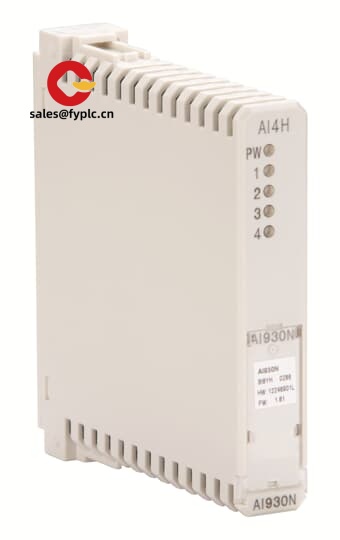
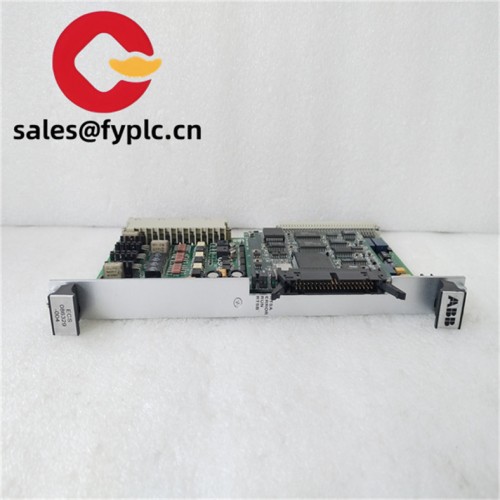
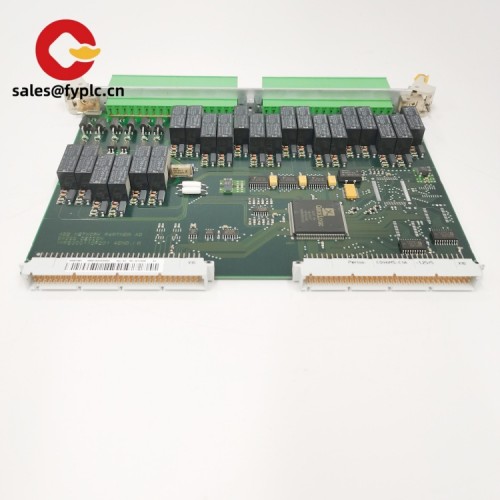
ABB AI930N – Analog Input Module for reliable 0/4–20 mA field signal acquisition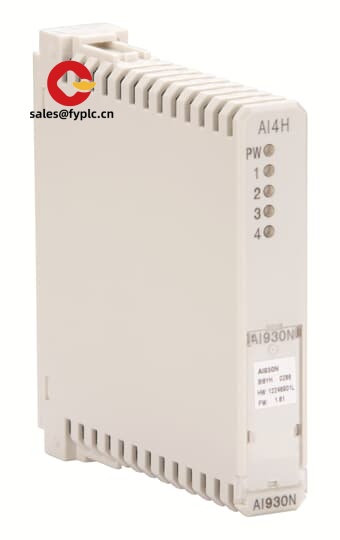
The ABB AI930N is an analog input module designed for distributed control and remote I/O applications where stable, noise‑resistant current loops are the norm. It typically slots into an ABB remote I/O node and collects multiple 0/4–20 mA process signals from transmitters for use in ABB DCS platforms. From my experience, it’s the kind of module plants pick when they want consistent loop performance, straightforward diagnostics, and a clean path to integrate HART instruments when the node supports it.
Company’s Order Placement Process and Guarantees
- Warranty: 365 days
- Delivery: 1 week if in stock; no more than one month at the latest
- Payment: 50% advance payment; full payment before delivery
- Express options: FedEx, UPS, DHL
Key Features
- Multi‑channel 0/4–20 mA inputs – Built for common process transmitters (flow, pressure, level, temperature converters) with stable loop reading.
- Galvanic isolation – Channel/bus isolation reduces ground loops and improves resilience in electrically noisy areas.
- HART passthrough (platform dependent) – When used in a HART‑capable node, it typically enables asset parameters and diagnostics without extra wiring.
- On‑module status LEDs – Quick indication of per‑channel health and power state helps field teams troubleshoot faster.
- Filtering and scaling – Configurable smoothing and engineering‑unit scaling cut out jitter and simplify controller logic.
- DIN‑rail I/O node integration – Fits ABB remote I/O bases, keeping cabinet depth modest and wiring tidy.
- Serviceability in place – In many cases, you can replace the module in a powered node, reducing downtime during maintenance windows.
Technical Specifications
| Brand / Model | ABB AI930N |
| HS Code | 8538.90 (Parts suitable for apparatus of heading 8537 – industrial control equipment) |
| Power Requirements | 24 VDC supplied via the I/O backplane; typical module consumption < 2.5 W |
| Operating Temperature | 0 to +55 °C (typical for ABB remote I/O modules; check node rating) |
| Signal Input Types | 0/4–20 mA DC analog inputs; HART passthrough available on certain node configurations |
| Communication Interfaces | Module communicates over ABB remote I/O backplane; upstream connectivity to the controller typically via PROFIBUS DP or PROFINET through the node’s communication interface module |
| Installation Method | DIN‑rail mounted I/O base/terminal unit; field wiring via pluggable terminal blocks (screw or spring clamp, depending on base) |
| Dimensions & Weight | Compact plug‑in module; weight typically under 0.20 kg; node form‑factor dictates height/depth |
Application Fields
You’ll usually find the AI930N in process plants where 4–20 mA is the backbone signal: oil & gas gathering skids, chemical dosing racks, water & wastewater treatment, power generation balance‑of‑plant, pharmaceuticals, and food processing. Typical points include pressure/DP transmitters, magnetic or Coriolis flow transmitters, guided‑wave radar level, and temperature transmitters with 4–20 mA output.
One thing I appreciate is how it fits brownfield expansions: you can drop it into an existing ABB remote I/O node and map new loops with minimal cabinet rework. A maintenance lead at a municipal WWTP told us they cut loop‑checkout time because the module’s status LEDs quickly pointed to wiring or polarity issues before they called controls.
Advantages & Value
- Reliability first – Stable readings and strong EMC behavior reduce nuisance trips and rework during FAT/SAT.
- Wide ABB compatibility – Designed for ABB DCS ecosystems; simplifies engineering and lifecycle support.
- Lower total wiring cost – Dense analog inputs and neat terminal bases typically mean fewer marshalling terminals and less panel space.
- Asset data ready – With HART‑capable nodes, you get instrument diagnostics without separate multiplexers.
- Spares strategy – Common footprint across nodes makes stocking and field swap much faster for maintenance teams.
Installation & Maintenance
- Panel environment – Install in a ventilated control cabinet; maintain ambient 0–55 °C and keep humidity within the node’s rating. Provide clean 24 VDC power with proper grounding.
- Wiring practices – Use twisted, shielded pair for 4–20 mA loops; ground shields at one end to avoid loops. Observe polarity and channel labeling to prevent cross‑wiring.
- HART considerations – If HART is used, verify node configuration supports passthrough and keep loop impedance within the instrument specification.
- Safety – De‑energize field loops before servicing. In hazardous areas, match the node/module approvals and barriers to the zone classification.
- Routine care – Periodically check terminal tightness, clean dust from ventilation paths, and review diagnostics. Firmware updates for the I/O node (when applicable) should be scheduled during planned outages.
- Commissioning tip – Run a quick loop‑check (simulate 4–20 mA) and verify scaling in the controller faceplates; this tends to catch 4/20 offsets early.
Quality & Certifications
- CE conformity for EMC and safety (typical for ABB I/O)
- UL listing/certification often available for North American installations
- RoHS compliance for hazardous substances
- Manufactured under ISO 9001 quality systems
- Manufacturer’s warranty: 365 days (backed by our stated sales terms)

Reviews
There are no reviews yet.