
Description
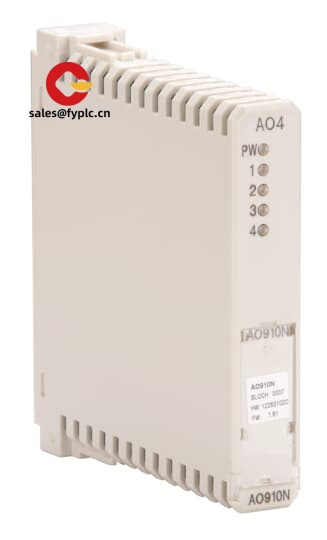
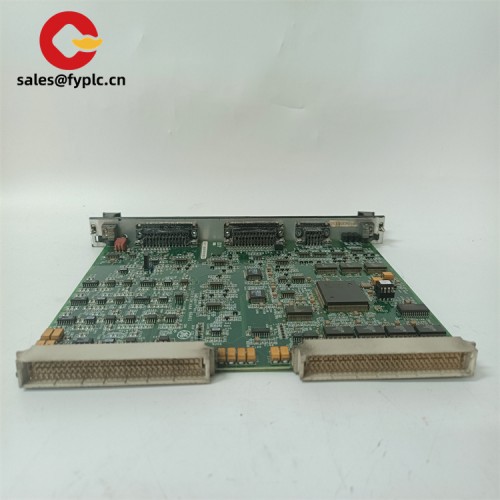
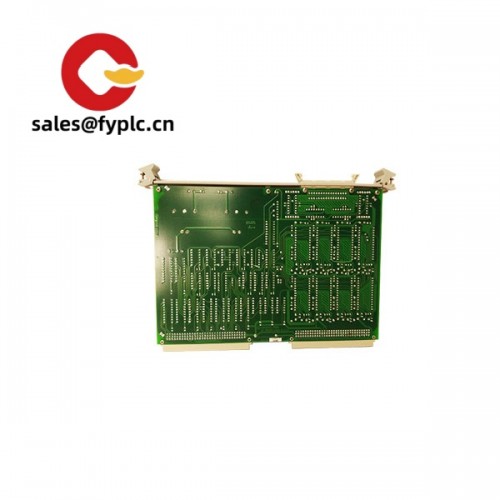
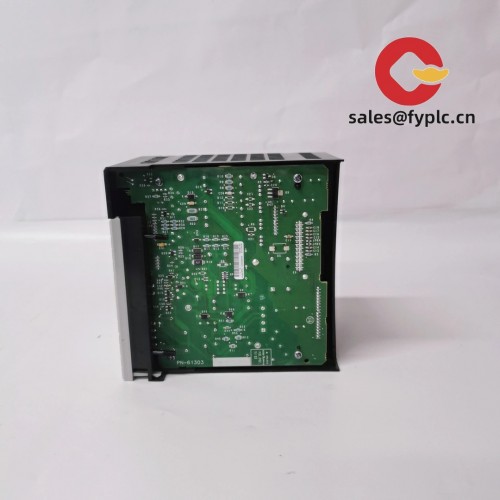
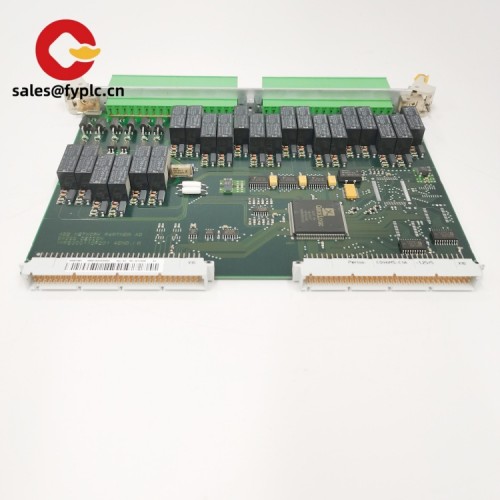
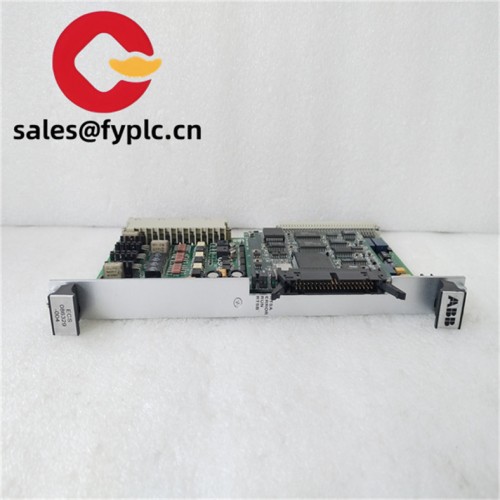
ABB AO910S (3KDE175531L9100) – Analog Output Module for Precise Current/Voltage Control in Industrial DCS/PLC Systems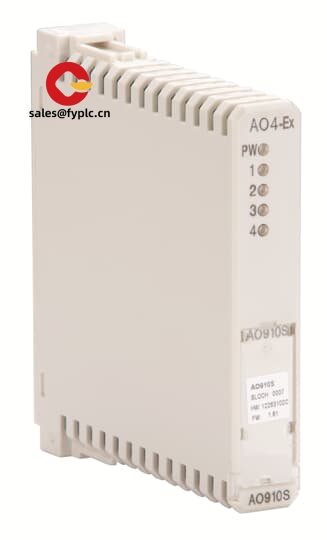
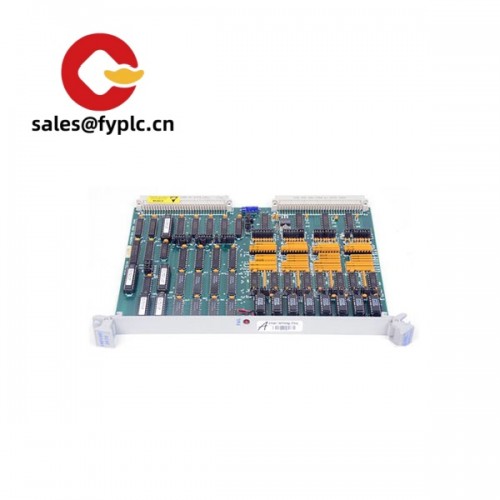
The ABB AO910S 3KDE175531L9100 is an analog output module designed for process automation where stable, repeatable control signals are essential. From my experience, it’s typically deployed to drive control valves, VFD analog references, and actuator setpoints in distributed control systems. You might notice that it fits into standard ABB system carriers/backplanes and draws its power and communication through the base unit, which keeps the front wiring neat and service-friendly.
Company’s Order Placement Process and Guarantees
- Warranty period: 365 days
- Delivery time: 1 week for in-stock items; no more than one month at the latest
- Payment: 50% advance payment; full payment before delivery
- Express delivery options: FedEx, UPS, DHL
Key Features
- Analog outputs for process control – Typically supports industry-standard 4–20 mA current signals; many installations also set it for 0–10 V where the system permits.
- Backplane-powered, field-wired at the front – Cleaner panel layouts and faster changeouts, since the module pulls power and comms from the system base.
- Stable, low-noise performance – From my experience, these AO modules are selected for steady valve positioning and VFD references where drift would show up in product quality.
- Diagnostics and status LEDs – Technicians can see channel or module health at a glance, which typically speeds up troubleshooting.
- DIN-rail installation – Standardized footprint on ABB I/O bases makes expansion straightforward in crowded cabinets.
- System-bus communication – No front serial/Ethernet to wire; the module communicates through the ABB system backplane for simplicity.
Technical Specifications
| Brand / Model | ABB AO910S (3KDE175531L9100) |
| HS Code | 853890 (Parts for industrial control equipment) |
| Power Requirements | 24 VDC nominal via system backplane (typical ABB I/O power scheme) |
| Signal Output Types | Analog Output – commonly 4–20 mA (source). Certain setups may allow 0–10 V depending on base and configuration. |
| Communication Interfaces | System backplane bus; no front Ethernet/serial ports |
| Operating Temperature | 0 to +55 °C (typical for ABB I/O modules; verify against your panel conditions) |
| Installation Method | DIN-rail mounted on ABB system base/terminal unit; front field-wiring |
| Dimensions & Weight | Compact module format; width typically around 45 mm; height approx. 110–130 mm; depth approx. 100–120 mm; ~0.2 kg |
Application Fields
Commonly used in process industries where reliable analog control is mission-critical:
- Oil & gas – valve positioners, pressure/flow control loops, dosing systems
- Chemical & specialty materials – reactor temperature and feed-rate control
- Water & wastewater – pump speed reference to VFDs, actuator setpoints
- Power generation – turbine/boiler auxiliary controls where 4–20 mA is standard
- Food & beverage / pharma – CIP skids, batching, and utilities management
Advantages & Value
- Reliability – Stable outputs with predictable behavior, which in many cases reduces loop tuning effort and nuisance trips.
- Compatibility – Designed to integrate with ABB system backplanes and engineering tools; minimal fuss when replacing or expanding.
- Lifecycle cost – Quick swap capability and clear diagnostics typically save technician hours over the product’s life.
- Support – Availability of firmware notes, wiring guidelines, and ABB technical service helps when standardizing across sites.
Installation & Maintenance
- Cabinet environment – Install in a clean, dry enclosure to IEC cabinet standards; maintain ambient within 0–55 °C and allow convection paths around the module.
- Power & grounding – Use a stable 24 VDC supply for the rack/backplane. Bond shields at a single, dedicated grounding point to limit noise on analog loops.
- Wiring – Use twisted, shielded pairs for 4–20 mA runs. Keep analog cables separated from high-voltage and relay wiring to reduce interference.
- Safety – De-energize the backplane before inserting or removing modules unless the system allows hot-swap and your procedures cover it.
- Routine maintenance – Periodic loop checks and output calibration against a reference meter. Inspect terminals for looseness and oxidation. Where applicable, apply recommended firmware updates during planned outages.
Quality & Certifications
- CE marked; RoHS compliant in most markets
- UL/CSA recognition is commonly available for ABB I/O modules (verification by exact variant is recommended)
- Manufacturer warranty: typically 12 months; we provide a 365-day warranty on supply
What customers usually say
“Swapping an AO module during a shutdown took minutes, wiring didn’t need to be disturbed. The loops came back exactly as tuned,” is the sort of feedback we hear from maintenance teams. One thing I appreciate is how predictable the output scaling is across units, which makes multi-site standardization less of a headache.
Recommended accessories and related items
- System terminal/base unit for AO modules – ensures correct backplane power and channel terminations
- Redundant 24 VDC power modules – for higher availability on critical loops
- Shielded analog signal cables and ferrules – better noise immunity on long field runs
- Spare AO module – keeping one on the shelf typically cuts downtime during unplanned events
Note: Specifications above reflect common configurations for ABB analog output modules in this family and may vary slightly by system base and project settings. If you share your installed backplane/base type and channel count needs, we can confirm the exact I/O signal set and wiring diagram for AO910S (3KDE175531L9100).

Reviews
There are no reviews yet.