
Description
Aerotech BAI20-320 – High-voltage servo amplifier for demanding single‑axis motion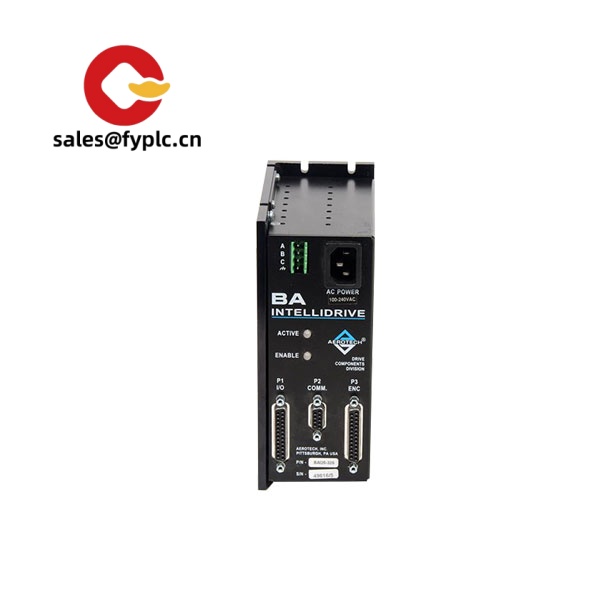
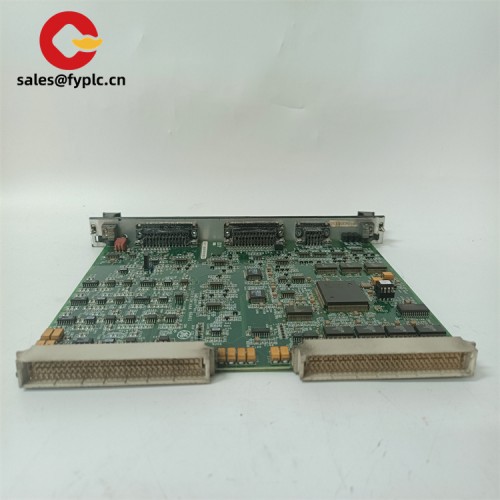
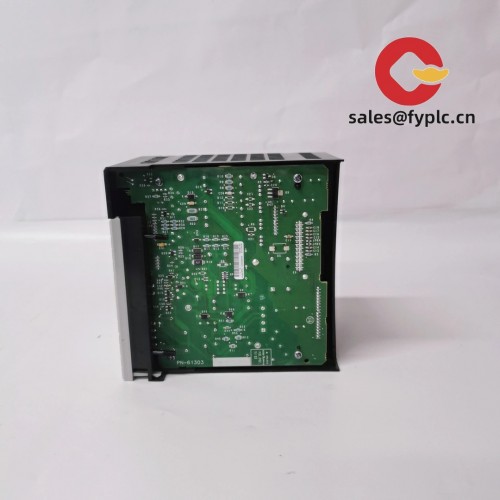
The Aerotech BAI20-320 is a robust, cabinet‑mount servo amplifier designed for 200–240 VAC systems where a 320 VDC bus is preferred. From my experience, it’s typically paired with an analog motion controller (±10 V command) to drive high‑performance industrial servomotors on stages, gantries, and precision tooling. One thing I appreciate is how predictable it feels under load—stable torque delivery and straightforward protection make it pragmatic for upgrades or field replacements.
Our Order Process & Guarantees
- Warranty: 365 days
- Lead time: 1 week when in stock; no more than one month at the latest
- Payment: 50% advance payment; full payment prior to delivery
- Courier options: FedEx, UPS, DHL
Key Features
- 320 VDC bus for high dynamic response – Built for 200–240 VAC mains, enabling fast torque rise and high speed ranges.
- 20 A class output – Suitable for medium‑to‑high power axes; typically supports 20 A peak with application‑dependent continuous ratings.
- Analog ±10 V command interface – Plays nicely with A3200/Ensemble‑style controllers and other analog motion controls.
- Incremental encoder and Hall commutation support – Differential A/B/Z feedback and Hall inputs for brushless motor commutation.
- Comprehensive protections – Over‑current, over‑voltage, and over‑temperature fault handling to protect drive and motor.
- External dynamic braking support – Works with a properly sized brake resistor for rapid deceleration energy management.
- Cabinet‑mount chassis – Straightforward panel installation with standard industrial wiring practices.
Technical Specifications
| Brand / Model | Aerotech BAI20-320 |
| HS Code | 8504.40 (Static converters / servo drives) |
| Power Requirements | 200–240 VAC, 50/60 Hz input; internal DC bus approx. 320 VDC (typical) |
| Output / Current Class | 20 A class (peak); continuous current depends on heat sinking and duty cycle |
| Operating Temperature | 0 to +40 °C (typical cabinet environments) |
| Signal I/O Types | ±10 V analog command; differential A/B/Z encoder; Hall inputs; enable/fault digital I/O |
| Communication Interfaces | Analog interface (no embedded fieldbus; integrates with external motion controllers) |
| Supported Motor Types | 3‑phase brushless servo motors (rotary or linear); brushed DC support may be available by configuration |
| Installation Method | Panel/cabinet mount; vertical orientation; forced‑air cooling recommended |
| Protections | Over‑current, over‑voltage, over‑temperature, short‑circuit; brake resistor support |
Application Fields
You might notice this model in equipment that needs crisp servo behavior at higher bus voltages. Typical uses include:
- Precision stages and gantries in electronics assembly and inspection
- Laser processing and micromachining axes where fast settling is valuable
- Packaging, labeling, and converting lines with high‑speed indexers
- Lab automation, test fixtures, and general mechatronics retrofits
A packaging OEM recently swapped a legacy axis for a BAI20-320 and kept the existing ±10 V controller. The commissioning felt routine—just encoder phasing, gain tuning, and a properly sized braking resistor—no surprises.
Advantages & Value
- Reliability in production – Protective features and a conservative power stage help reduce unplanned stops.
- Controller‑agnostic – Accepts standard ±10 V commands; easy to drop into mixed‑vendor systems.
- Lifecycle flexibility – In many cases, a practical replacement for older high‑bus analog drives without re‑architecting control.
- Lower integration effort – Familiar wiring patterns (encoder, Hall, enable) and standard cabinet practices save engineering hours.
- Total cost – Using a single‑axis amplifier can be more economical than migrating to a full multi‑axis rack when only one axis needs service.
Installation & Maintenance
- Cabinet & cooling – Mount on a flat metal backplate; maintain vertical airflow. Provide adequate clearance and forced‑air cooling for continuous load.
- Power wiring – Use appropriately rated copper conductors, upstream fusing, and an EMI/RFI line filter on the mains as needed.
- Motor/feedback cabling – Shielded, low‑capacitance motor cables; differential encoder wiring (RS‑422 levels) with proper grounding to minimize noise.
- Braking resistor – Size an external resistor for your inertia and decel rates; ensure safe mounting and thermal clearance.
- Grounding – Single‑point protective earth; bond panel door and cable shields per IEC 61800‑3 practices.
- Commissioning – Verify phasing, Hall alignment, and loop gains at low speed first; then ramp to application speeds while monitoring faults and temperatures.
- Routine checks – Inspect connectors, fan airflow, and dust buildup quarterly; re‑verify tuning after mechanical changes or motor swaps.
Quality & Certifications
- Manufacturer certifications typically include CE and RoHS; UL/CSA recognition is common for this class of amplifier.
- Warranty provided: 365 days from delivery.
Complementary Components We Can Supply
- Braking resistor assemblies – Proper wattage/ohmic selection for the BAI20-320 bus.
- Mains line filters and line reactors – To meet EMC and improve bus stability on weak grids.
- Shielded motor and encoder cable sets – Pre‑terminated harnesses for fast, clean wiring.
- 24 V control power supplies – For enable/logic circuits where external control power is preferred.
- Analog motion controllers – ±10 V command controllers compatible with Aerotech‑style servo loops.
- Matched servomotors – Rotary or linear brushless motors sized to the 20 A class.
If your application involves aggressive decel profiles or high reflected inertia, it seems to be worth sizing the brake resistor early; in many cases that’s what unlocks stable, repeatable throughput without nuisance over‑voltage trips.

Reviews
There are no reviews yet.