
Description
Teknic M-2330-109 – NEMA 23 Brushless Servo Motor for Compact, High-Response Motion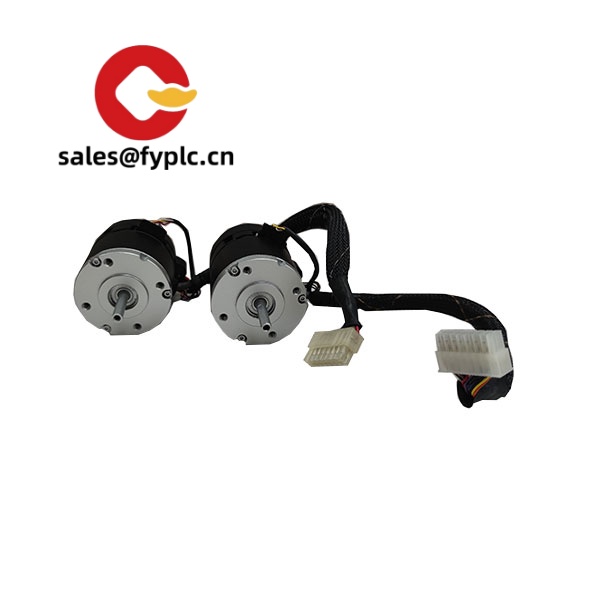
The Teknic M-2330-109 is a compact, NEMA 23-frame brushless servo motor that’s typically paired with an external servo drive for precise, closed-loop motion. It hits a sweet spot for OEMs who need strong dynamic performance in a small footprint—pick-and-place axes, light gantries, packaging lanes, small CNC retrofits, and indexing tables are common fits. One thing I appreciate is how the M‑23xx family balances speed bandwidth with smooth low-speed control, so you can run fast moves without the choppiness you sometimes see in steppers.
The “-109” suffix denotes a specific winding/feedback configuration within the 2330 family. In many cases, it’s selected to match a mid-voltage bus and a moderate inertia load, making it friendly for compact drives and 24–75 VDC-class systems. If you’re upgrading older axes using Teknic M-series motors, this model seems to drop in cleanly with standard NEMA 23 mounting and typical Hall/encoder feedback.
Order Placement Process and Guarantees
- Warranty: 365 days
- Delivery time: 1 week for in-stock items; no more than one month at the latest
- Payment terms: 50% advance payment; full payment before delivery
- Express options: FedEx, UPS, DHL
Key Features
- Compact NEMA 23 footprint – Fits tight machine envelopes while delivering servo-grade dynamics.
- Brushless servo construction – 3‑phase, permanent magnet design for high efficiency and smooth torque.
- Hall + incremental encoder feedback – Commutation halls plus incremental A/B/Z feedback for precise positioning with compatible drives.
- External drive compatible – Works with matched servo drives that accept standard BLDC commutation and 5 V encoder signals.
- Standardized mounting – NEMA 23 front flange simplifies retrofits and multi-axis standardization.
- Balanced speed and torque – From my experience, the 2330 family is chosen when you need quicker moves than a stepper can reliably deliver without resonance issues.
- Clean wiring options – Typically available with separate motor power and feedback connections to keep EMI under control in cabinets.
Technical Specifications
| Brand / Model | Teknic M-2330-109 |
| Product Type | 3‑phase brushless servo motor (NEMA 23) |
| HS Code | 8501.52 (AC multi‑phase motors ≤750 W) |
| Power Requirements | Operates via external servo drive; bus voltage typically 24–75 VDC depending on drive/winding |
| Dimensions & Weight | NEMA 23 (56 mm square face); 2330 family denotes ~3.0 in body length class |
| Operating Temperature | 0 to +40 °C ambient is typical for this series (verify for your duty cycle) |
| Signal I/O Types | Commutation Halls; Incremental encoder A/B/Z (5 V TTL, often differential) |
| Communication Interfaces | None (motor‑level power and feedback signals only) |
| Installation Method | Front‑flange mounting, standard NEMA 23 pattern; shaft coupling or pulley per application |
Related or Supporting Products
- Teknic M‑2310 series – Same NEMA 23 frame with shorter body; suited when space is tighter and torque demand is lower.
- Teknic ClearPath CPM‑SDSK‑2310/2330 variants – Integrated servo (motor + drive + encoder). A practical drop-in when you prefer a single cable set and onboard tuning.
- Motor power and feedback cable sets – Pre-terminated harnesses reduce wiring time and help maintain signal integrity.
- NEMA 23 mounting brackets and 6.35 mm couplings – Common accessories for quick mechanical integration.
A packaging OEM told us the M‑2330 swap-in cut their axis settling time by roughly 20% versus a high-torque stepper, without changing the carriage or belts—just the drive tuning and motor.
Installation & Maintenance
- Cabinet and ventilation – Place the servo drive in a ventilated control cabinet (IEC/UL-rated). Maintain clearance for airflow and keep power and feedback cables separated to limit EMI.
- Wiring – Use shielded twisted-pair for encoder signals and a proper earth reference at one end of the shield. Keep motor phase leads short where possible. Verify correct Hall/phase alignment during commissioning.
- Grounding – Bond the motor frame to cabinet ground. From my experience, consistent grounding is the single biggest factor in reducing intermittent encoder faults.
- Tuning – Start with conservative drive gains, auto-tune if available, and validate following error with your worst-case load. You might notice the 2330 family tolerates higher accel than expected once inertia is matched.
- Routine checks – Inspect connectors quarterly, clean dust from vents and cable glands, and confirm encoder index repeatability. Update drive firmware when the vendor releases stability or noise-immunity improvements.
- Mechanical – Align couplings carefully; misalignment can shorten bearing life. Belt tension should be set so the axis meets peak torque without harmonic vibration.
Quality & Certifications
- CE compliant motor design
- RoHS conformity for hazardous substances
- Manufactured under ISO 9001 quality systems (typical for this product class)
- Manufacturer warranty: 12 months from delivery
If you can share your target bus voltage, peak/continuous torque requirements, and mechanical interface (coupling, pulley, or direct), we’ll verify that M‑2330‑109 is the best fit—or recommend a sibling winding that matches your drive and load inertia more closely.

Reviews
There are no reviews yet.