
Description
MTL 4073 – Intrinsically Safe Isolator for Pulse/Proximity Signals in Hazardous Areas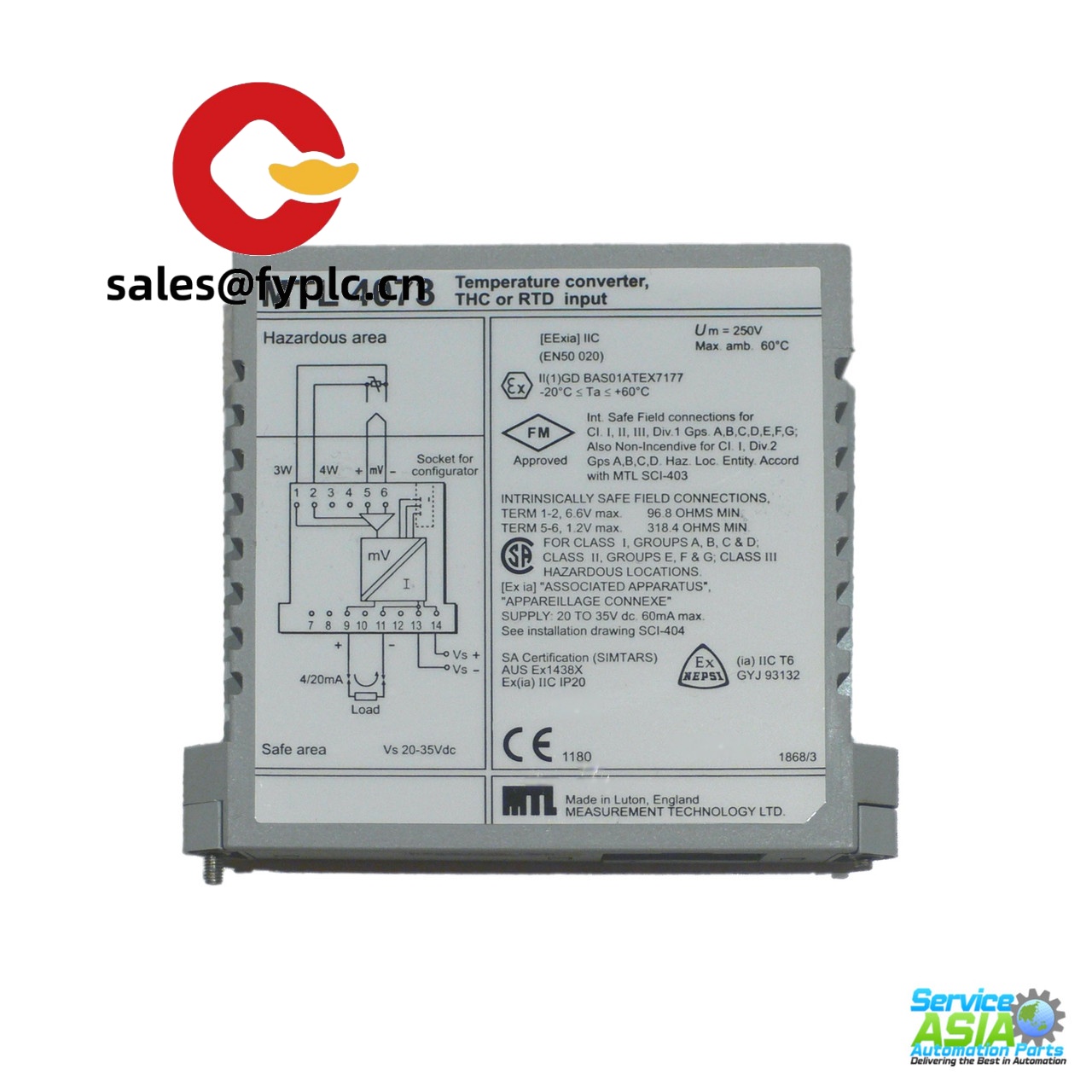
The MTL 4073 sits within the proven MTL4000 series of galvanic isolators and is typically specified to interface pulse or contact-type signals from hazardous-area sensors—think NAMUR proximity switches, contact closures, or pulse pick-offs—and deliver a clean, isolated signal into the safe area. From my experience, it’s a dependable way to protect your PLC or flow computer from ground loops and noise while maintaining intrinsic safety compliance in Zone 0/1 or Division 1 applications.
Typical use cases include turbine flowmeter pulse outputs, speed sensing with NAMUR prox sensors on rotating equipment, and level alarms from float switches installed in classified zones. One thing I appreciate is how the 4000-series modules keep wiring straightforward on a carrier/backplane while giving you three-port isolation and low downtime for swaps.
Our Order Placement Process and Guarantees
- Warranty: 365 days
- Delivery: 1 week for in-stock; no more than one month at the latest
- Payment: 50% advance payment; full payment before delivery
- Express options: FedEx, UPS, DHL
Key Features
- Hazardous-area pulse/contact interfacing – Commonly used with NAMUR proximity sensors, mechanical contacts, or pulse pickups from meters in Zone 0/1 or Div. 1.
- Galvanic isolation – Breaks ground loops and improves noise immunity between field, power, and control sides.
- Safe-area compatible output – Provides a conditioned, isolated output for PLCs/SCADA or flow computers, helping cut spurious counts and nuisance trips.
- Carrier/backplane mounting – Tool-free plug-in to MTL4000 carriers keeps panels tidy and speeds replacement.
- Slim format – Suited to dense I/O marshalling where cabinet space is tight.
- Industrial temperature range – Designed for harsh plant environments; typically performs reliably in instrument cabinets with moderate ventilation.
- Intrinsic safety pedigree – Part of the long-running MTL safety isolator family favored in oil & gas, chemicals, and terminals.
Technical Specifications
| Brand / Model | MTL 4073 (MTL4000 series) |
| HS Code | 8543.70 – Electrical machines and apparatus with individual functions (typical classification for signal isolators) |
| Power Requirements | 24 V DC nominal via MTL4000 carrier/backplane (commonly 20–35 V DC supply range at the carrier) |
| Operating Temperature | Typically −20 to +60 °C for the series when installed in a ventilated cabinet |
| Signal Input/Output Types | Hazardous-area pulse or contact input (e.g., NAMUR prox / dry contact) to isolated safe-area logic/transistor-type output (commonly specified) |
| Communication Interfaces | Not applicable (discrete signal conditioning) |
| Installation Method | DIN-rail via MTL4000 carrier/backplane; plug-in module with front-access terminals |
A maintenance supervisor from a gas processing site mentioned they swapped older relay-based interfaces for MTL 4073 units on turbine meters and “saw the chatter disappear,” which seems to be consistent with the better isolation and cleaner edges you get from these modules.
Related or Supporting Products
- MTL 5546 – New-generation pulse/proximity isolator from the MTL5500 series; higher packing density and enhanced diagnostics compared with 4000-series modules.
- MTL 4546 – MTL4500 equivalent for marshalled cabinets; useful where a mid-generation refresh is planned.
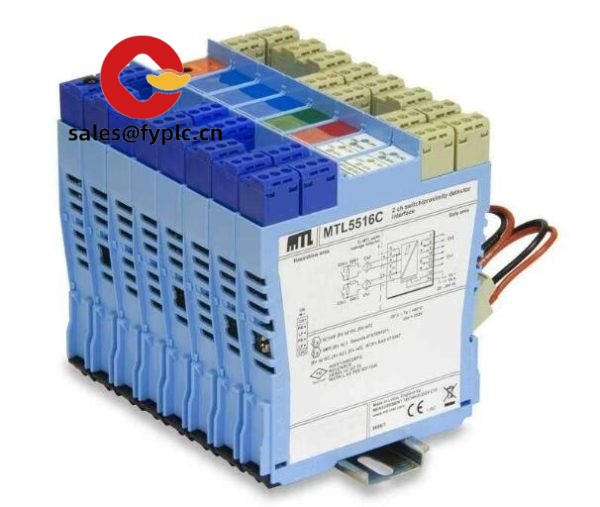
- MTL 5511 / MTL 5516 – Switch/proximity detector interfaces; often used alongside pulse isolators in mixed discrete I/O cabinets.
- MTL4000 carriers/backplanes – Required for power and mounting; choose the slot count to match your I/O (consult your panel layout and spare capacity).
Installation & Maintenance
- Cabinet standards – Mount in a clean, dry enclosure; maintain spacing per the carrier manual. From my experience, light forced ventilation helps in hot climates.
- Grounding – Bond the carrier earth rail to the panel ground. Keep IS field wiring segregated from non-IS cables.
- Wiring – Follow NAMUR/dry-contact polarity and cable shield practices; route hazardous-area cables separately and label per site standards.
- Safety – Verify the loop’s entity parameters and gas group/temperature class. Only use approved IS barriers and field devices in the same loop.
- Routine checks – Periodically tighten terminals, inspect for damage, and verify pulse counts in the PLC trending. Calibration is generally not required unless the module is used as a converter with scaling.
- Firmware/updates – These modules are typically hardware-based; no routine firmware updates. Keep the data sheet and loop drawings accessible for maintenance crews.
Quality & Certifications
- CE and UKCA compliance for EMC and safety
- ATEX / IECEx intrinsic safety certifications (model/variant dependent)
- UL/cUL listings for use in North America (where applicable)
- RoHS-compliant manufacturing
- Manufacturer’s standard warranty, plus our 365-day coverage on supply
If you’re replacing an existing pulse barrier or planning a hazardous-area flow measurement panel, the MTL 4073 is, in many cases, the straightforward drop-in choice. You might notice that cycle times and diagnostics become more predictable once you eliminate contact bounce and ground loops at the source.

Reviews
There are no reviews yet.