
Description
ProSoft MVI94-MCM-MHI – Modbus Serial Communication for Rockwell 1794 FLEX I/O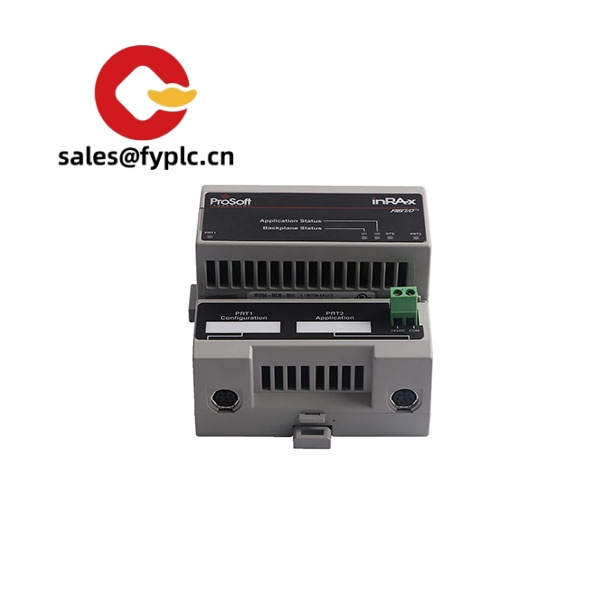
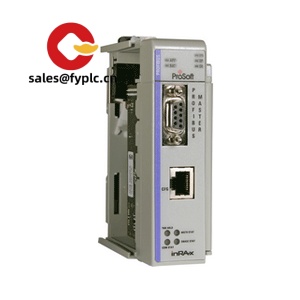
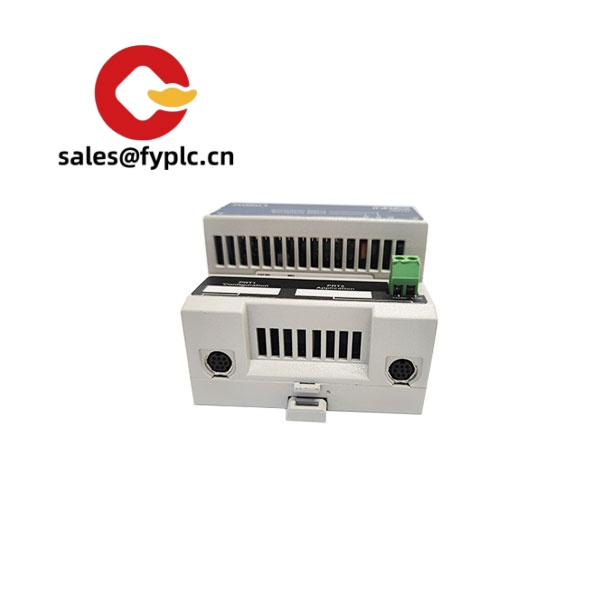
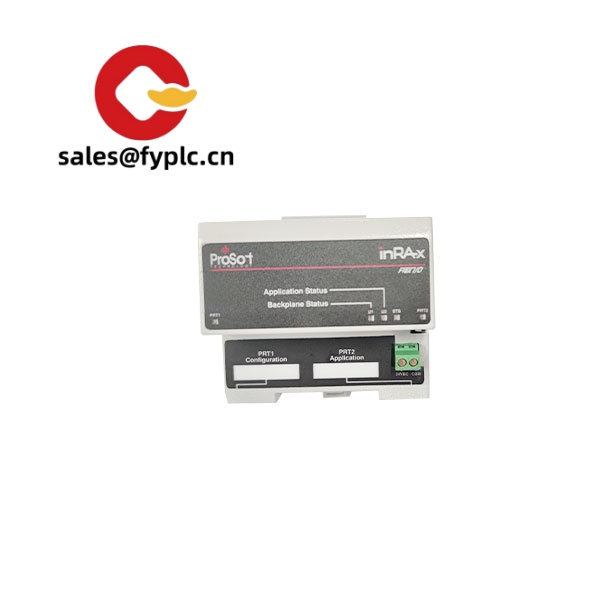
The ProSoft MVI94-MCM-MHI is a FLEX I/O communication module designed to bridge Rockwell’s 1794 FLEX I/O platform with Modbus serial devices. From my experience, this model is a solid fit when you need a compact, backplane-powered Modbus RTU/ASCII Master/Slave interface that lives right inside a FLEX I/O rack and exchanges data through the adapter’s I/O image. You might notice that the -MHI variant is typically chosen for host/HMI-centric polling schemes, where straightforward Modbus data blocks and predictable scan behavior matter.
Typical use cases: linking FLEX I/O to Modbus drives, power meters, weigh scales, RTUs, or legacy PLCs over RS-232/422/485; adding serial Modbus points to EtherNet/IP or ControlNet systems via 1794 adapters (e.g., 1794-AENTR, 1794-ACNR).
Order Placement Process and Guarantees
- Warranty: 365 days
- Delivery: 1 week for in-stock; no more than one month at the latest
- Payment: 50% advance payment, full payment prior to delivery
- Express options: FedEx, UPS, DHL
Key Features
- Native 1794 FLEX I/O integration – mounts on a standard 1794 terminal base and exchanges data via the adapter’s I/O image. It keeps the footprint small and wiring tidy.
- Modbus RTU/ASCII Master/Slave – suitable for mixed-device networks; typically supports multi-drop RS-485 and point-to-point RS-232 links in the same project.
- Dual isolated serial ports – commonly configurable as RS-232/422/485, giving you flexibility for drives, meters, and legacy controllers.
- Flexible data mapping – large contiguous I/O data blocks mapped to the FLEX I/O image, which in many cases simplifies your PLC tags and HMI bindings.
- Diagnostics that matter – status LEDs, port-level counters, and serial pass-through for quick commissioning and troubleshooting.
- ProSoft Configuration Builder (PCB) – straightforward configuration workflow; export/import helps with version control across plants.
- -MHI variant focus – seems to be favored for HMI/host-style polling patterns, with predictable scan cycles and minimal overhead.
Feedback from a maintenance engineer: “We used the MVI94-MCM-MHI to pull 150+ Modbus points from old power meters. Setup through PCB took about an hour, and tag mapping into CompactLogix via the AENTR adapter was cleaner than I expected.”
Technical Specifications
| Brand / Model | ProSoft MVI94-MCM-MHI |
| HS Code | 8517.62 (Data communication apparatus) |
| Power Requirements | Backplane powered via 1794 FLEX I/O terminal base; no external power to the module |
| Dimensions & Weight | Standard 1794 FLEX I/O module footprint (mounts on 1794 terminal bases) |
| Operating Temperature | 0 to 60°C; 5–95% RH non-condensing (typical for this family) |
| Signal Input/Output Types | 2 × isolated serial ports; RS-232/422/485 selectable; Modbus RTU/ASCII |
| Communication Interfaces | Modbus Master/Slave; typical baud rates from 1.2 kbps up to 115.2 kbps; configurable parity/stop bits |
| Installation Method | Mounts on 1794 terminal base (e.g., 1794-TB3/TB3S); used with FLEX I/O adapters such as 1794-AENTR or 1794-ACNR |
| Configuration | ProSoft Configuration Builder (Windows); port diagnostics and serial pass-through supported |
| Certifications | CE, cULus, RoHS (typical for ProSoft MVI94 family) |
Related & Supporting Products
- ProSoft MVI94-MCM – Core Modbus serial variant for FLEX I/O; the -MHI option is typically used when the polling is host/HMI-centric.
- ProSoft MVI56E-MCM – ControlLogix in-chassis Modbus RTU/ASCII module; higher throughput and tight integration if you are on 1756 platforms.
- ProSoft PS69-MCM – CompactLogix/1769 platform Modbus serial module; good when FLEX I/O is not required.
- 1794-AENTR / 1794-ACNR – FLEX I/O adapters for EtherNet/IP or ControlNet; pick based on network and redundancy needs.
- 1794-TB3 / 1794-TB3S – Terminal bases required for mounting the MVI94 series modules.
- Shielded RS-485 cabling & 120 Ω terminators – Recommended for reliable multi-drop Modbus links, especially over longer runs.
Installation & Maintenance
- Cabinet & environment: Install in a clean, dry control cabinet with adequate ventilation. Keep ambient within 0–60°C; avoid direct mounting near high-heat sources.
- FLEX I/O base & grounding: Mount on the correct 1794 terminal base; ensure proper earth ground of the FLEX backplane and the adapter power supply.
- Serial wiring: Use twisted-pair, shielded cable for RS-485. Terminate the bus with 120 Ω at both ends and apply bias resistors as needed. Keep serial and power wiring separated from VFD output cables.
- Network topology: For RS-485 multi-drop, keep stubs short; in most cases, daisy-chain works best. Validate baud rate, parity, and addressing before site energization.
- Safety & handling: Power down and wait for discharge before adding/removing modules. Observe ESD precautions.
- Routine maintenance: Periodically check connectors for looseness, review module diagnostics for retries/timeouts, back up PCB project files, and apply firmware updates when released. Light dust cleaning with dry air helps longevity.
- Commissioning tip: Start with a single device at low baud, confirm reads/writes, then scale to full speed and the rest of the node list. It usually saves hours of chasing noise.
Quality & Certifications
- Compliance: CE, cULus, RoHS (typical for this series). Additional hazardous-location ratings may apply on certain builds.
- Manufacturer’s warranty: typically 1 year; our coverage is 365 days on supplied units.
- Each unit is function-tested prior to dispatch when requested; serial link parameters can be preloaded if you share the register map.
If you’re migrating legacy Modbus devices into a modern EtherNet/IP architecture and want to keep the FLEX I/O form factor, this module is, in many cases, the neatest way to do it without adding an external gateway.

Reviews
There are no reviews yet.