
Description
KROHNE OPTIFLUX 4300F – Flanged Electromagnetic Flowmeter for demanding process liquids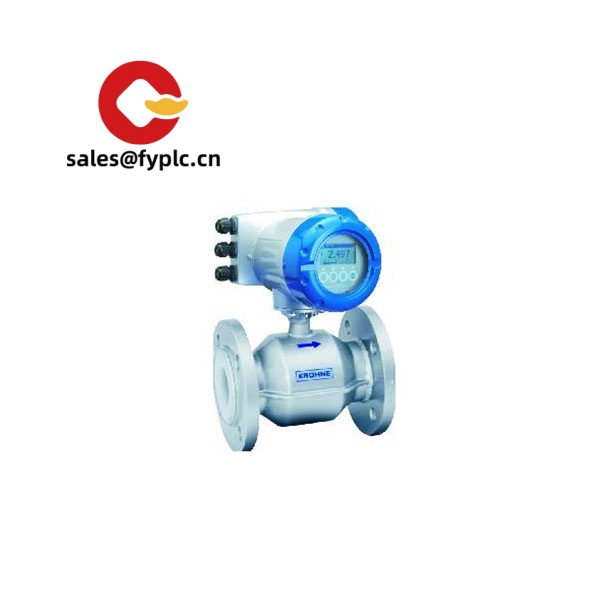
The KROHNE OPTIFLUX 4300F is the flanged sensor version of the 4300 series, built for applications where stability, chemical resistance, and diagnostic transparency really matter. From my experience, it’s a solid choice for chemical dosing, utilities in process plants, and slurry or abrasive services where you still want high accuracy without babying the instrument. One thing I appreciate is how it pairs with KROHNE IFC signal converters to deliver precise 4–20 mA and digital communications while keeping total maintenance fairly low.
Typical use cases include: aggressive acids/alkalis (PTFE/PFA liners), raw or process water (hard rubber liners), and higher-solids media in vertical runs. You might notice that the 4300F maintains good zero stability even when the process isn’t perfectly calm, which—in many cases—saves time on site.
Our Order Process and Guarantees
-
- – Warranty: 365 days from delivery
-
- – Delivery: 1 week if in stock; no more than 1 month latest lead time
-
- – Payment: 50% advance payment; full payment prior to delivery
- – Shipping: Express via FedEx, UPS, or DHL
Key Features
- Flanged inline sensor (F version) – Straightforward piping integration on standard EN/ASME flanges.
- High accuracy, stable zero – Typically up to ±0.2% of measured value when paired with the appropriate IFC converter.
- Chemically resistant liners – PTFE or PFA for aggressive media; hard rubber for water and slurry-type duties.
- Robust electrodes – Common options include stainless steel, Hastelloy C, titanium, or tantalum for corrosion resistance.
- Multiple outputs & comms – 4–20 mA, pulse/frequency, status/relay; with HART or fieldbus via IFC converter.
- Process-ready diagnostics – Status alarms, empty pipe detection, and verification support with OPTICHECK (on site, no process interruption).
- Wide pressure/temperature envelope – Suited to PN16…PN40/ASME Class 150–300 ranges and elevated process temperatures depending on liner.
- Ingress protection – Sensor typically IP67/68; compact or remote converters available to match the environment.
Technical Specifications
| Brand / Model | KROHNE OPTIFLUX 4300F (flanged electromagnetic flow sensor) |
| HS Code | 9026.10 – Instruments for measuring flow/level of liquids |
| Measuring Principle | Electromagnetic (Faraday’s law), full-bore inline |
| Accuracy | Up to ±0.2% of measured value (typical, with suitable IFC signal converter) |
| Power Requirements | Powered via companion IFC converter; common supplies 24 V DC or 100–230 V AC, 50/60 Hz |
| Operating Temperature | Process: up to approx. 130–150 °C with PTFE/PFA; up to approx. 80 °C with hard rubber (application dependent). Ambient (converter): typically −20…+60 °C. |
| Pressure Ratings | Commonly PN16…PN40 / ASME Class 150…300 (varies by DN and liner) |
| Signal I/O Types | 4–20 mA, pulse/frequency, status/relay outputs; empty pipe detection |
| Communication Interfaces | HART, PROFIBUS PA, FOUNDATION Fieldbus, Modbus (via IFC converter options) |
| Materials (wetted) | Liners: PTFE, PFA, hard rubber (Ebonite); Electrodes: stainless steel, Hastelloy C, titanium, tantalum |
| Ingress Protection | Sensor typically IP67/IP68; converter typically IP66/67 (depending on configuration) |
| Installation Method | Flanged inline; horizontal or vertical (upflow preferred); pipe must be completely filled |
| Minimum Conductivity | Typically ≥ 5 µS/cm |
| Verification | Compatible with KROHNE OPTICHECK for in-situ meter verification |
Related and Supporting Products
- IFC 300 / IFC 100 signal converters – Pair with OPTIFLUX 4300F in compact or remote versions; adds HART/fieldbus and advanced diagnostics.
- OPTIFLUX 5300F – Higher-end alternative when you need even tighter accuracy and advanced performance on very challenging media.
- OPTIFLUX 2300F – Cost-effective option for utilities and general-purpose applications with fewer advanced diagnostics.
- Grounding rings & liner protection rings – Recommended for plastic-lined pipes or abrasive slurry services.
- OPTICHECK – Portable tool for on-site verification without removing the meter from the line.
“We dropped the 4300F into a vertical line handling a mildly abrasive liquor; once we grounded correctly and set empty pipe detection, the zero stayed put. Diagnostics helped us catch a partially closed valve upstream—saved us a headache.” — Utilities Engineer, specialty chemicals (typical result)
Installation & Maintenance
- Mounting – Install flanged, ensuring the pipe remains completely filled. Vertical (upward flow) is often best for slurry/solids. Keep the sensor away from strong magnetic fields.
- Straight runs – As a practical guide, 5×DN upstream and 3×DN downstream help stabilize the profile (or follow the stricter site standard if required).
- Grounding & gaskets – Use grounding rings or electrodes for plastic-lined piping. Select gasket materials compatible with the liner and process chemistry.
- Wiring – Shield and segregate signal cables from high-voltage lines. For remote converters, use approved interconnection cables and respect max cable length.
- Routine checks – Verify zero with stable, no-flow conditions when possible. Run OPTICHECK verification periodically. Clean electrode area during scheduled shutdowns if media tends to coat.
- Firmware & parameters – Keep converter firmware updated and back up configuration (KROHNE DD/DTM). Lock parameters after commissioning to avoid accidental edits.
- Safety – Depressurize and drain the line before removal. Observe PPE and chemical compatibility with chosen liner/electrodes.
Quality & Certifications
- Certifications – CE marking; RoHS conformity; ATEX/IECEx hazardous area options available with approved converter setups (model dependent).
- Manufacturing – Produced under ISO 9001 quality systems.
- Warranty – Manufacturer’s standard warranty applies; our supplied units carry a 365-day warranty as stated above.
To speed up quoting and delivery, share your medium, temperature/pressure, nominal size and flange standard, expected flow range, liner/electrode preferences, and required outputs/communications. That usually locks in the correct 4300F configuration on the first pass.

Reviews
There are no reviews yet.