
Description
NI PXI-8105 – Embedded PXI System Controller for Reliable Test & Measurement Racks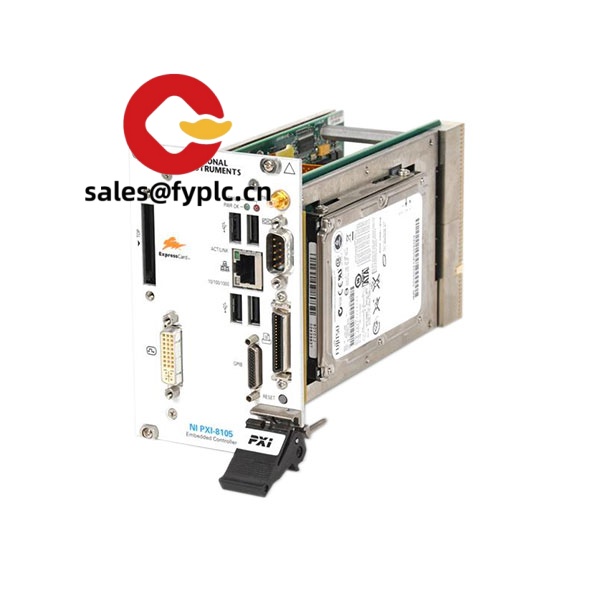
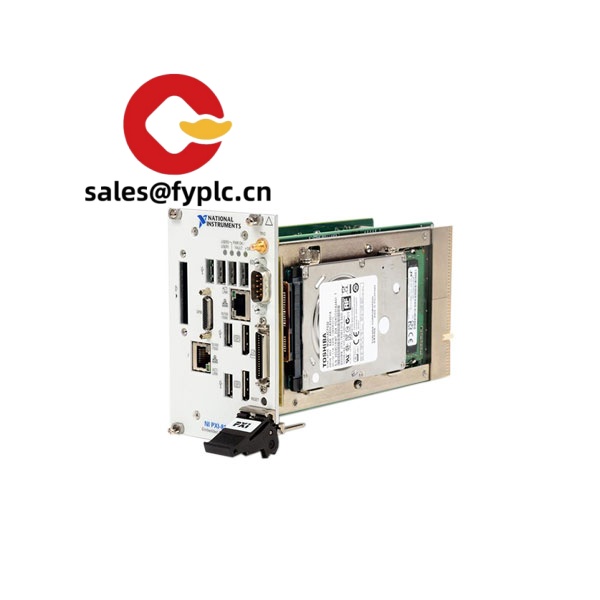
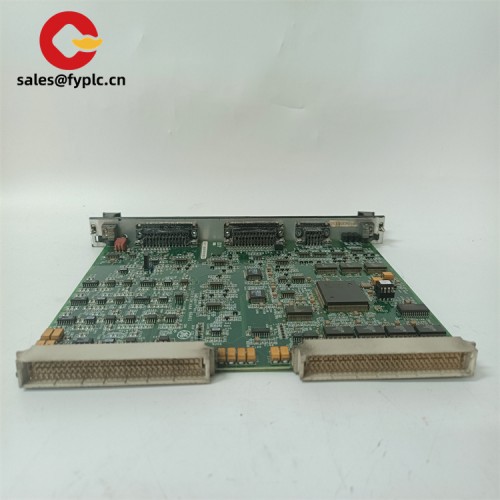
The NI PXI-8105 is a 3U PXI embedded controller that drops into the system slot of a PXI chassis and runs your test sequences locally—no external PC required. From my experience, it’s a sweet spot for legacy and mid-life-cycle stations that need a stable dual-core controller with integrated GPIB, solid Ethernet throughput, and predictable behavior in 24/7 environments. You might notice that teams keep it in service because it balances performance with long-term OS and driver stability, especially for LabVIEW-based benches that still need IEEE 488.2 and RS‑232 alongside USB and VGA.
Order Placement Process and Guarantees
- Warranty period: 365 days
- Lead time: 1 week if in stock; no more than one month at the latest
- Payment: 50% advance; full payment prior to delivery
- Express delivery: FedEx, UPS, DHL
Key Features
- Integrated system controller for PXI – Installs in the system slot of a 3U PXI chassis to run Windows or LabVIEW Real‑Time without an external host.
- Dual‑core performance – Typically outfitted with an Intel Core Duo class CPU (around 2.0 GHz), good for parallel test steps and deterministic tasks in many cases.
- Built‑in GPIB (IEEE 488.2) – Handy for connecting legacy instruments directly; one thing I appreciate is it saves a slot and simplifies cabling.
- Balanced I/O set – Gigabit Ethernet, USB 2.0, RS‑232, and VGA cover most bench and rack needs without extra adapters.
- PXI timing/trigger backplane access – Works with PXI chassis timing signals for synchronized measurements across multiple modules.
- Industrial deployment – Designed for continuous operation inside ventilated PXI chassis; typically stable across rollout fleets.
Technical Specifications
| Brand / Model | National Instruments PXI-8105 |
|---|---|
| HS Code | 8471.50 (Automatic data processing machine – processing unit) |
| Form Factor | 3U PXI system controller, 1-slot (installs in the PXI system controller slot) |
| Processor | Dual-core Intel mobile processor (Core Duo class, ~2.0 GHz typical) |
| Memory | DDR2 SODIMM; typical builds up to 2 GB for Windows or LabVIEW RT deployments |
| Storage | 2.5 in internal drive (HDD/SSD options, OS image support) |
| Power Requirements | Powered by PXI backplane (5 V and 3.3 V rails); typical consumption ~30–45 W depending on configuration |
| Dimensions & Weight | 3U, 1-slot; approx. 130 mm (H) × 20 mm (W) × 215 mm (D); ~1.1 kg |
| Operating Temperature | 0 °C to 50 °C (ambient, when installed in a properly cooled PXI chassis) |
| Front-Panel I/O (typical) | 1× RJ‑45 Gigabit Ethernet; up to 4× USB 2.0; 1× RS‑232; 1× IEEE 488.2 GPIB controller; 1× VGA |
| Backplane / Bus | PXI (CompactPCI 32‑bit, 33 MHz) with PXI trigger and timing support |
| Installation Method | Insert into PXI chassis system slot; secure with front-panel screws; connect I/O via front panel |
| Supported OS | Windows (legacy support common for Windows XP/XP Embedded) and NI LabVIEW Real‑Time, depending on image |
A quick field note: a power‑electronics customer kept the NI PXI-8105 as the primary controller in their burn‑in rack because the integrated GPIB meant one less add‑in card and fewer failure points. Boot times were consistent, and the controller handled sequencing, data logging, and SCPI control across legacy instruments without breaking a sweat.
Related or Supporting Products
- NI PXI-8106 – Similar generation controller with a higher‑clock dual‑core CPU for modest performance headroom.
- NI PXI-8108 – Core 2 Duo class; typically faster processing and more memory scalability for heavier test sequences.
- NI PXIe-8135 – For PXI Express systems needing modern multi‑core performance and higher bandwidth (PXIe backplane).
- NI PXI-1042 / PXI-1045 Chassis – Compatible PXI mainframes; good airflow and slot counts for mixed I/O modules.
- NI PXI timing modules – For advanced synchronization across mixed-signal instruments when tighter skew is required.
Installation & Maintenance
- Environment – Mount in a compliant 3U PXI chassis with unobstructed front‑to‑back airflow. Keep intake filters clean and leave at least 50 mm clearance at vents.
- Wiring – Use quality shielded Ethernet for remote logging; route GPIB and RS‑232 away from high‑current lines to minimize noise.
- OS images – Create a baseline image after commissioning. From my experience, restoring a known‑good image saves hours during unplanned downtime.
- Firmware/BIOS – Apply NI‑recommended BIOS updates during scheduled maintenance only; verify compatibility with the installed OS and drivers.
- Storage care – For HDD units, avoid shock and high vibration; SSD retrofits typically improve reliability in mobile carts.
- Calibration – Not required for the controller itself; follow calibration schedules for measurement modules in adjacent slots.
- Thermal checks – Periodically verify chassis fan health; the controller’s stability in most cases tracks with airflow quality.
Quality & Certifications
- CE and FCC EMC compliance
- RoHS directive compliance
- Manufactured under ISO 9001 quality systems
- Manufacturer’s typical warranty: 1 year limited (our coverage: 365 days as stated above)

Reviews
There are no reviews yet.