
Description
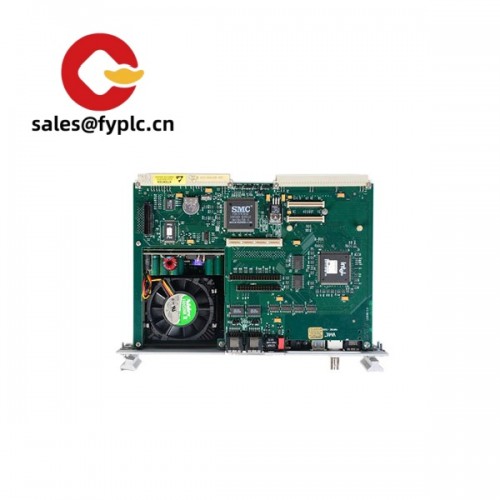
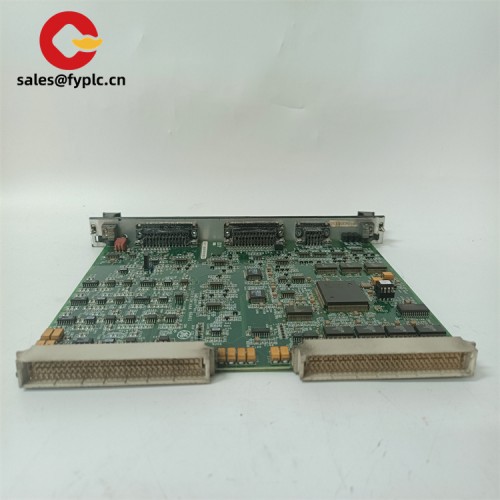
NI PXIe-7846 – Reconfigurable I/O (R Series) for high-speed test, measurement, and control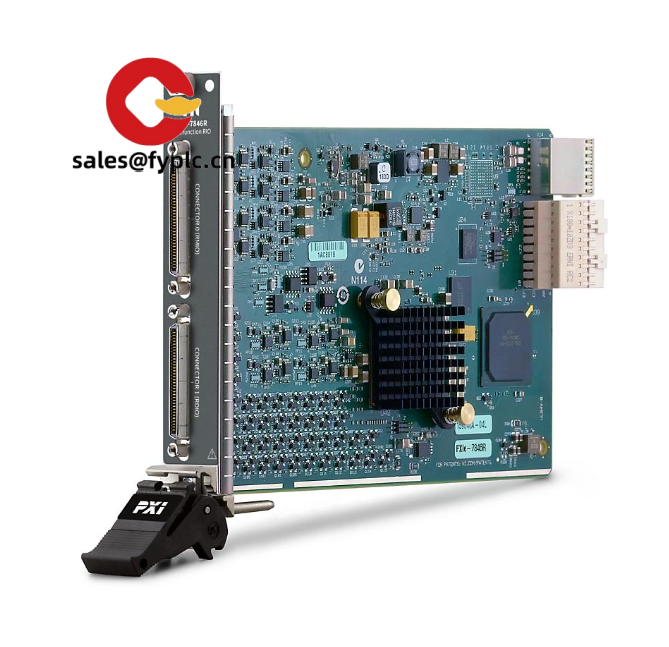
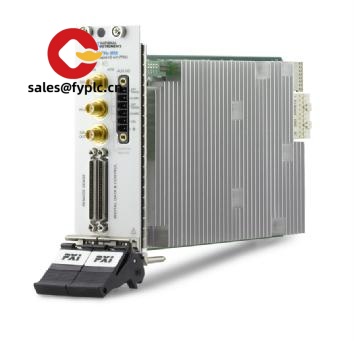
The NI PXIe-7846 is part of NI’s R Series family for PXI Express, often referenced in the field as PXIe‑7846R. From my experience, teams choose it when they need tight, deterministic timing and custom digital/analog behaviors implemented directly in an FPGA, but still want the convenience of the PXI Express platform and LabVIEW FPGA development flow. You might notice that it fits nicely where standard DAQ cards fall short—things like protocol emulation, closed-loop control, hardware-in-the-loop, or high-channel-count digital stimulus/response.
Company’s Order Placement Process and Guarantees
-
- – Warranty period: 365 days
-
- – Delivery time: 1 week for in-stock; no more than one month at the latest
-
- – Payment method: 50% advance payment, full payment before delivery
- – Express delivery methods: FedEx, UPS, DHL
Key Features
- FPGA-based reconfigurable I/O – User-programmable FPGA (via LabVIEW FPGA) lets you create custom timing, triggering, and logic for non-standard protocols or fast closed-loop control.
- PXI Express integration – High-throughput DMA streaming to the host with low-latency triggering over the PXI backplane for synchronized, multi-module systems.
- Deterministic digital and analog I/O – Typically used for precise response to events, custom PWM/encoder handling, or shaping digital stimulus without CPU jitter.
- Front-panel 68‑pin VHDCI connectivity – Connect to standard NI terminal blocks (e.g., SCB‑68A, CB‑68LPR) using shielded 68‑pin cables for quick wiring into test fixtures.
- Suits rapid prototyping to production test – Teams often start with a LabVIEW FPGA prototype, then reuse the same bitfile and I/O mapping in production PXIe racks.
- Robust ecosystem – Works with NI‑RIO driver stack, LabVIEW FPGA, and the broader PXIe timing/synchronization modules for scalable systems.
Typical use cases we see: real-time protocol emulation in automotive ECUs, HIL stimulus/response for motor drives, semiconductor device functional test, and custom digital pattern generation with deterministic handshakes.
Practical feedback from a test lead: “We moved a timing-critical SPI variant into the PXIe‑7846 FPGA. Jitter disappeared, and we cut our test cycle by about 30% without changing the fixture.”
Technical Specifications
| Brand / Model | NI PXIe‑7846 (R Series; commonly referenced as PXIe‑7846R) |
| HS Code | 9030.89 (Measuring/checking electrical quantities – other) |
| Power Requirements | Powered via PXI Express backplane; typical board power around 15 W (many setups stay well under 25 W, chassis-dependent) |
| Dimensions & Weight | 3U, 1‑slot PXI Express module; depth approx. 215 mm; weight approx. 0.4 kg |
| Operating Temperature | 0 °C to 55 °C (typical for NI PXIe modules; observe chassis airflow and slot derating) |
| Signal I/O Types | Reconfigurable digital I/O (TTL/CMOS) via 68‑pin VHDCI; R Series family variants typically include analog I/O as well (channel counts and rates vary by sub‑model) |
| Communication Interfaces | PXI Express backplane DMA streaming; PXI trigger bus; front‑panel VHDCI I/O to NI terminal blocks |
| Software Support | LabVIEW FPGA and NI‑RIO driver (deterministic execution and host‑to‑FPGA streaming) |
| Installation Method | Installs in a 3U PXI Express chassis slot; connect I/O using shielded 68‑pin VHDCI cables to NI terminal blocks |
Related or Supporting Products
- NI PXIe‑7845 / PXIe‑7847 – Closely related R Series models; typically differ in I/O mix and performance points.
- NI PXIe‑7856R – Higher‑performance R Series with faster analog I/O and a larger FPGA footprint for more complex logic.
- NI PXIe‑7868R – Advanced Kintex‑7–based R Series (in many cases) with increased logic resources and bandwidth for demanding HIL tasks.
- NI SCB‑68A / CB‑68LPR / BNC‑2120 – Terminal blocks and BNC breakout for 68‑pin VHDCI connectivity to simplify wiring.
- NI SHC68‑68‑EPM (or equivalent 68‑pin shielded cables) – Recommended cable type for robust connections and reduced noise pickup.
- Timing & Sync (e.g., NI PXIe‑6674T) – Add-on for disciplined clocks and multi-module synchronization when building larger systems.
Installation & Maintenance
- Chassis and slotting – Install in a 3U PXIe chassis with adequate airflow; avoid placing multiple high‑power cards adjacent if the chassis cooling is marginal.
- Wiring practices – Use shielded 68‑pin cables with proper strain relief. For mixed‑signal use, route analog and high‑speed digital separately to minimize crosstalk.
- Grounding & ESD – ESD‑safe handling is essential. Tie shield grounds at a single point to reduce ground loops, especially in HIL rigs.
- Software & firmware – Keep NI‑RIO drivers up to date. Store the compiled FPGA bitfile (and version) with your test sequence for quick rollback if needed.
- Routine checks – Verify I/O direction and thresholds after major FPGA changes. For analog channels (where applicable), a yearly functional check or calibration is typical in most labs.
- Thermal hygiene – Inspect chassis filters/fans periodically. A light dust clean every few months can prevent heat‑related throttling.
Quality & Certifications
- CE and RoHS compliant; designed and manufactured under ISO 9001 quality systems.
- Electromagnetic compliance typical of NI PXIe modules (meets regional EMC requirements when used in a compliant chassis).
- Manufacturer’s standard warranty is typically 1 year; we provide a 365‑day warranty on supply.
If you’re matching an existing test sequence or replacing a legacy FPGA I/O card, share the bitfile version and I/O mapping you currently use. It makes it much easier to confirm PXIe‑7846 compatibility and cable/terminal block pinout before shipment.
Reviews
There are no reviews yet.