
Description
NI PXIe-8861 – High‑performance PXI Express Embedded Controller for Deterministic Test and Measurement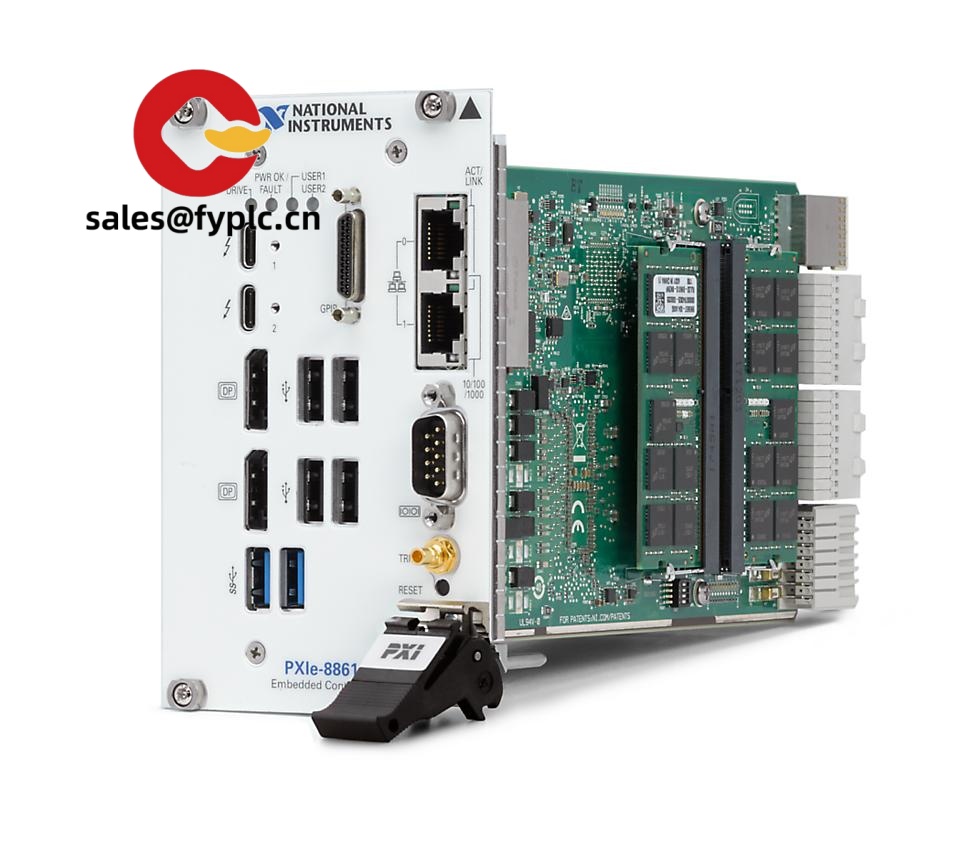
The NI PXIe-8861 is a 3U, 2‑slot PXI Express embedded controller designed to run your automated test, data acquisition, and HIL/real‑time simulation workloads inside a PXIe chassis. From my experience, it’s a solid fit when you need reliable Windows-based control with high-throughput PCIe backplane bandwidth and plenty of front-panel I/O for lab or production environments. It typically serves as the system controller, so you get tight synchronization with PXI modules and streamlined deployment—no external PC required.
Our Order Process & Guarantees
- Warranty: 365 days
- Delivery: 1 week for in‑stock items; no more than one month at the latest
- Payment: 50% advance payment; full payment before delivery
- Express options: FedEx, UPS, DHL
Key Features
- PXI Express system controller – Installs in the system slot to manage timing, synchronization, and data movement across the PXIe backplane.
- High-throughput PCIe backplane – Designed for multi‑gigabyte/s streaming between instruments and storage, useful for RF test and high‑channel‑count DAQ.
- Multiple front-panel I/O – Typically includes USB 3.x/2.0, dual DisplayPort, dual GbE, and an RS‑232 port for flexible lab connectivity.
- SSD-based storage – Fast boot and logging; easy to image and swap for maintenance or version control on production lines.
- Rugged 24/7 operation – Built for continuous use in PXIe chassis; fans and airflow match industrial cabinet deployments.
- Software ecosystem – Seamless with NI software stacks (LabVIEW, TestStand, drivers), which in many cases shortens test development cycles.
Technical Specifications
| Brand / Model | NI PXIe-8861 |
| HS Code | 847150 (Processing units for automatic data processing machines) |
| Power Requirements | Powered from PXI Express chassis backplane (no external power supply) |
| Form Factor / Dimensions & Weight | 3U, 2‑slot PXI Express embedded controller; fits PXIe system slot (weight is typically around 1.5 kg) |
| Operating Temperature | 0 °C to 50 °C (typical) |
| Signal I/O Types | USB 3.x/2.0, DisplayPort (video), Gigabit Ethernet, RS‑232 (serial); no native analog/digital measurement I/O |
| Communication Interfaces | PXI Express (PCIe) backplane connectivity, dual GbE (typical), multiple USB 3.x/2.0 ports, 1x RS‑232 |
| Storage | 2.5-inch SSD (SATA), factory-configured; field-replaceable for imaging or capacity changes |
| Installation Method | Installs in PXIe chassis system slot as the embedded controller; no host PC required |
Where it fits best
Teams typically pick the PXIe-8861 for mixed-signal ATE, RF validation, and endurance testing where you need sustained data logging to SSD and easy multi‑display support for operator stations. One thing I appreciate is how it simplifies cabinet wiring—USB instruments, barcode readers, and operator peripherals plug right into the front panel without a separate rack PC.
Related or Supporting Products
- NI PXIe-8840 – Earlier-generation controller; suitable for legacy Windows systems and moderate bandwidth needs.
- NI PXIe-8880 – Higher-end CPU performance for compute-heavy sequencing, large RF datasets, or parallel test.
- NI PXIe-1085 / PXIe-1095 chassis – High‑bandwidth PXIe chassis to fully utilize Gen 3 PCIe backplane performance.
- NI RAID/SSD expansion (e.g., NI 826x series) – For long-duration logging or higher write endurance compared to a single drive.
- USB‑GPIB adapters – If you need to control legacy GPIB instruments directly from the controller.
Installation & Maintenance
- Cabinet & airflow – Mount the PXIe chassis in a 19-inch rack with at least 50 mm front/rear clearance. Keep intake filters clean to maintain airflow through the controller’s cooling path.
- Power & grounding – Use a properly grounded supply to the chassis; avoid sharing circuits with high-noise loads. From my experience, this prevents intermittent Ethernet or USB dropouts.
- Wiring – Route DisplayPort and USB away from high-current lines. Use locking or panel-mount cables in production cells to reduce accidental disconnects.
- Software – Keep NI drivers, BIOS, and controller firmware current. Many issues are resolved by aligning NI‑DAQmx/RFmx versions with the controller image.
- Routine service – Quarterly dust removal with ESD‑safe methods; annual SSD health check and image backup. Replace SSDs proactively in high-duty cycles.
- Safety – De-energize the chassis before installing/removing the controller. Observe ESD precautions when handling modules and storage.
Quality & Certifications
- CE and UKCA compliant for EMC and safety (typical for NI PXIe controllers)
- UL/cUL listed; RoHS compliant
- Manufactured under ISO 9001 quality systems
- Manufacturer warranty: NI typically provides a limited hardware warranty (often 1 year) on new units; program terms may vary by region
You might notice that the PXIe-8861 balances performance and stability without forcing a full platform refresh—teams often drop it into existing PXIe chassis and see immediate gains in test throughput. If you plan to stream large datasets or drive multiple 4K displays, let us know your exact configuration and we can validate port counts, memory, and storage options before shipment.

Reviews
There are no reviews yet.