
Description
ABB TB5600-2ETH – Dual-Ethernet terminal base for reliable PLC/RTU networking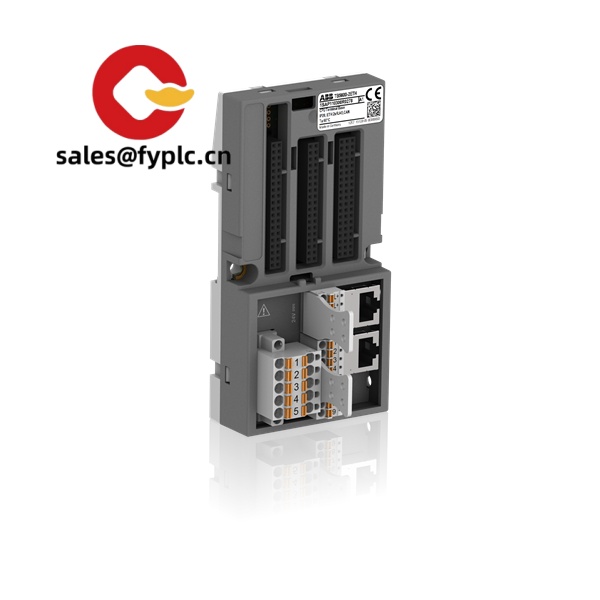
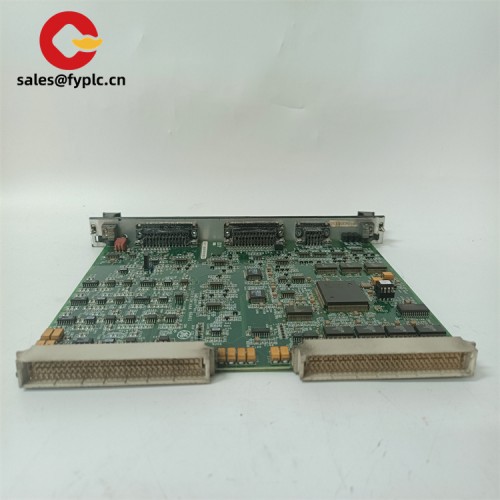
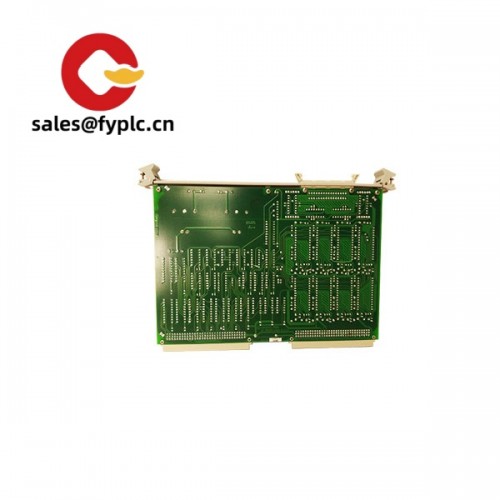
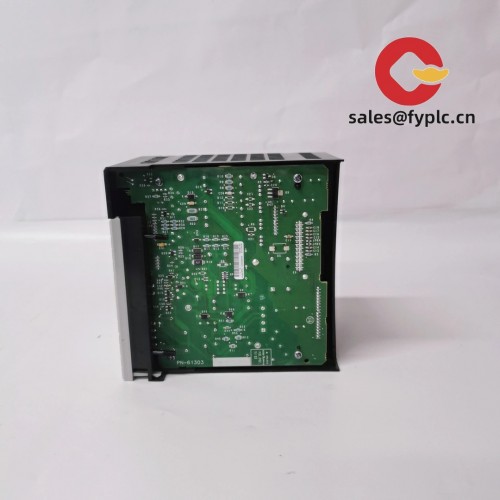
The ABB TB5600-2ETH is a dual-port Ethernet terminal base designed to give industrial controllers and remote terminal units a stable, redundant-ready network backbone. From my experience, it’s typically used in utility substations, process plants, and infrastructure nodes where you want simple DIN-rail installation and two copper Ethernet ports without overcomplicating the architecture. You might notice that projects pick it either for redundant uplinks (PRP/RSTP topologies) or to cleanly separate control and service networks on a compact footprint.
Our Order Placement Process and Guarantees
- Warranty: 365 days standard coverage
- Lead time: typically 1 week if in stock; no more than one month at the latest
- Payment terms: 50% advance; full payment prior to delivery
- Express delivery: FedEx, UPS, DHL available
Key Features
- Dual 10/100BASE‑TX Ethernet ports – Two RJ45 ports allow redundant links or segmentation of control and maintenance networks. In many cases this simplifies network resilience without adding extra switches.
- Compact terminal-base design – Fits cleanly on a 35 mm DIN rail, keeping panels tidy and serviceable. One thing I appreciate is the straightforward wiring and labeling.
- Utility-grade protocol friendliness – Common stacks such as Modbus TCP are typically supported; in utility automation it often pairs with IEC 60870‑5‑104 or DNP3 over TCP, depending on the controller firmware.
- 24 VDC power – Low power draw helps when cabinet budgets are tight and you need headroom for expansion.
- Industry-ready operating range – Built for control cabinets in harsh sites; appears to be suitable for most plant environments when properly ventilated.
- Maintenance-friendly – Status LEDs and a simple layout make fault tracing quick. Technicians usually appreciate that during commissioning nights.
Technical Specifications
| Brand / Model | ABB TB5600-2ETH |
| HS Code | 8537.10 (Boards/panels for electric control, ≤1000 V) |
| Power Requirements | 24 VDC nominal (typ. 19–30 VDC); consumption < 5 W in most cases |
| Dimensions & Weight | Approx. 110 × 100 × 35 mm; ~0.25 kg (typical for this form factor) |
| Operating Temperature | -20 to +60 °C (typical control-cabinet rating); 5–95% RH, non-condensing |
| Signal I/O Types | Ethernet networking only; no direct analog/digital field I/O on this base |
| Communication Interfaces | 2 × RJ45, 10/100BASE‑TX; auto‑MDI/MDI‑X; supports common IP protocols (e.g., Modbus TCP; many deployments use IEC 60870‑5‑104 or DNP3/TCP with appropriate controller firmware) |
| Installation Method | DIN‑rail (35 mm); panel mounting in standard industrial enclosures; front access to terminals |
| Protection / Enclosure | IP20 (cabinet use); keep clearances for airflow and cable bend radius |
Related or Supporting Products
- ABB TB5600‑1ETH – Single‑port variant for simpler networks where redundancy isn’t required (commonly chosen to reduce cost and panel space).
- ABB AC500 communication modules (e.g., CM592‑ETH) – If you need protocol‑specific links at the PLC level; these integrate at the controller rather than a terminal base.
- Industrial Ethernet switches (managed) – For ring or RSTP topologies; choose models with IGMP snooping if you run SCADA multicast.
- 24 VDC DIN‑rail power supplies – 30 W or higher to ensure headroom for additional modules and accessories.
Quick feedback from a recent substation retrofit: the dual‑port setup on TB5600‑2ETH let the team keep a service laptop online while the controller stayed on the SCADA VLAN—no temporary switch needed during FAT and SAT.
Installation & Maintenance
- Cabinet standards – Mount on a 35 mm DIN rail inside an IP54 (or better) enclosure when installed in dusty or humid areas. Maintain at least 25 mm clearance above/below for ventilation.
- Power & grounding – Use a regulated 24 VDC supply with proper protective earth. From my experience, adding a DIN‑rail surge protector reduces nuisance downtime in lightning‑prone sites.
- Networking – Use shielded CAT5e or better; terminate shields at one end to avoid ground loops. If you’re running rings, enable RSTP or the site’s redundancy protocol at the switch level.
- Safety precautions – De‑energize before wiring. Verify correct polarity and check for stray strands at terminals. Label both ports clearly if they serve different VLANs.
- Routine maintenance – Inspect connectors quarterly, clean dust with dry air, and confirm link speed/duplex in diagnostics. Firmware updates (when applicable via the host system) should be scheduled during planned outages.
- Commissioning tip – Validate both Ethernet links with loopback or a test switch, then document MAC addresses in the cabinet layout to speed up future troubleshooting.
Quality & Certifications
- CE compliant; RoHS-conform construction in most configurations
- Designed for industrial control cabinets; UL/cUL assessment common for this category
- Manufacturer’s warranty support aligned with our 365‑day coverage



Reviews
There are no reviews yet.