Description
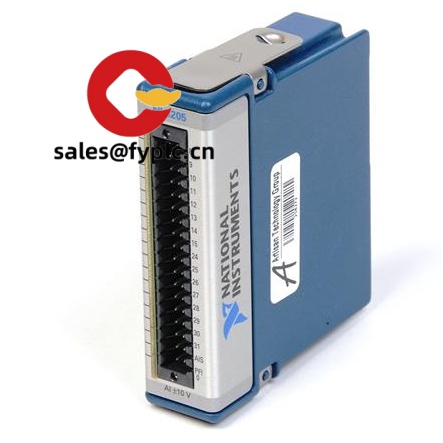
National Instruments USB-8451 USB-Powered I2C & SPI Master Interface Module
Technical Specifications
- Product Model: USB-8451
- Brand: National Instruments (NI)
- Warranty: One Year
- Input Voltage: Bus-powered via USB 2.0 port, 5V DC output terminal for external peripheral power supply
- Operating Temperature: 0°C to +45°C
- Storage Temperature: -40°C to +85°C
- Response Time: Microsecond-level serial frame transmission latency, real-time byte-by-byte data polling
- Protection Class: IP30 enclosed plastic housing for laboratory and bench environment
- Accuracy Class: Zero bit error rate for synchronous serial bus data transmission
- Output Frequency: Max 250 kHz I2C clock rate, Max 12 MHz SPI clock rate
- Rated Current Range: Limited USB bus draw, 500mA maximum 5V terminal power output
- Communication Interface: USB 2.0 Type-B host port, screw terminal block for I2C/SPI/GPIO wiring
- Supported Protocols: I2C, SMBus, SPI synchronous serial bus protocols
- Overload Capacity: ESD protection on signal terminals, reverse polarity prevention for 5V power rail, short-circuit current limiting
- Dimensions: 112mm × 72mm × 32mm compact benchtop enclosure
Product Overview
The USB-8451 is a portable USB 2.0 master communication interface designed by National Instruments for direct host-level communication with I2C, SMBus and SPI serial integrated circuits. It acts as a bridge between a Windows/Linux host PC and low-level serial peripheral chips, eliminating the need for embedded microcontroller hardware during IC validation, firmware debugging and circuit prototype testing.
This hardware addresses core limitations of fixed PCI/PCIe bus adapters and standalone MCU test setups. Its compact plug-and-play USB form factor allows direct placement close to the target circuit board, shortening I2C bus wiring length and drastically reducing electromagnetic noise-induced signal corruption. Eight independent general-purpose 3.3V digital I/O channels support auxiliary tasks such as device address selection, reset triggering and LED status indication, while the onboard regulated 5V power output can supply small test circuits without an external bench power unit. Compatible with LabVIEW, C/C++ and Python programming environments, it streamlines automated batch testing for sensor ICs, memory chips, ADC/DAC converters and embedded peripheral components.

Reviews
There are no reviews yet.