
Description
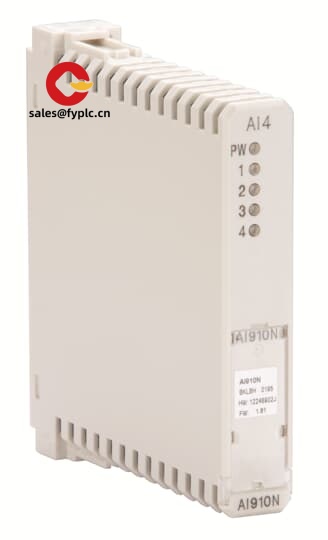
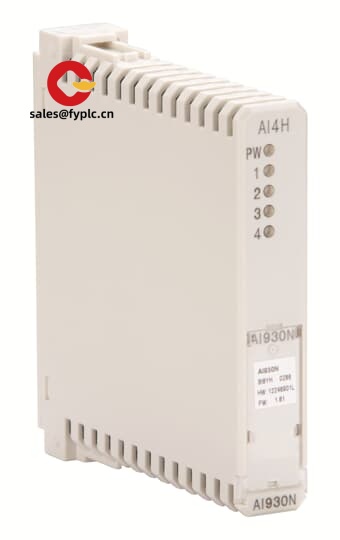
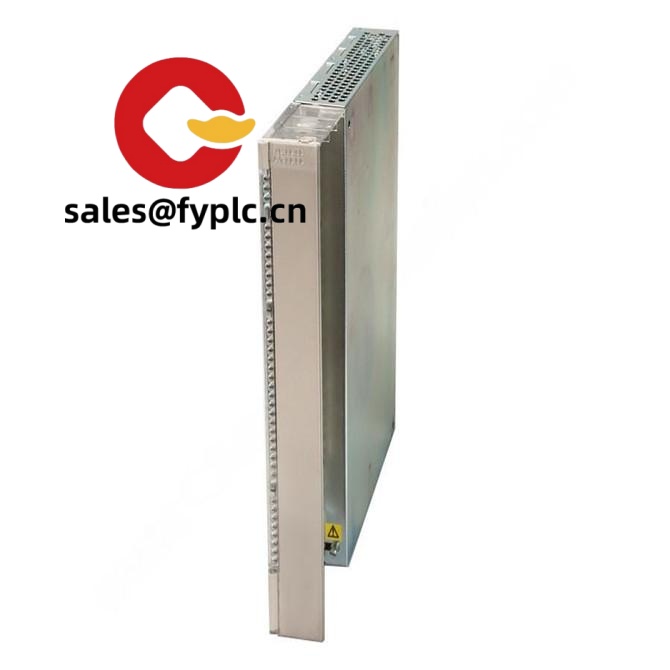
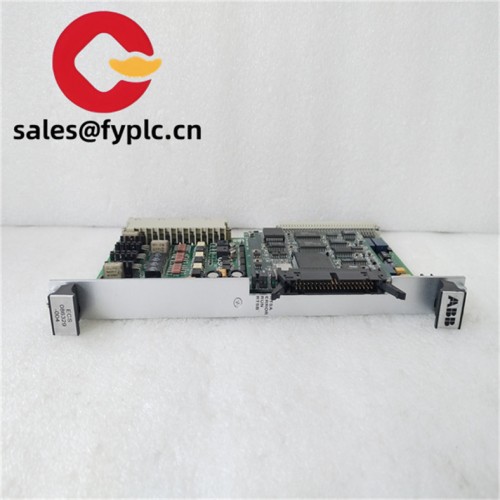
ABB AI910S – Precision Analog Input Module for DCS/PLC I/O Expansion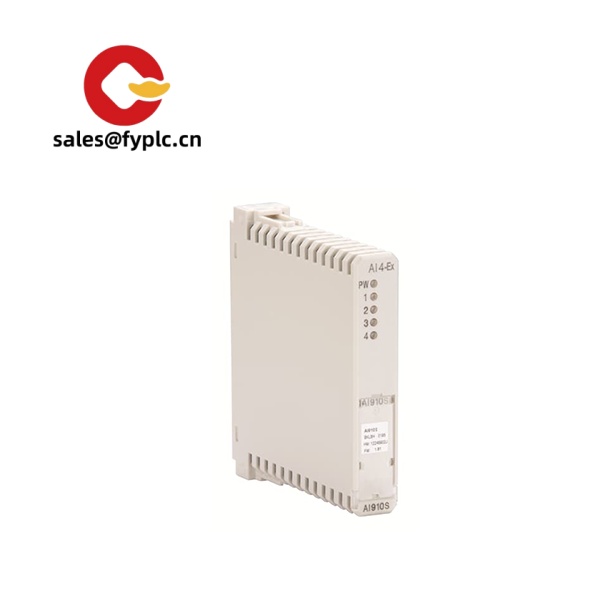
The ABB AI910S is designed for plants that need steady, accurate analog signal acquisition—think 4–20 mA transmitters and common process voltages—without complicating cabinet layouts. From my experience, this module slots neatly into ABB distributed I/O architectures and is typically used to bring temperature, pressure, flow, or position feedback into AC 800M / 800xA or Freelance-based systems. You might notice that it emphasizes reliability and straightforward commissioning rather than flashy features, which in many cases is exactly what keeps a line running.
Company’s Order Placement Process and Guarantees
- Warranty: 365 days coverage from delivery.
- Lead time: 1 week for in-stock items; no more than one month at the latest.
- Payment terms: 50% advance payment; full payment prior to delivery.
- Express options: FedEx, UPS, DHL—door-to-door, trackable.
Key Features
- Analog signal acquisition (mA/V): Suitable for common process transmitters; typically supports 4–20 mA and standard voltage ranges.
- Stable accuracy for process control: The AI910S is tuned for steady-state performance, which matters for closed-loop applications.
- Seamless ABB integration: Works within ABB DCS/PLC ecosystems, minimizing engineering time and reducing risk during expansions.
- DIN-rail, compact footprint: Helps retain cabinet space and simplifies wiring in crowded panels.
- Channel diagnostics: It appears that basic fault indication and channel health checks are available to speed up troubleshooting.
- HART passthrough (where configured): In many cases, the module can pass HART signals via the appropriate terminal/carrier hardware for device maintenance.
Technical Specifications
| Brand / Model | ABB AI910S |
| HS Code | 853890 (Parts suitable for electrical control equipment) |
| Power Requirements | 24 VDC nominal, typically supplied via system backplane/carrier |
| Signal Input/Output Types | Analog inputs (current/voltage); commonly 4–20 mA and standard V ranges; HART passthrough when paired accordingly |
| Communication Interfaces | Backplane/ModuleBus interface within ABB I/O rack or carrier system |
| Installation Method | DIN-rail mounted on ABB I/O base/carrier; field wiring via terminal blocks |
| Operating Temperature | Typically 0 to +55 °C (verify per site standard and enclosure rating) |
| Dimensions & Weight | Compact DIN-rail module; plant engineers usually treat it as a standard ABB I/O form factor for cabinet planning |
Application Fields
- Oil & gas skids: pressure, temperature, and flow transmitters aggregated to ABB DCS nodes.
- Water & wastewater: lift station monitoring, dosing control, and reservoir level feedback.
- Chemicals & pharma: stable analog capture where gradual trends matter more than peak detection.
- Power & utilities: boiler, balance-of-plant, or auxiliary systems requiring reliable 4–20 mA inputs.
- F&B and packaging: line utilities (steam, air, cooling) and utility energy metering inputs.
Advantages & Value
- Reliability first: The AI910S seems to be built for continuous duty—fewer nuisance trips, less chasing ghosts at 2 a.m.
- Interoperability: Fits into ABB control stacks with minimal engineering changes, which typically lowers commissioning cost.
- Lifecycle support: Documentation, firmware, and spares are well-structured in ABB’s ecosystem.
- Cost-of-ownership: Stable modules reduce callouts and speed up troubleshooting, saving both labor and downtime.
Field note: “We swapped in AI910S units on a water treatment train. Trending stabilized immediately and our calibration intervals stretched out to semiannual. Wiring was straightforward on the DIN carriers.” — Maintenance Lead, municipal WTP
Installation & Maintenance
- Cabinet & environment: Install in a ventilated, dry enclosure; follow typical panel practices (IP-rated cabinet, segregated low-voltage and signal wiring).
- DIN-rail & carrier: Mount on the correct ABB I/O base/carrier; ensure proper backplane engagement and locking tabs are seated.
- Wiring: Use shielded twisted pair for analog runs; ground one end per site standard; avoid running alongside VFD outputs.
- Power: Provide clean 24 VDC to the I/O rack; consider redundant supplies for critical loops.
- Safety: De-energize before insertion/removal; label channels; verify ranges prior to loop check.
- Routine maintenance: Periodic loop calibration (typically 6–12 months), connector check/retightening, and reviewing diagnostics. Apply firmware updates where applicable through approved ABB tools.
Quality & Certifications
- CE conformity and RoHS compliance are typically met for ABB I/O modules.
- UL/CSA listings available on regional variants; confirm against your site compliance list.
- Manufactured under ISO 9001 quality systems.
- Standard manufacturer’s warranty policy applies; extended coverage available on request.
Common Supporting Components
- ABB I/O carriers/terminal bases: DIN-rail bases for module seating and field termination.
- Shielded analog cable (twisted pair): For long runs or noisy environments, especially near drives or heavy switching.
- 24 VDC redundant power supplies: Stabilizes the backplane and mitigates single-point failures.
- HART modem/tools (when used): Enables device parameterization through the analog channel infrastructure.

Reviews
There are no reviews yet.