

Description
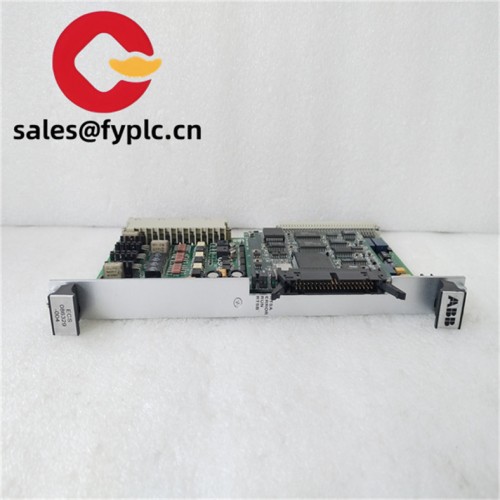
ABB REJ601 BD446NN1XG – Advanced Feeder Protection Relay for Medium-Voltage Applications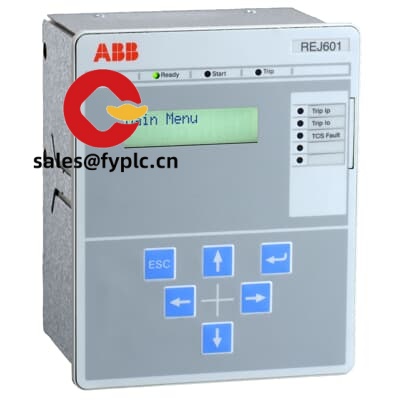
If you’re working on medium-voltage substation automation or distribution networks, the ABB REJ601 BD446NN1XG typically stands out as a solid choice. It’s not just another protection relay—it’s built to handle feeder protection with precision, especially in industrial plants and utility substations where uptime matters. From my experience, engineers tend to appreciate how it balances modern communication features with rugged reliability in demanding electrical environments.
Key Features
- Comprehensive protection functions: Offers overcurrent, earth fault, thermal overload, and breaker failure protection—commonly used in motor and cable protection schemes.
- IEC 61850 compliance: Supports GOOSE messaging and IEC 61850-8-1 communication, which simplifies integration into digital substations. One thing I appreciate is how smoothly it interfaces with SCADA systems.
- Dual Ethernet ports: Enables redundant network topologies (ring or star), improving data availability during network disturbances.
- Local HMI with graphical display: Makes configuration and diagnostics more intuitive, especially when troubleshooting under time pressure.
- Firmware upgradable: Field updates are supported via USB or network, helping extend service life without hardware swaps.
Technical Specifications
| Parameter | Specification |
|---|---|
| Brand / Model | ABB / REJ601 BD446NN1XG |
| HS Code | 85371090 |
| Power Supply | 88–264 V AC/DC, typical draw ~15 W |
| Dimensions (H×W×D) | 240 × 170 × 155 mm (fits standard 19″ panel) |
| Weight | Approx. 2.8 kg |
| Operating Temperature | -25°C to +70°C (storage up to +85°C) |
| Signal Inputs | 4 analog inputs (CTs), 16 binary inputs (24–250 V DC) |
| Outputs | 8 relay outputs (form C), rated 8 A |
| Communication Interfaces | Dual Ethernet (IEC 61850-8-1), RS485 (Modbus RTU), USB port |
| Installation Method | Panel-mounted (front-fixing), compatible with 19″ cabinets |
Application Fields
This unit shows up most often in medium-voltage switchgear protecting feeders in mining operations, water treatment plants, and regional power distribution grids. You might notice that it’s particularly common in retrofit projects where legacy systems are being upgraded to support IEC 61850 but still need physical relay-style outputs. It also works well in ring-main units and compact secondary substations where space and communication flexibility both matter.
Advantages & Value
Procurement teams often highlight its long-term availability and ABB’s global support footprint. In many cases, switching to this model reduces spare part fragmentation because it consolidates multiple protection functions into one device. The dual Ethernet ports mean less dependency on external switches, potentially cutting cabinet costs. And since firmware can be updated remotely, field visits for logic changes become less frequent—something maintenance managers usually welcome.
Installation & Maintenance
Mounting requires a standard 19-inch panel cutout, and ventilation should allow at least 50 mm clearance on each side. Make sure the control cabinet meets IP54 standards if deployed outdoors. Wiring should follow ABB’s separation guidelines between high- and low-voltage paths to avoid noise coupling. For safety, always disconnect auxiliary power before servicing. Routine checks every 12–18 months typically include contact resistance testing, cleaning dust filters, and verifying time synchronization accuracy. Firmware updates are recommended when new versions address known issues—usually released through ABB’s portal.
Quality & Certifications
The REJ601 carries CE, UL 508, and IEC 60255 certifications, confirming its compliance with international protection relay standards. It’s also RoHS compliant, which helps with environmental compliance in EU markets. The manufacturer offers a standard warranty period of 365 days, covering defects in materials and workmanship under normal operating conditions.

Delivery is typically within one week for in-stock units, though lead times won’t exceed one month even during supply constraints. Payment terms require 50% upfront, with full balance due prior to shipment. We ship via FedEx, UPS, or DHL depending on destination and urgency—no customs surprises thanks to accurate HS code classification.



Reviews
There are no reviews yet.