
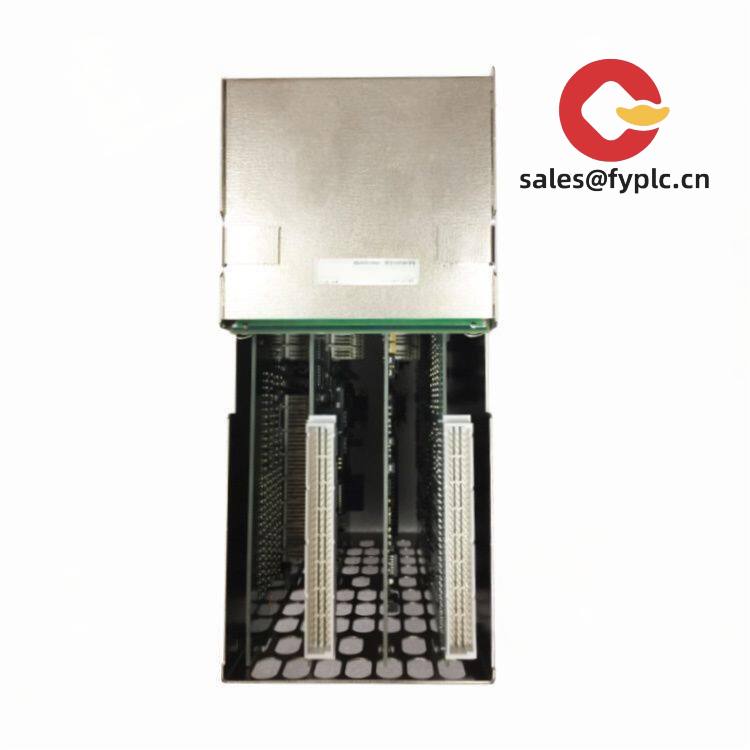
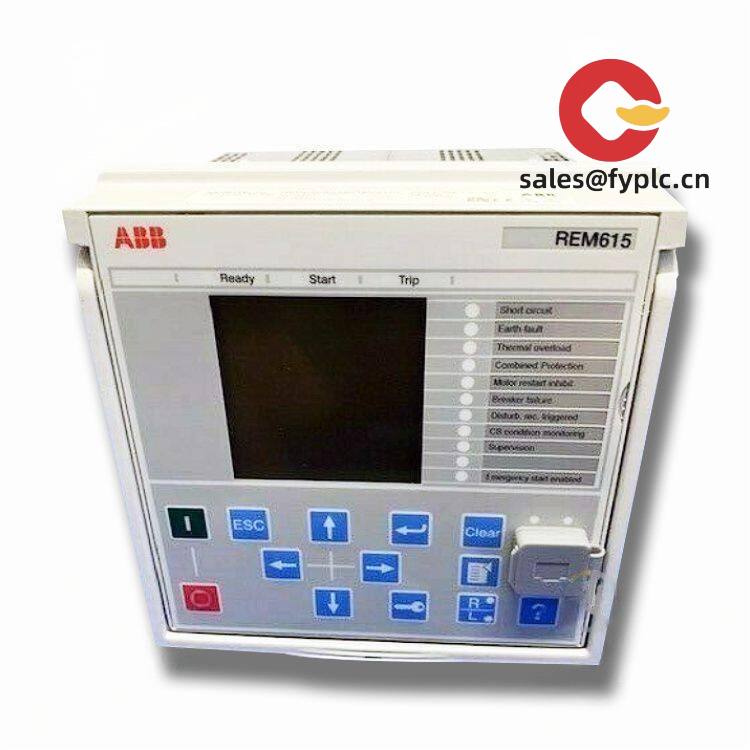

Description
ABB REM620 – High-Performance Protection Relay for Power Substations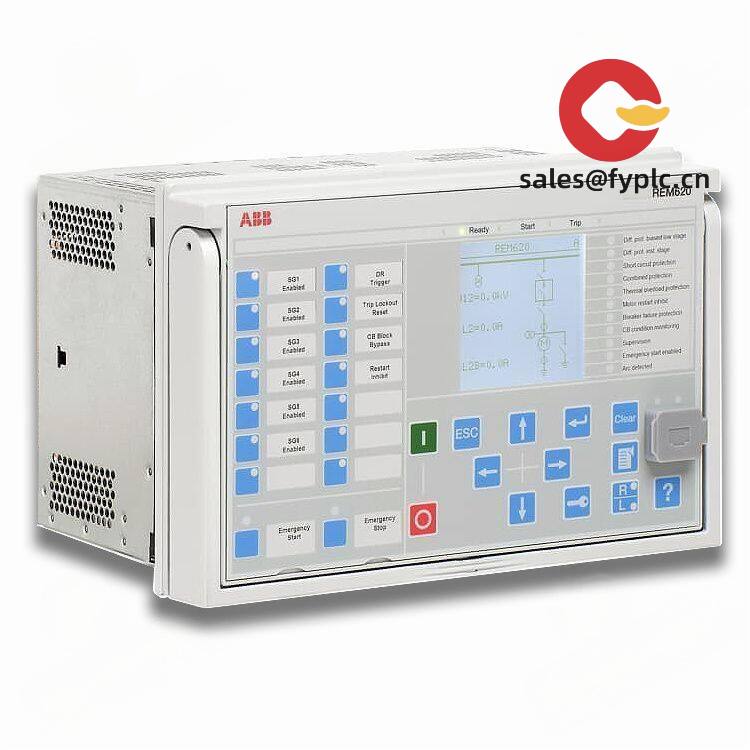
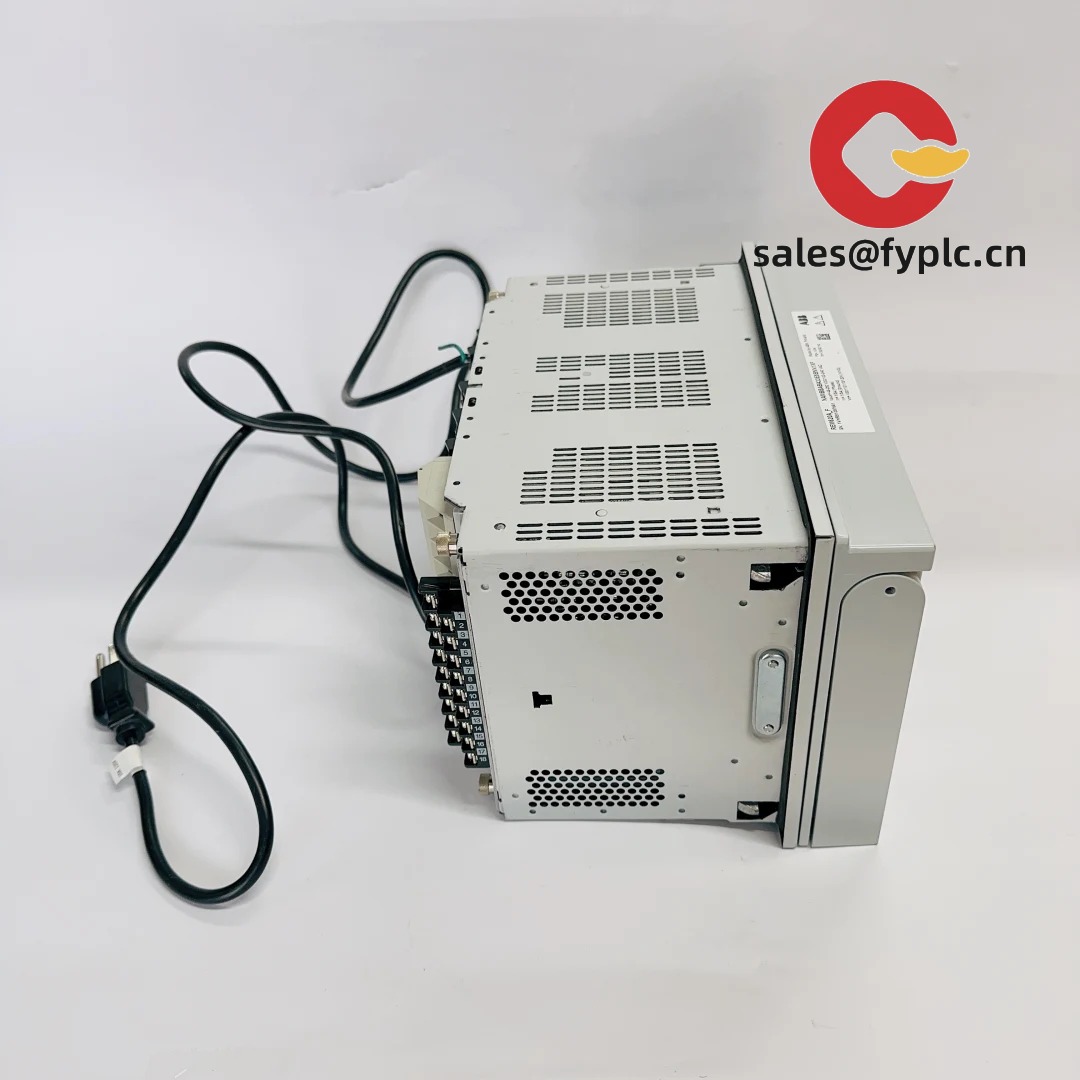
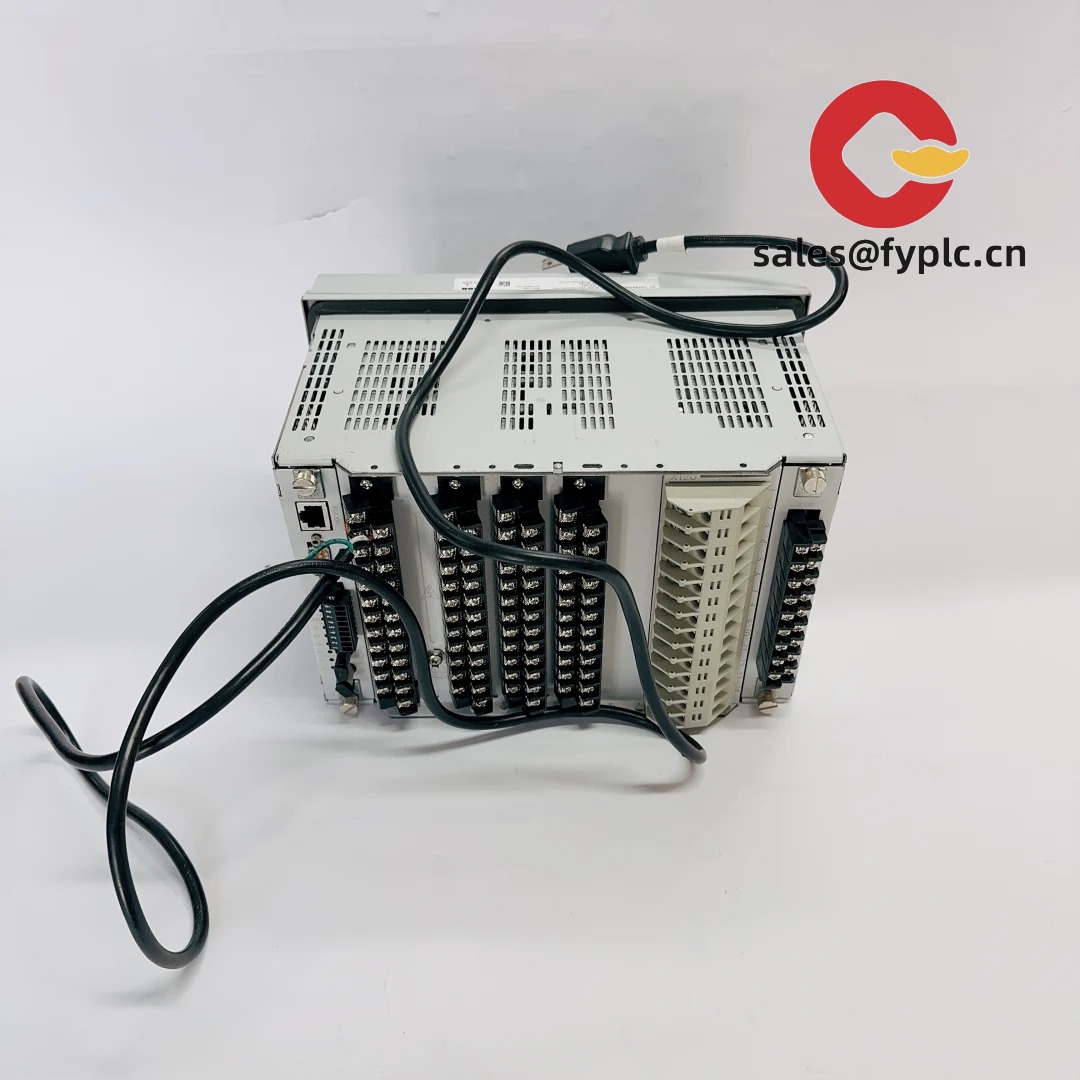
If you’re managing medium to high-voltage substations, the ABB REM620 is one of those relays that tends to show up where reliability really matters. It’s designed primarily for transformer protection, but from what I’ve seen in the field, it’s also being used effectively on busbars and even some generator applications—especially where differential protection schemes are needed.
Key Features
- Transformer & Busbar Protection: Built around a robust algorithm set, it handles differential, overcurrent, and thermal overload protection with minimal tuning.
- Dual-Core Processor Architecture: One core manages protection logic while the other handles communication and HMI tasks—so there’s no lag during fault events.
- IEC 61850 Compliance: Supports GOOSE messaging and Sampled Values, which makes integration into modern digital substations smoother than older REM models.
- Front Ethernet & Serial Ports: You might notice that having both fiber and copper Ethernet options simplifies retrofitting in cabinets where space or EMI is a concern.
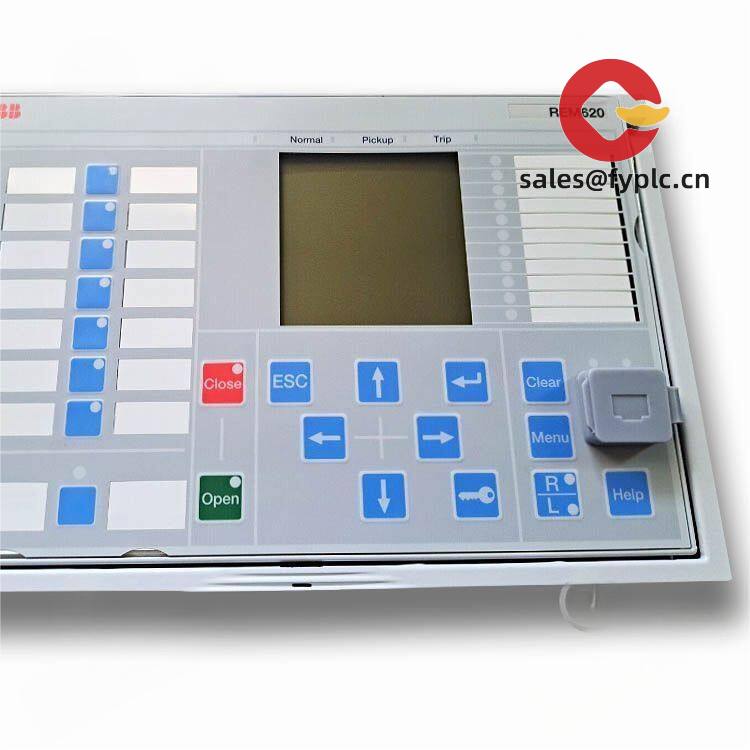
- Local HMI with Graphical Display: The 5.7” color screen isn’t just easy to read—it allows engineers to view real-time phasor diagrams without needing a laptop.
Technical Specifications
| Parameter | Specification |
|---|---|
| Brand / Model | ABB / REM620 |
| HS Code | 85371090 |
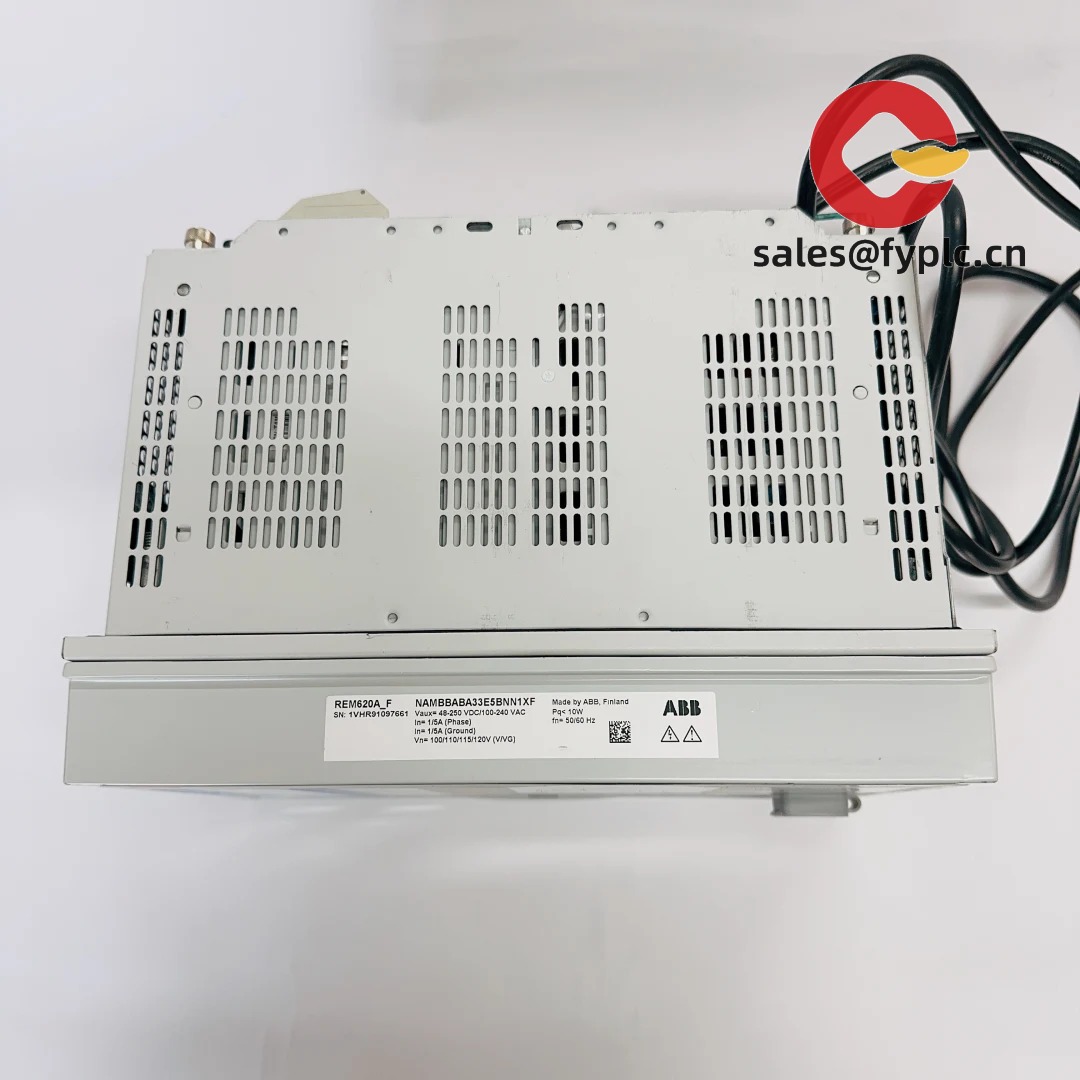
| Power Requirements | 88–264 VDC or 85–265 VAC, auto-ranging |
| Dimensions (H×W×D) | 270 × 185 × 120 mm |
| Weight | Approx. 3.1 kg |
| Operating Temperature | -25°C to +70°C (storage up to +85°C) |
| Signal Input/Output Types | Analog: CT/VT inputs; Digital: 16+ binary inputs, 12 relay outputs |
| Communication Interfaces | 2× Ethernet (RJ45/fiber), 2× RS-485, USB host port |
| Installation Method | Panel-mounted (19” rack compatible), front terminal block |
Application Fields
The REM620 typically shows up in transmission and distribution substations, especially where two-winding or three-winding transformers need fast, secure tripping during internal faults. In many cases, utilities have deployed it alongside IEC 61850-based SCADA systems because of its strong GOOSE performance—reducing reliance on hardwired interlocks. Some wind farm operators have also adopted it for step-up substation protection due to its immunity to voltage transients.
Advantages & Value
One thing I appreciate is how well this unit plays with legacy ABB ecosystems—migrating from an older REL or RED device usually means less re-engineering. From a procurement standpoint, its long-term availability (ABB has committed to support through at least 2035) reduces lifecycle risk. Also, firmware updates are modular, so you’re not bricking the whole relay just to patch a communication bug.
While it’s not the cheapest option out there, the reduction in engineering hours during commissioning often offsets the initial premium. And if your team already uses PCM600, configuration time drops significantly.
Installation & Maintenance
Install in a standard 19” switchgear panel with adequate ventilation—don’t stack it directly under heat-generating devices like power supplies. Make sure AC and DC wiring are separated by at least 100 mm to avoid noise coupling. Grounding should follow ABB’s star-point recommendation to prevent circulating currents.
For maintenance, schedule annual visual inspections and clean air vents gently with dry compressed air. Calibration checks every 3–5 years seem sufficient unless operating in harsh environments. Firmware updates are best done during planned outages—always back up settings first using PCM600.
Quality & Certifications
The REM620 carries CE, UL 508, CSA, and IEC 60255 certifications, and meets environmental standards per IEC 60068. It’s RoHS compliant and tested against severe EMI conditions typical in industrial plants. ABB backs it with a standard 365-day warranty covering parts and labor, extendable under service agreements.
A client in Norway recently mentioned they’d replaced three aging electromechanical relays with REM620 units across their hydro site—and cut fault response time by nearly 40%. That kind of real-world impact tends to justify the investment pretty quickly.



Reviews
There are no reviews yet.