
Description
Allen‑Bradley 1404‑M405A‑DNT PowerMonitor 3000 – DeviceNet multifunction power and energy meter for industrial panels and MCCs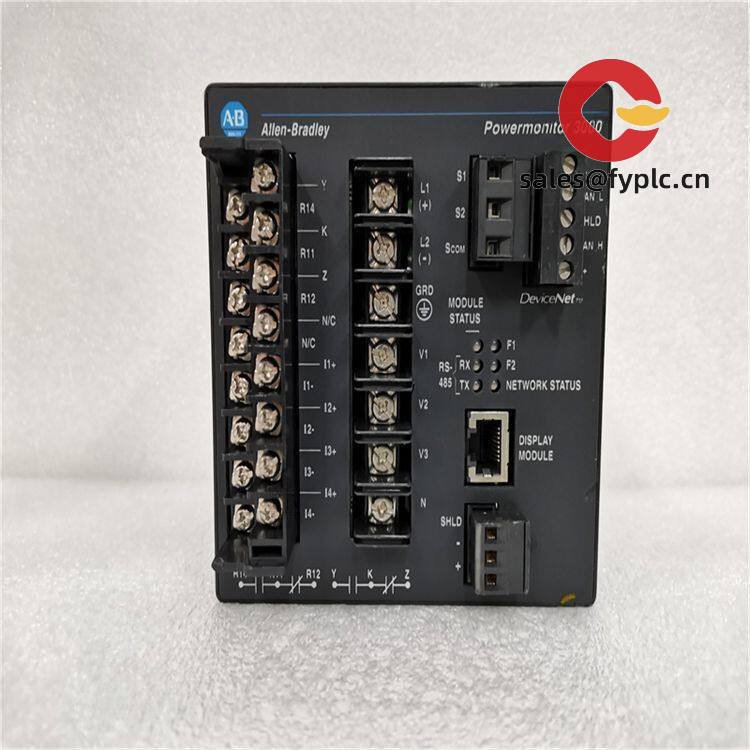
The Allen‑Bradley 1404‑M405A‑DNT is a PowerMonitor 3000 series meter that measures three‑phase electrical parameters and exposes them over DeviceNet. From my experience, it’s a solid fit when you need reliable power and energy data straight into your DeviceNet architecture without bolting on protocol converters. You get real‑time values like V, I, kW, kVA, kVAR, PF, demand, and accumulated energy, with CT (0–5 A) and PT/voltage inputs designed for typical 480 V systems (and higher via PTs). One thing I appreciate is how quickly maintenance teams can map key parameters into a PLC and start trending demand peaks and harmonizing alarm events—usually in a single shift.
Company’s Order Placement Process and Guarantees
- Warranty: 365 days
- Delivery time: 1 week for in‑stock items; no more than one month at the latest
- Payment terms: 50% advance payment; full payment before delivery
- Express options: FedEx, UPS, DHL
Key Features
- DeviceNet communications (-DNT): Native DeviceNet interface for straightforward integration with existing Rockwell/DeviceNet networks, typically supporting 125/250/500 kbps.
- Comprehensive power metering: Measures V, I, kW, kVA, kVAR, PF, frequency, demand, and energy—useful for cost allocation and load profiling.
- CT/PT friendly inputs: 0–5 A current inputs and voltage inputs suitable for 480 V systems (and higher using PTs) in 3‑phase, 3‑ or 4‑wire configurations.
- Alarms and pulses: Configurable thresholds with pulse/alarm outputs for demand control or energy pulsing to external counters.
- Industrial build: Designed for panel and MCC environments, typically 0…55 °C operation with robust terminal connections.
- Scalable monitoring: Works as a plant‑wide energy node; you can build dashboards in your PLC/HMI without separate gateways.
Technical Specifications
| Brand / Model | Allen‑Bradley 1404‑M405A‑DNT (PowerMonitor 3000, DeviceNet) |
| HS Code | 902830 (Electricity meters) |
| Power Requirements | 85–265 Vac, 47–63 Hz; or 110–300 Vdc (typical for this series) |
| Operating Temperature | 0 to 55 °C (non‑condensing environment) |
| Signal Input / Output Types | Voltage inputs (3‑phase, PT capable); current inputs 0–5 A via CTs; digital status inputs; pulse/alarm output |
| Communication Interfaces | DeviceNet (isolated, selectable baud rate; typical node addressing 0–63) |
| Installation Method | Panel/cabinet mounting on backplate; CT/PT wiring to screw terminals; suitable for MCC buckets and control panels |
| Dimensions & Weight | Compact PowerMonitor 3000 form factor; approximately 140 × 110 × 75 mm; ~0.9 kg (varies slightly by option) |
Application Fields
Typical use cases include energy monitoring in automotive assembly lines, power distribution in food & beverage plants, and load studies in mining or metals. You might notice that MCC retrofits go smoothly—install the meter in the bucket, loop CTs, tie PTs or direct voltage inputs, then map DeviceNet objects into the PLC. Many facilities also use it for sub‑metering individual production cells to allocate energy costs per shift or SKU.
- Switchgear and MCC power monitoring
- Sub‑metering for production lines and utilities (compressed air, chillers, etc.)
- Demand management and peak shaving control
- Power quality visibility for maintenance teams (basic PQ trends)
Advantages & Value
- Native DeviceNet: No gateway needed—saves engineering time and reduces failure points.
- Compatibility: Works cleanly with Rockwell PLCs and common DeviceNet scanners; standard object mapping in most cases.
- Reliability: Industrial‑grade hardware that holds up in MCC environments; fewer nuisance dropouts when the network is properly terminated.
- Cost savings: Energy transparency typically delivers quick wins on demand charges and idle load reduction.
- Supportability: Widely adopted platform; documentation and spares are straightforward to source.
A maintenance lead told us they replaced an older meter with the 1404‑M405A‑DNT in a 480 V MCC and had it reporting demand and energy pulses to their PLC within an hour—no surprises on addressing or baud rate.
Installation & Maintenance
- Panel environment: Mount on a rigid backplate in a clean, dry enclosure. Provide ventilation; avoid sources of electrical noise where possible.
- Wiring practices: Use CTs with 0–5 A secondary and shorting blocks. Keep CT/voltage leads twisted and shielded; land shields at one end only to minimize noise.
- DeviceNet rules: Maintain correct trunk/drop topology, 120 Ω termination at each end, and keep within segment length for the selected baud rate. Assign a unique node address.
- Safety: De‑energize circuits, verify absence of voltage, and observe CT shorting before disconnecting. Follow local electrical codes.
- Routine checks: Verify terminal torque periodically, clean dust buildup, and review demand/energy logs quarterly. Re‑calibration intervals depend on site QA policy; annually is common in many cases.
- Firmware/config: Keep a backup of meter settings; when manufacturer updates are available, schedule controlled firmware updates during downtime.
Quality & Certifications
- CE compliant
- cULus Listed
- RoHS compliant
- Manufacturer’s warranty: 12 months


Reviews
There are no reviews yet.