
Description
Allen‑Bradley 1746-BAS BASIC Module for SLC 500 – ASCII/Serial Integration and Offloaded Logic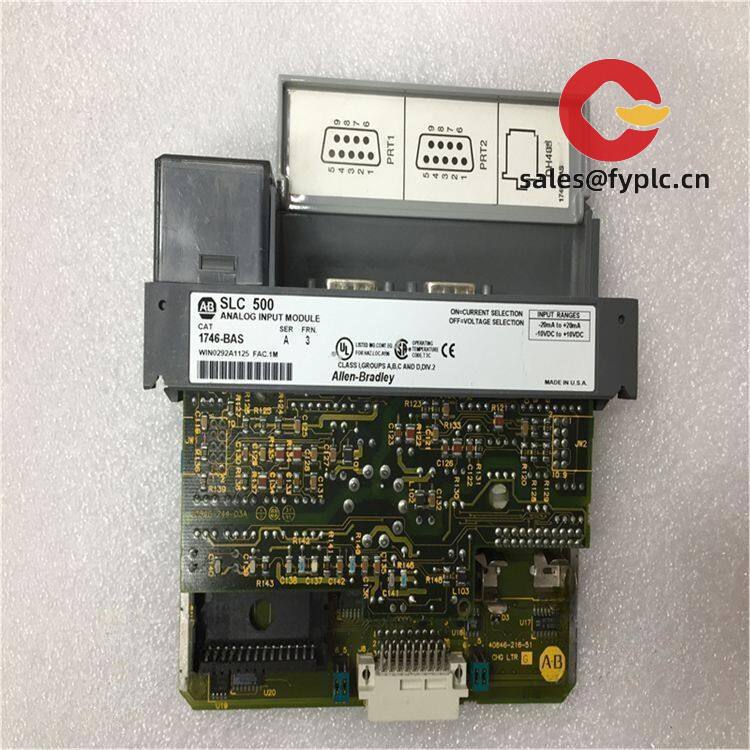
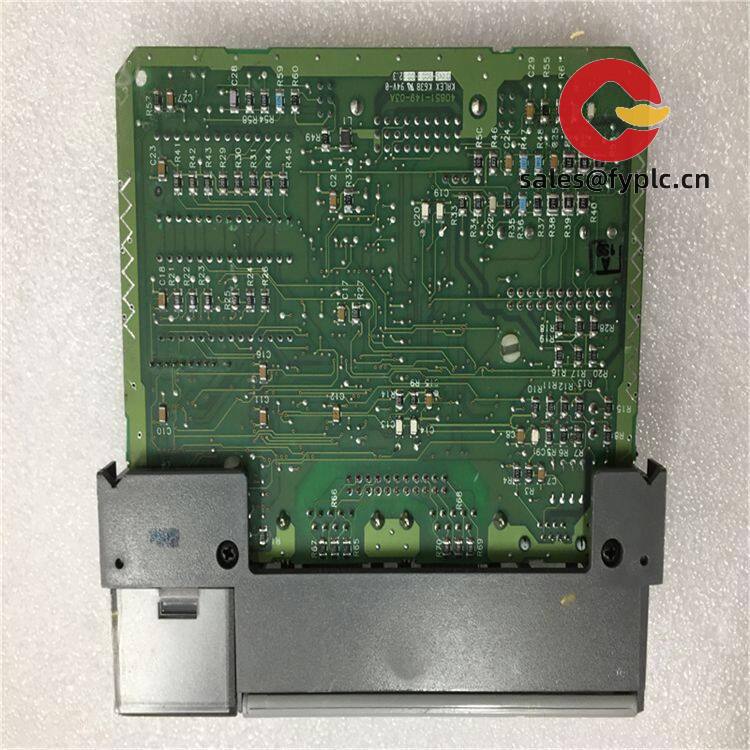
The Allen‑Bradley 1746-BAS is a BASIC language module for the SLC 500 platform designed to handle ASCII devices and custom logic without overloading the main CPU. From my experience, it’s a practical way to integrate barcode scanners, weigh scales, printers, and other serial peripherals directly into an SLC 500 system—especially where simple protocol parsing or string handling is needed. One thing I appreciate is how it offloads math and data manipulation, so scan times on the main controller typically stay consistent even as serial traffic grows.
Company’s Order Placement Process and Guarantees
- Warranty: 365 days
- Lead time: 1 week if in stock; no more than one month at the latest
- Payment terms: 50% advance payment; full payment prior to delivery
- Express options: FedEx, UPS, DHL
Key Features
- BASIC Language Runtime – Write and execute BASIC programs inside the module to parse ASCII, perform math, and handle custom routines.
- Serial/ASCII Connectivity – Typically used to connect barcode readers, label printers, weigh scales, or legacy instruments that talk ASCII.
- Offloads CPU Tasks – Moves string handling and protocol parsing off the SLC CPU, which in many cases helps keep ladder scan times stable.
- Tight SLC Integration – Exchanges data with the controller via M0/M1 files and status commands for reliable handshaking.
- Flexible Data Handling – Floating‑point math, buffers, and string functions make custom data formatting straightforward.
- Development via Serial Terminal – Program and debug over a serial terminal session; simple to test line‑by‑line logic.
- Standard 1746 Form Factor – Installs in a single slot of a 1746 chassis alongside your existing SLC I/O and specialty cards.
Technical Specifications
| Brand / Model | Allen‑Bradley 1746-BAS (SLC 500 BASIC Module) |
| HS Code | 8537.10 (Programmable controller equipment) |
| Power Requirements | 5 VDC supplied by 1746 chassis backplane (single‑slot module) |
| Operating Temperature | 0 to 60 °C (32 to 140 °F), typical SLC 500 rating |
| Signal Input/Output Types | Asynchronous serial (ASCII); no discrete or analog points |
| Communication Interfaces | Serial terminal connection for programming; ASCII ports for external devices (RS‑232 levels in most cases) |
| Installation Method | Plugs into a 1746 SLC chassis slot; data exchange via M0/M1 files with the SLC CPU |
| Dimensions & Weight | Standard 1746 single‑slot module form factor; approximate weight ~0.3 kg |
| Platform Compatibility | SLC 500 systems using 1746 chassis (e.g., 1746‑A4/A7/A10/A13 with suitable 1746‑P series supplies) |
Application Fields
Typically deployed wherever an SLC 500 needs to talk to ASCII or proprietary serial devices. You might notice it’s especially helpful in:
- Discrete manufacturing: barcode/2D code scanning for WIP tracking and label printing
- Food & beverage: weigh scale capture and recipe data formatting to printers
- Warehouse & logistics: direct serial printer control and scanner aggregation
- Process skids: parsing ASCII strings from analyzers or lab instruments to SLC tags
- Legacy integration: bridging older serial‑only devices into modern SCADA/HMI via the SLC
Advantages & Value
- Reliability – Mature, well‑documented module with predictable behavior in SLC environments.
- Compatibility – Fits standard 1746 chassis and works alongside existing SLC I/O with minimal program changes.
- Cost Savings – Eliminates separate protocol gateways when the requirement is straightforward ASCII parsing or printing.
- Technical Efficiency – Offloads heavy string handling so the main CPU scan typically remains stable under load.
A maintenance supervisor recently shared that adding a 1746‑BAS for printer control “cleaned up” their ladder program—fewer rungs, fewer timeouts, and far easier troubleshooting when a printer cable goes bad.
Installation & Maintenance
- Panel/Cabinet: Mount the 1746 chassis in a clean, dry, ventilated cabinet; maintain ambient 0–60 °C with adequate airflow.
- Slotting: Install the 1746‑BAS in any available single slot; verify keying and ensure the PSU capacity is sufficient for the added backplane load.
- Wiring: Use shielded serial cables for longer runs; tie shields at one end to reduce ground loops. Keep serial and power wiring separated.
- Program Integration: Exchange data through M0/M1 files; implement simple status bits/handshake to avoid buffer overruns.
- Maintenance: Periodically check connectors for looseness/oxidation; back up BASIC programs. If using battery‑backed storage, replace batteries on the recommended interval.
- Firmware/Tools: Keep your terminal/emulation tools consistent across updates; label serial settings (baud, parity, stop bits) inside the panel door for quick service.
Quality & Certifications
- Certifications: CE and UL/cUL (typical for SLC 500 modules); CSA availability depending on series
- Manufacturing standards consistent with Rockwell Automation quality systems
- Warranty: 365 days

Reviews
There are no reviews yet.