
Description
Anritsu MT8803G Radio Communication Analyzer – One-box 2G/3G terminal testing for production and service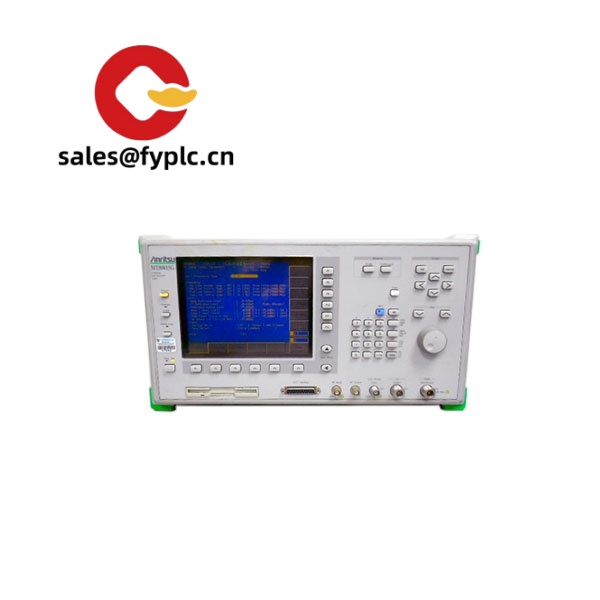
The Anritsu MT8803G is a proven radio communication analyzer designed for multi-standard cellular testing on a single bench. From my experience, it shines when you need reliable RF and signaling tests across 2G/3G formats (GSM/GPRS/EDGE, W‑CDMA/HSPA, CDMA2000/1xEV‑DO depending on installed options) without juggling multiple instruments. Typical use cases include handset repair and refurbishment lines, RF module bring-up, and production QA where fast call setup, Tx/Rx verification, and repeatable measurements matter more than flashy extras.
One thing I appreciate is how quickly it establishes a call and walks through core tests—output power, modulation quality, frequency error, and receiver sensitivity—so your team can catch drift early and keep yields predictable. You might notice that its signaling-based workflow reduces script complexity; GPIB control and straightforward SCPI-style commands keep automation simple in most cases.
Order Placement Process & Guarantees
- Warranty: 365 days
- Delivery: 1 week if in stock; no more than one month at the latest
- Payment: 50% advance; full payment before delivery
- Express: FedEx, UPS, DHL
Key Features
- Multi-standard cellular testing – Supports 2G/3G formats via option units (GSM/GPRS/EDGE, W‑CDMA/HSPA, CDMA2000/1xEV‑DO); ideal for mixed-technology repair benches.
- Signaling-based call processing – Place/receive calls and execute TX/RX tests under controlled conditions; typically shortens test time for go/no‑go checks.
- Integrated RF generator and analyzer – One-box solution for output power, modulation quality, frequency error, and sensitivity/BER/BLER checks.
- Production-friendly automation – GPIB/remote control with clear command sets; logging and limit checks streamline pass/fail workflows.
- Modular options – Add only the air-interface options you need; in many cases modules can be field-installed to adapt to changing models.
- Robust RF I/O – 50 Ω N‑type RF ports and audio/trigger I/O for stable, repeatable cabled measurements.
- Stable, repeatable results – Power and EVM accuracy that, in typical labs, reduces re-runs and technician time.
Technical Specifications
| Brand / Model | Anritsu MT8803G Radio Communication Analyzer |
| HS Code | 9030.40 (Instruments specially designed for telecommunications testing) |
| Power Requirements | AC 100–240 V, 50/60 Hz (auto-ranging) |
| Dimensions & Weight | Bench-top chassis, 19-inch rack-mountable; approx. 426 (W) × 221 (H) × 451 (D) mm, ~20 kg typical |
| Operating Temperature | +5 to +40 °C, ≤85% RH non-condensing (typical lab conditions) |
| Signal I/O Types | RF 50 Ω (N‑type), audio I/O, trigger I/O, 10 MHz reference in/out (depending on configuration) |
| Communication Interfaces | GPIB (IEEE‑488.2) and RS‑232C standard; LAN available on certain configurations |
| Installation Method | Bench-top use or 19-inch rack mounting with bracket kit |
Related or Supporting Products
- Anritsu MT8820C – Newer universal radio communication test set with broader standard coverage (adds LTE) and faster measurement throughput; a common upgrade path if you’re moving into 4G.
- Anritsu MT8815B – Earlier generation 2G/3G tester; similar concept but typically slower call setup and fewer automation refinements compared with MT8803G.
- Anritsu MT8821C – For LTE/LTE‑A signaling tests; choose if you primarily need 4G coverage and a modern API.
- RF accessories – Low‑loss N‑type test cables, attenuators, 10 MHz reference distribution amps, and shield boxes for stable over‑the‑cable testing in production.
Feedback from a repair depot manager was fairly simple: “We swapped an aging MT8815B for an MT8803G and shaved minutes off each device—call setup is snappier and the pass/fail script is easier to maintain.” That seems to be a common pattern when teams consolidate instruments.
Installation & Maintenance
- Environment – Place on a stable bench or rack; allow at least 50 mm clearance around vents for airflow; typical lab temperature 5–40 °C.
- Power & grounding – Use a grounded AC outlet and keep RF shields/grounds consistent to reduce measurement variance.
- Cabling – Use high‑quality 50 Ω N‑type cables and fixed attenuators to protect the RF input; avoid repeated bending to maintain cable phase stability.
- RF hygiene – Prefer shield boxes in production to minimize radiated interference and improve receiver sensitivity repeatability.
- Calibration – Annual calibration is typical for production lines; verify power accuracy after major moves or cable changes.
- Firmware – Keep firmware at a consistent revision across stations; from my experience that reduces edge‑case script failures.
- Dust & cooling – Clean intake filters periodically and avoid blocking side/rear fans to maintain thermal stability.
Quality & Certifications
- CE marking; RoHS and WEEE compliant (typical for Anritsu bench instruments)
- Manufactured under ISO 9001 quality systems
- 365‑day warranty provided by us; manufacturer policies may vary by region and configuration

Reviews
There are no reviews yet.