
Description
Bently Nevada 330106-05-30-10-02-05 Proximity Probe – Non‑contact shaft vibration and displacement sensing for critical rotating machinery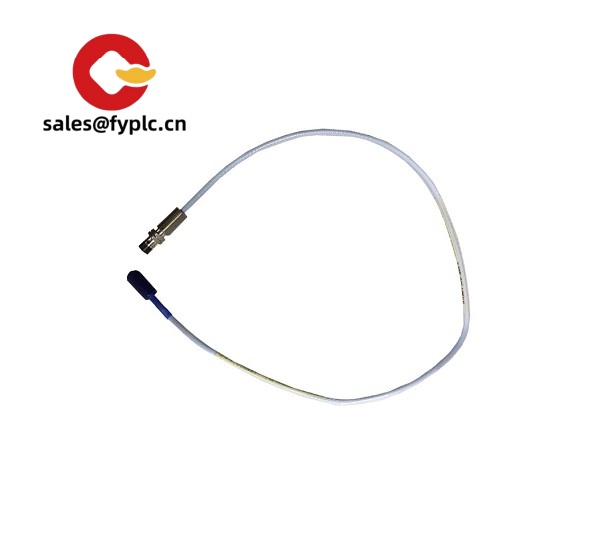
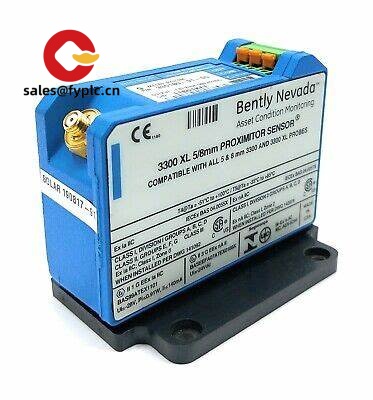
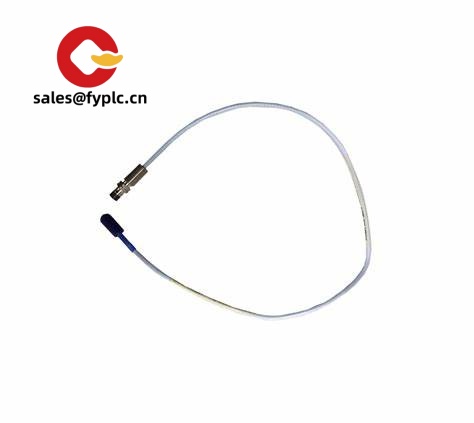
The Bently Nevada 330106-05-30-10-02-05 is a 3300 XL-series proximity probe assembly used to monitor shaft vibration, axial position, and rotor-to-stator clearance on turbines, compressors, pumps, and similar assets. It’s built for harsh industrial environments and works with a matching 3300 XL Proximitor Sensor and extension cable to provide reliable eddy‑current measurements. From my experience, this combination is the default choice in many API 670-compliant installations when you need stable readings across temperature swings and tight mounting spaces.
Company’s Order Placement Process and Guarantees
- Warranty: 365 days
- Delivery: typically 1 week if in stock; no more than one month at the latest
- Payment: 50% advance payment; full payment before delivery
- Express options: FedEx, UPS, DHL
Key Features
- Non-contact eddy-current sensing – Measures shaft vibration and displacement without mechanical loading, ideal for high-speed rotors.
- 3300 XL system compatibility – Designed to operate with the corresponding 3300 XL Proximitor Sensor and extension cable for a calibrated chain.
- Robust probe construction – Typically rated for elevated temperatures and oil-rich environments commonly found in bearing housings and seal areas.
- Threaded mounting – Simplifies installation through holders or tapped holes; allows fine adjustment of probe gap.
- Coded configuration – You might notice “-05” in the code; in many cases it denotes a 5 m probe lead, while other digits define thread, tip, connector, or armor options.
- Stable gap voltage – When paired with the proper Proximitor, you get a steady -10 V to -2 V gap voltage window and a dynamic voltage proportional to motion.
- API 670 condition monitoring workflows – Works seamlessly with Bently Nevada monitors and historians for trip, trending, and protection logic.
Technical Specifications
| Brand / Model | Bently Nevada 330106-05-30-10-02-05 (3300 XL proximity probe assembly) |
| HS Code | 903180 (Measuring or checking instruments, n.e.s.) |
| Power Requirements | Probe is passive; powered via matching 3300 XL Proximitor Sensor (nominal -24 Vdc supply at the Proximitor) |
| Dimensions & Weight | Threaded probe tip; integrated lead. Configuration code “-05” typically indicates 5 m probe cable. Weight depends on option codes. |
| Operating Temperature | Probe assemblies in the 3300 XL family are commonly specified for -35 °C to +177 °C service. Check label for exact rating by option code. |
| Signal Input/Output Types | Eddy-current displacement probe; connects to a 3300 XL Proximitor Sensor which provides gap voltage (approx. -10 to -2 Vdc) and dynamic vibration output |
| Communication Interfaces | Not applicable (analog signal via Proximitor to monitoring system) |
| Installation Method | Threaded mounting into probe holder or tapped hole; target is conductive shaft/journal; final gap set using monitor readout |
Application Fields
Typically deployed on steam and gas turbines, centrifugal compressors, gearboxes, motors, fans, and critical pumps. Use it where non-contact vibration, shaft radial position, or thrust measurements feed into protection relays or condition monitoring systems. One thing I appreciate is how it holds calibration even in oil splash zones, which reduces drift in long-term trending.
Advantages & Value
- Reliability under heat and oil – The 3300 XL design is known for stable output across temperature and contamination, which cuts nuisance alarms.
- Compatibility and scalability – Works with mainstream Bently Nevada racks and distributed systems; easy to add channels as assets grow.
- Lower lifecycle cost – Durable probe and cabling typically mean fewer shutdowns for replacement, saving labor and production time.
- Technical support continuity – Widely used in API 670 environments; documentation and field know-how are straightforward to source.
Installation & Maintenance
- Mounting – Install in a rigid probe holder or tapped hole; ensure the tip faces a clean, conductive target surface. Maintain clearance and avoid probe bending during routing.
- Cabinet & wiring – Place the Proximitor in a ventilated cabinet; route probe and extension cables away from high-voltage lines and VFDs. Use proper grounding and shielding.
- Gap set – With the system powered, adjust probe until the monitor indicates a mid-range gap voltage (commonly around -8 to -10 V to -2 V window, depending on the setup).
- Safety – De-energize associated equipment before mechanical adjustments. In hazardous areas, ensure the exact probe option code meets the zone requirements.
- Routine care – Periodically inspect connectors, clean the probe tip if fouled, verify tightness of mounts, and review calibration in your monitoring software after outages.
Simulated feedback: “We swapped two older probes on a hot-end turbine bearing with this model code, kept the existing Proximitor and cable spec, and the noise floor dropped immediately—trending stabilized within a day.”
Quality & Certifications
- Typically conforms to CE requirements; RoHS-compliant materials are common in the 3300 XL family
- Manufactured under ISO 9001-quality systems
- Hazardous area approvals (e.g., ATEX/IECEx) may be available depending on option codes; verify against the product nameplate
- Manufacturer’s warranty practices apply; our supplied units carry a 365-day warranty as stated above
Notes on Configuration Code
The sequence “-05-30-10-02-05” defines specifics such as cable length, thread type, tip style, connector orientation, and armor or protection options. “-05” is commonly a 5 m probe lead. If you share your existing part code or machine drawing, we can double-check thread and connector options to ensure drop-in compatibility with your installed Proximitor and extension cable.
Reviews
There are no reviews yet.