

Description
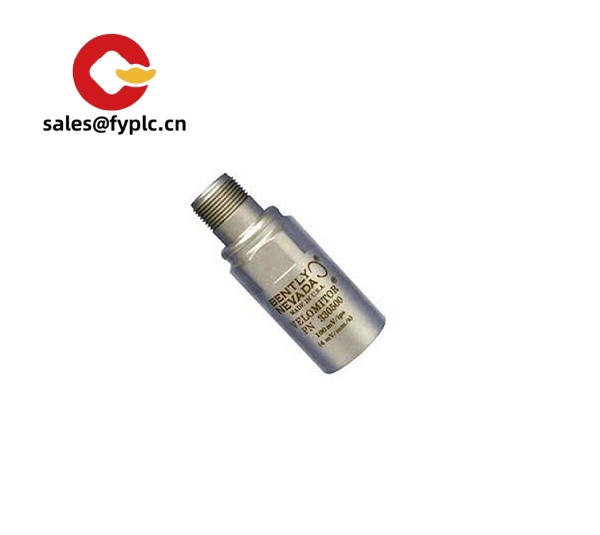
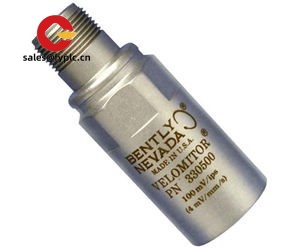
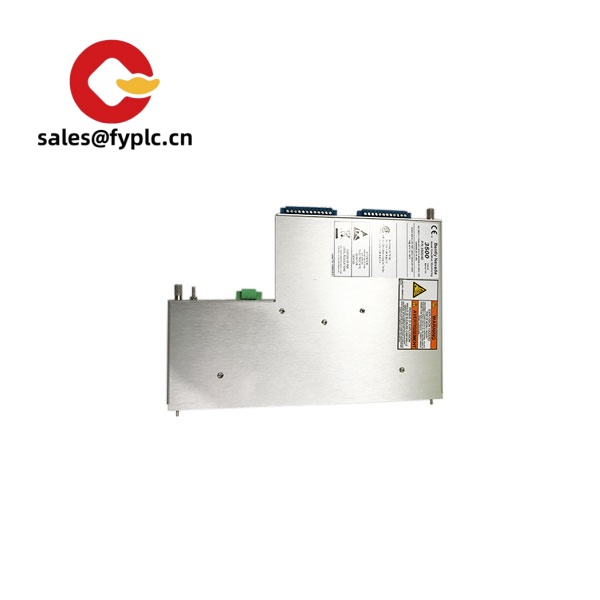
BENTLY NEVADA 330500-02-00 Velomitor – Piezo-velocity sensor for reliable rotating machinery vibration monitoring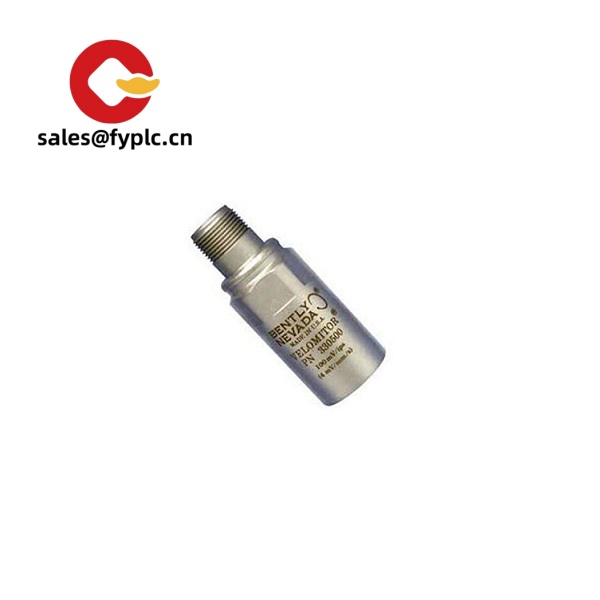
The BENTLY NEVADA 330500-02-00 is part of the Velomitor family, a rugged piezoelectric velocity transducer used to measure machine casing vibration on pumps, fans, motors, compressors, and gearboxes. From my experience, this model is favored where a direct velocity output simplifies wiring into existing monitors or PLCs. You might notice that it’s typically paired with Bently Nevada 3500 or 1900/65 monitors, but it also works nicely with standard IEPE/ICP signal inputs on third‑party systems.
Our Order Placement Process and Guarantees
- Warranty: 365 days
- Lead time: typically 1 week if in stock; no more than one month at the latest
- Payment: 50% advance payment; full balance prior to delivery
- Express options: FedEx, UPS, DHL
Key Features
- Velocity output (IEPE/ICP type): Direct mV/(in/s) output reduces the need for external integration and speeds up commissioning.
- Typical sensitivity ~100 mV/in/s (≈3.94 mV/mm/s): A widely supported scaling that most condition monitoring systems can read without custom firmware.
- Industrial frequency band: Designed for machine casing vibration in the ~10–1000 Hz range commonly used for rotating equipment health.
- Rugged stainless-steel housing: Built for plant environments with good resistance to oil mist, dust, and temperature swings.
- Stud mounting: A solid mechanical path (usually 1/4‑28 UNF) gives more repeatable readings than adhesive pads in many cases.
- Flexible system compatibility: Works with BENTLY NEVADA 3500/42M and 1900/65A, and most PLC/DCS/CM systems that accept 2‑wire IEPE sensors.
- Variant clarity: The “‑02‑00” option typically denotes a specific mounting/connector configuration; we help verify the exact build against your datasheet before shipping.
Technical Specifications
| Item | Specification |
|---|---|
| Brand / Model | BENTLY NEVADA 330500-02-00 (Velomitor series) |
| HS Code | 9031.80 (measuring/checking instruments, other) |
| Power Requirements | IEPE constant‑current drive, typically 2–10 mA with 18–30 VDC compliance |
| Output / Sensitivity | Dynamic velocity, nominal ~100 mV/in/s (≈3.94 mV/mm/s) |
| Frequency Response | Suitable for rotating equipment bands (commonly around 10–1000 Hz for general machinery monitoring) |
| Operating Temperature | Typically −54 to +121 °C (−65 to +250 °F) |
| Signal Input/Output Types | 2‑wire IEPE (ICP) constant‑current excitation; single‑ended dynamic voltage output |
| Communication Interfaces | None (analog sensor output) |
| Installation Method | Rigid stud mounting on machine casing; “‑02‑00” typically defines a specific connector/exit style—confirm drawing prior to order |
| Dimensions & Weight | Compact cylindrical body; approx 28 mm diameter × 60–70 mm height; ~120 g (typical for this series) |
| Housing / Materials | Stainless‑steel housing, industrial grade sealing |
Application Fields
Commonly used on balance‑of‑plant rotating assets and critical machinery:
- Pumps, fans, blowers, and motors (casing vibration trending and alarm)
- Gearboxes and belt drives (fault detection around running speed and harmonics)
- Compressors and small steam/gas turbine auxiliaries where velocity is the preferred metric
- Refineries, chemical plants, steel mills, power generation, and water/wastewater facilities
A maintenance engineer from a mid‑stream facility told us the Velomitor “seems to be the least fussy” on their outdoor pump skids—especially with long cable runs into a shared junction box—because the IEPE standard keeps the wiring straightforward.
Advantages & Value
- Reliability: Proven construction for harsh plants; fewer false alarms when properly mounted and biased.
- Compatibility: Direct tie‑in to BENTLY NEVADA 3500/1900 monitors and most third‑party IEPE inputs—saves interface hardware.
- Cost efficiency: Velocity output reduces processing complexity; often lowers total installed cost compared with accelerometer + integrator setups.
- Technical support: We help confirm the “‑02‑00” build options (orientation, connector/cable style) against your machine drawings before shipment.
Installation & Maintenance
- Mounting: Use a clean, flat, machined pad; stud mount (typically 1/4‑28 UNF). Apply manufacturer‑recommended torque to ensure a rigid path.
- Wiring: Route IEPE cabling away from high‑current lines; maintain shield continuity; keep connectors dry and properly strain‑relieved.
- Environment: Suitable for most indoor/outdoor industrial areas. For washdown or hazardous areas, confirm the exact 330500‑02‑00 configuration and approvals.
- Commissioning: Verify IEPE bias (usually ~10–14 VDC at the receiver), check sensitivity scaling (100 mV/in/s), and perform a bump test where possible.
- Routine care: Re‑torque mounting annually, inspect connectors and cable jackets, and schedule calibration every 1–2 years depending on criticality.
- Firmware/monitor updates: If used with digital monitors (e.g., 3500/42M), keep monitor firmware current and document channel configuration.
Quality & Certifications
- Manufacturer quality systems typically aligned with ISO 9001
- CE conformity and RoHS compliance are commonly available for Velomitor series
- Manufacturer’s standard warranty is generally 1 year; we provide a 365‑day warranty on supply
Helpful Accessories & Compatibility
- Mounting studs and adapters (e.g., 1/4‑28 UNF to M8) to match your machine pad
- Magnetic mounting base for temporary route measurements (commissioning/testing)
- IEPE‑rated extension cables and sealed connectors for outdoor runs
- Compatible monitoring: BENTLY NEVADA 3500/42M dynamic channels, 1900/65A monitors, and most PLC/DCS analog IEPE input cards
One thing I appreciate is how quickly teams can retrofit these onto existing machine pads. If you can send a quick photo or the outline drawing, we’ll confirm the “‑02‑00” orientation/connector so it lands correctly the first time.

Reviews
There are no reviews yet.