
Description
Bently Nevada 330500-02-04 Velomitor – Seismic Velocity Sensor for Reliable Machine Vibration Monitoring
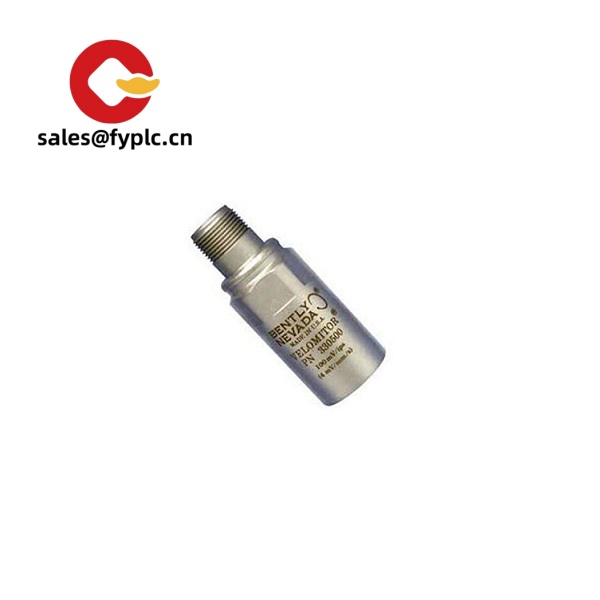
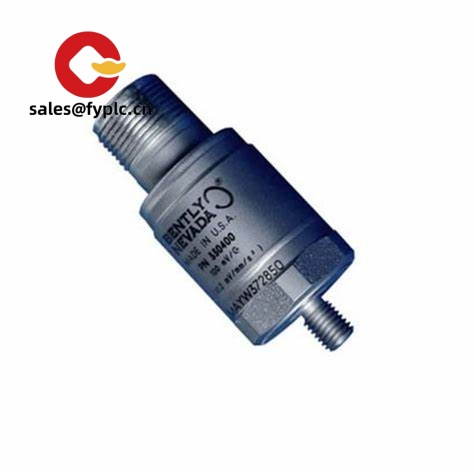
The Bently Nevada 330500-02-04 is part of the proven Velomitor family, designed for direct velocity measurement on rotating assets. From my experience, this model is a go-to when you want stable, low-frequency vibration data on pumps, motors, fans, and compressors without the complexity of proximity probes. It delivers a dynamic AC velocity signal (IEPE) that ties in cleanly with Bently Nevada monitors and most industrial condition monitoring systems. You might notice that the “-02-04” suffix typically denotes a specific mounting/cable configuration with an approximate 4 m integral lead, which simplifies routing in tight panels or harsh plant areas.
Order Placement Process & Guarantees
- Warranty: 365 days
- Delivery: 1 week if in stock; no more than 1 month at the latest
- Payment: 50% advance payment, full payment before delivery
- Express options: FedEx, UPS, DHL
Key Features
- Seismic (velocity) output: IEPE-type AC signal for direct mm/s or in/s readings, ideal for overall machine health trending.
- Robust low-frequency response: Typically captures down to a few Hz, which is important for slow-rolling equipment and looseness detection.
- Industrial-grade housing: Rugged, sealed construction to handle oils, dust, and plant moisture without drifting.
- Integral cable variant: The -02-04 configuration usually includes a fixed cable length, reducing connector failures in harsh areas.
- Broad system compatibility: Works with Bently Nevada 3500/42M and 1900/65A, and most IEPE-capable analyzers and PLC cards.
- Stable sensitivity: Nominal 100 mV/in/s (≈3.94 mV/mm/s) output helps keep alarm thresholds consistent across sites.
Technical Specifications
| Brand / Model | Bently Nevada 330500-02-04 (Velomitor seismic velocity sensor) |
| HS Code | 9031.80 (Measuring or checking instruments; global reference) |
| Power Requirements | IEPE constant current, typically 2–10 mA with 18–30 V DC compliance |
| Sensitivity (nominal) | 100 mV/in/s (≈3.94 mV/mm/s) |
| Frequency Response | Typically ~4.5 Hz to 5 kHz (±3 dB), application dependent |
| Operating Temperature | Approximately -54 °C to +121 °C (industrial environments) |
| Signal I/O | Dynamic AC velocity (IEPE/ICP type); integral cable in this variant |
| Communication Interfaces | N/A (analog sensor) |
| Installation Method | Stud mounting (commonly 1/4-28 UNF or M6); mount rigidly on the bearing housing |
| Dimensions & Weight | Compact cylindrical form; approx. 60 mm length; light-weight for machine casings (typical) |
| Enclosure Rating | Typically IP65 or better for industrial use |
Application Fields
This sensor fits well on fixed-speed rotating equipment where you need stable, trending-friendly velocity data:
- Pumps (process, cooling water, boiler feed) – early detection of imbalance and looseness.
- Fans and blowers – useful for soft-foot, belt issues, and bearing condition trends.
- Motors and gearboxes – casing velocity for broad-spectrum fault visibility.
- Compressors – complements proximity probes by covering low-frequency structural response.
- Paper machines, conveyors, mixers – where ruggedized cabling and easy mounting matter.
Advantages & Value
- High reliability: Bently Nevada’s seismic line has a strong track record in hot, oily, and vibrating areas.
- System compatibility: Pairs with 3500/42M, 1900/65A, and most IEPE-ready analyzers and PLC cards.
- Cost control: Straightforward installation and low upkeep typically reduce lifecycle costs versus more complex probe systems.
- Stable baselines: Sensitivity consistency helps keep alarm settings meaningful across multiple units and sites.
- Supportable spares strategy: Standardized configuration makes stocking and replacement predictable.
Installation & Maintenance
- Mounting surface: Use a flat, clean, rigid spot on the bearing housing; torque the stud per manufacturer guidance.
- Panel/cabinet: Route the integral cable in a ventilated, dry cabinet when possible; avoid tight bends and abrasion.
- Wiring: Use shielded cable practices; keep sensor leads away from VFD power to reduce EMI. Ground at one end.
- Power/bias check: Verify IEPE supply current (typically 2–10 mA) and confirm sensor bias voltage is within the expected window.
- Safety: Lockout/tagout rotating equipment; avoid mounting on thin covers that can resonate or loosen.
- Routine care: Inspect cable strain relief quarterly, clean the housing, and review trending. Annual calibration is recommended.
- Firmware/monitor updates: Keep connected Bently Nevada monitors (e.g., 3500/42M) on supported firmware to ensure stable readings.
A maintenance lead at a chemical plant told us the 330500 series “held its baseline for years,” and the only time they rolled a spare was after a cable snag during an overhaul—exactly the kind of predictable behavior you want in field devices.
Supporting Components (Common Pairings)
- Bently Nevada 3500/42M Proximitor/Seismic Monitor: Multi-channel rack monitor that accepts seismic (Velomitor) inputs for protection and trending.
- Bently Nevada 1900/65A General-Purpose Monitor: Compact stand-alone monitor for machinery protection where a full rack is not required.
- IEPE signal conditioners/barriers: For hazardous or noisy areas, use appropriate isolated IEPE power supplies and barriers compatible with the 330500 series.
- Studs and mounting adapters: 1/4-28 UNF or M6 studs and epoxy bases for cases where drilling is restricted.
Quality & Certifications
- Certifications: Typically CE-marked and RoHS compliant; produced under ISO 9001 quality systems.
- Environmental robustness: Industrial sealing and materials aimed at long service in oil & gas, power, and heavy industry.
- Warranty: 365 days (replacement or repair as applicable).
If you’re standardizing across a plant, this 330500-02-04 variant seems to be a safe, repeatable choice for casing velocity, especially where simple wiring and stable low-frequency response matter most.

Reviews
There are no reviews yet.