
Description
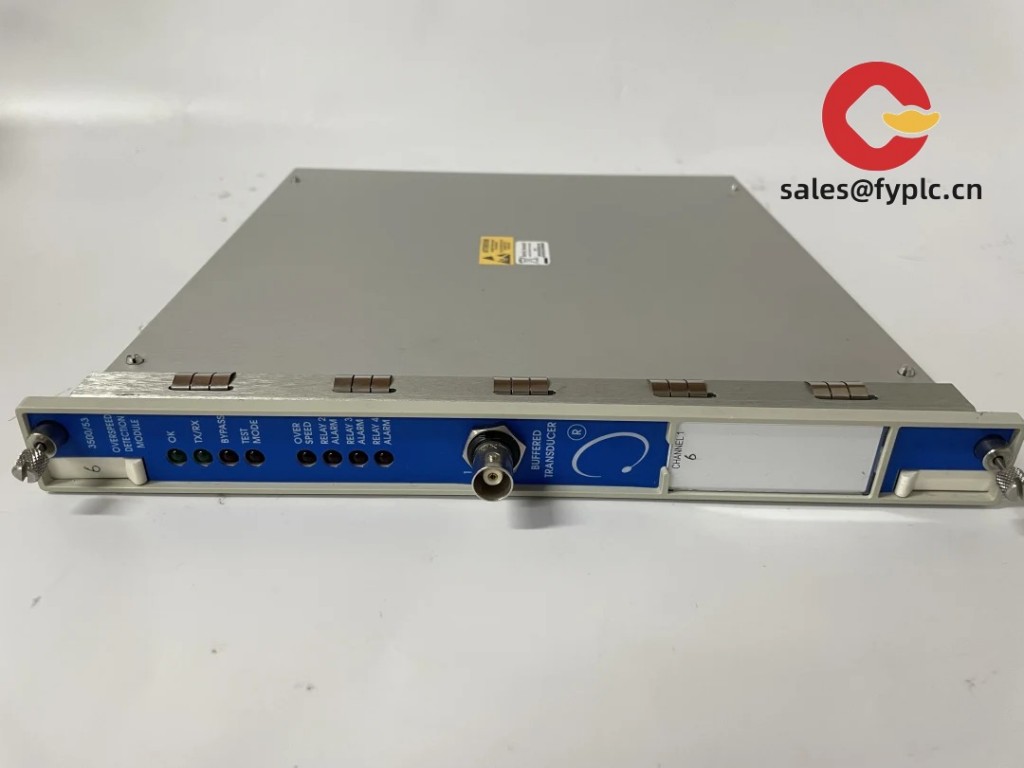
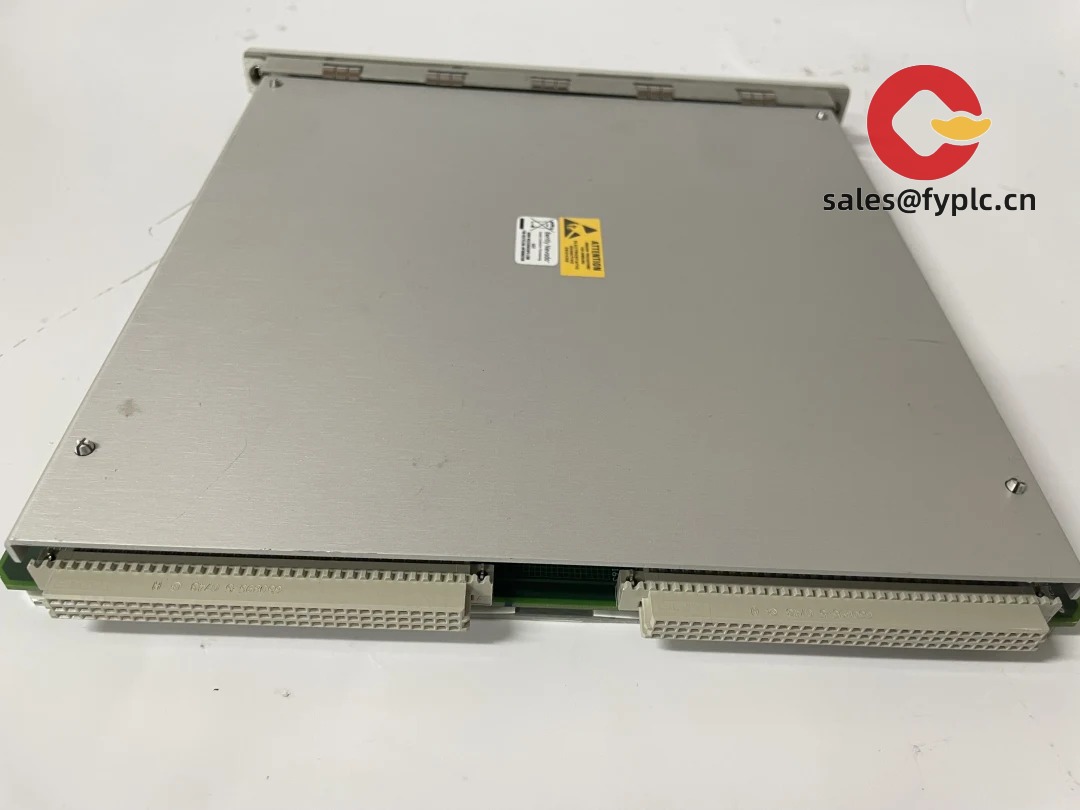
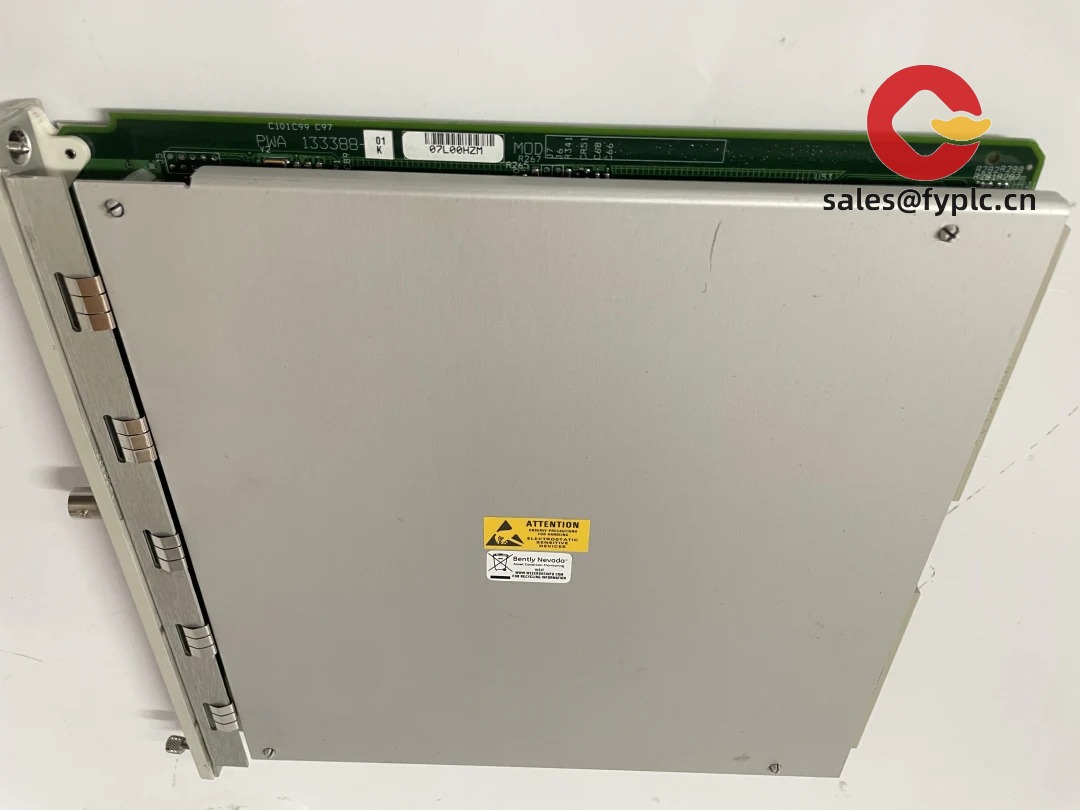
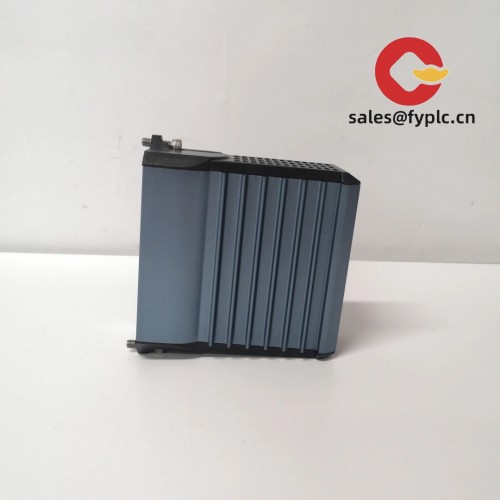
Bently Nevada 3500/53 Proximitor Monitor (Model 133388-01) — High-Integrity Vibration & Position Monitoring for Critical Rotating Machinery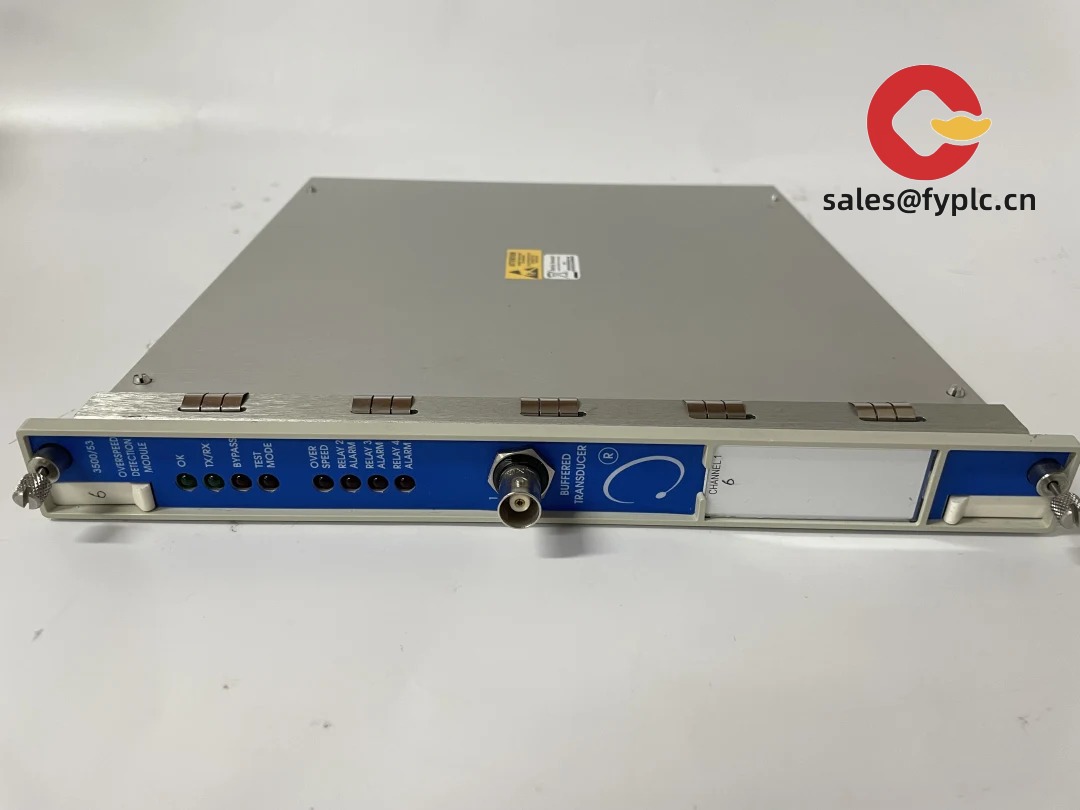
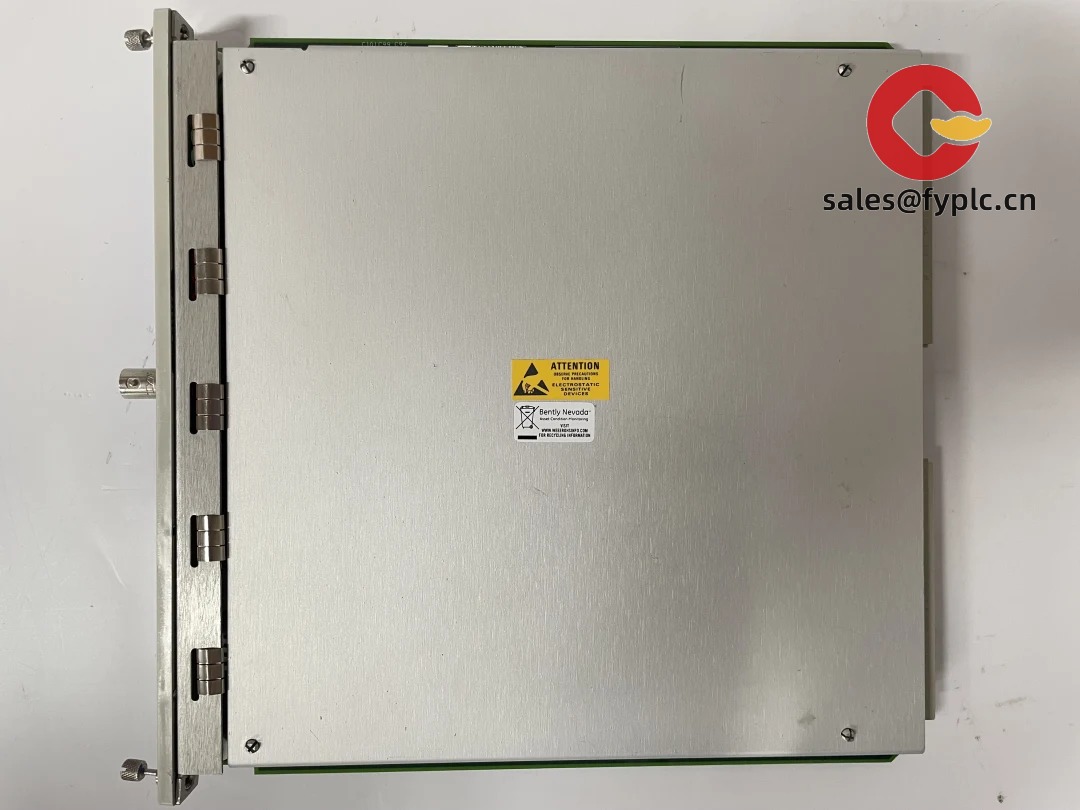
One thing I appreciate is how consistently this module shows up in retrofit projects across oil & gas compressor trains and power plant turbine skids — not because it’s flashy, but because it just works, year after year, even in cabinets where ambient temperature hovers near 55°C. From my experience, most users don’t realize how much engineering went into the 3500/53 until they try swapping in a generic alternative and start chasing ground loops or signal drift.
Key Features
- Dual-channel monitoring: Simultaneously processes two independent proximity probe signals (e.g., radial vibration + axial position), with independent alarm and danger thresholds per channel — useful when you need to isolate thrust collar movement from shaft orbit.
- True RMS vibration measurement: Not just peak-to-peak — it computes real-time RMS across the full 0.5–10 kHz range, which matters if your team uses ISO 10816-3 severity bands for mechanical integrity reporting.
- Integrated keyphasor input: Accepts TTL or variable-reluctance tach signals to enable phase analysis and time-synchronous averaging — something many newer “smart” monitors still handle via external add-ons.
- Fail-safe relay outputs: Three Form-C relays (alarm, danger, OK) with configurable de-energize-on-fault behavior — critical for interfacing with emergency shutdown systems where SIL-2 compliance is expected.
- Backplane-powered & hot-swappable: Draws power directly from the 3500 rack backplane (no separate PSU needed), and can be replaced under power without disturbing adjacent modules — we’ve seen maintenance teams cut downtime by ~40% on unplanned sensor calibrations because of this.
Technical Specifications
| Parameter | Specification |
|---|---|
| Brand / Model | Bently Nevada 3500/53, P/N 133388-01 |
| HS Code | 9031.80.8090 (Monitoring instruments for industrial process control) |
| Power Requirements | Supplied via 3500 rack backplane: +15 VDC ±5%, –15 VDC ±5%, +5 VDC ±5%; typical draw: 1.2 W |
| Dimensions & Weight | 172 mm H × 43 mm W × 254 mm D; ~0.9 kg (rack-mounted) |
| Operating Temperature | 0°C to +60°C (derated above 50°C; no condensation) |
| Signal Input Types | Two 100 mV/mil (2.54 V/mm) proximity probe inputs (typically -24 VDC bias); one keyphasor input (TTL or VR) |
| Signal Output Types | 4–20 mA analog outputs (per channel, scalable); three Form-C relay outputs (SPDT, 2 A @ 250 VAC) |
| Communication Interface | RS-232 serial port (for local configuration via Bently Nevada System 1 or 3500 Configuration Software); no Ethernet or Modbus built-in |
| Installation Method | Standard 3500 rack slot (requires 3500/15 or 3500/22 power supply module); DIN-rail mounting not supported |
Application Fields
This isn’t a general-purpose monitor — it’s built for places where misreading a 0.125 mm axial shift could mean a $2M turbine overhaul. You’ll find it protecting centrifugal compressors in LNG liquefaction plants, monitoring generator rotor eccentricity in combined-cycle facilities, and validating shaft alignment during startup procedures on large air-cooled condensers. One refinery client told us they kept their original 3500/53 units online for 17 years before upgrading — not because they couldn’t, but because the alarms never lied, and the loop checks always passed.
Advantages & Value
From a procurement standpoint, the value isn’t just in the unit price — it’s in what you don’t have to budget for downstream. No need for external signal conditioners, no extra isolation barriers for 4–20 mA outputs, and minimal engineering time spent on I/O marshalling since it integrates cleanly into legacy 3500 racks. Compatibility with existing 3500/22 power supplies and 3500/92 communication gateways means retrofits often cost less than 60% of a full system replacement. And while newer platforms offer cloud connectivity, this module still delivers deterministic response times under 20 ms — something that matters when your ESD logic solver expects sub-50 ms trip verification.
Installation & Maintenance
Install only in a NEMA 12 or IP54-rated cabinet with forced ventilation — passive convection isn’t enough if ambient exceeds 45°C. Keep at least 25 mm clearance above/below the module for airflow, and avoid routing high-current motor leads parallel to the probe cables. Ground the shield at the monitor end only (not at the probe), and verify common-mode rejection >80 dB before commissioning. For maintenance: clean dust filters every 6 months (yes, even in “clean” control rooms), perform zero-span verification annually using a calibrated simulator (we recommend the 1900 Series), and update firmware only during scheduled outages — version 4.22+ fixes a rare timing edge case with dual-channel alarm latching, but earlier versions remain fully supported.
Quality & Certifications
Certified to CE (2014/30/EU EMC Directive, 2014/35/EU LVD), UL 61010-1 (3rd Ed.), and RoHS 2011/65/EU. Complies with IEC 61508 SIL-2 for safety-related functions when used per GE’s Safety Manual (Doc. 133388-01-SM). Backed by a standard 365-day warranty — extended coverage options available. Note: While not ISO 9001-certified as a standalone product, it’s manufactured under Baker Hughes’ ISO 9001:2015 QMS (Certificate #QMS-001482).
Our Order Placement Process & Guarantees:
- Warranty period: 365 days from date of delivery
- Delivery time: 1 week for in-stock units; up to 30 days maximum for special-order or refurbished units
- Payment terms: 50% advance, balance due before shipment
- Shipping: Fedex, UPS, or DHL — all with tracking and insurance included

Reviews
There are no reviews yet.