
Description
Honeywell C7012E1104 UV Flame Detector for Industrial Burners and Ovens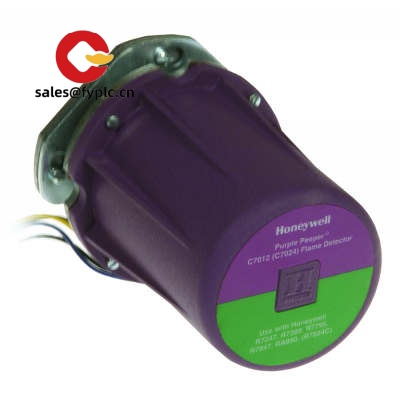
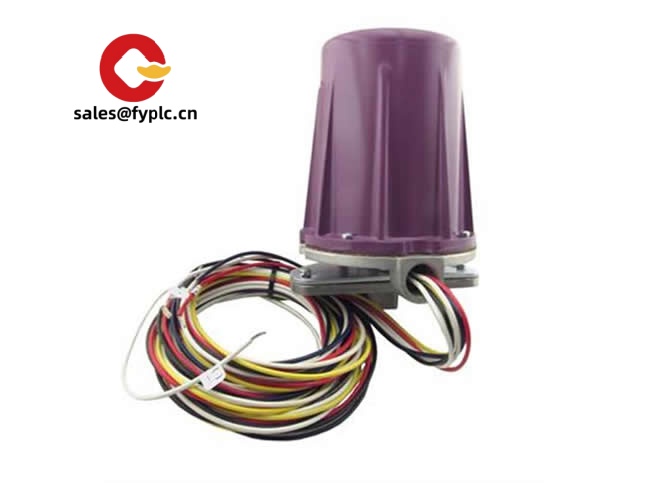
The Honeywell C7012E1104 is a UV flame detector designed for continuous supervision of gas, oil, or dual-fuel flames in industrial burners and thermal process equipment. From my experience, the C7012E variant is favored when plants need self-checking capability with Honeywell’s 7800 Series burner management systems. It scans the ultraviolet spectrum produced by an active flame, while ignoring visible light from refractory or ambient sources, which typically helps prevent nuisance trips.
Company’s Order Placement Process and Guarantees
- Warranty: 365 days
- Lead time: 1 week if in stock; no more than one month at the latest
- Payment: 50% advance payment; full payment prior to delivery
- Express options: FedEx, UPS, DHL
- Packaging: anti-static bag + cushioned carton, clearly labeled for maintenance spares
Key Features
- Ultraviolet flame sensing – Detects UV emissions from hydrocarbon combustion (typically 185–260 nm), while being blind to visible light.
- Self-checking (dynamic) – The E-series provides a self-check function when used with the proper Honeywell amplifier, helping meet continuous operation requirements in many jurisdictions.
- 7800 Series compatibility – Commonly paired with RM7800 controllers via R7847 UV flame amplifiers; a straightforward retrofit in many cases.
- Fast response – Quick pickup and loss-of-flame recognition, supporting safe, repeatable light-off and run supervision.
- Rugged industrial housing – Built for burner fronts and hot process areas; can be purged with clean air to keep the lens clear in dusty or high-temperature environments.
- Simple alignment – Designed to view the root of the flame through a sight pipe; minor aiming adjustments usually make a big difference in signal strength.
Technical Specifications
| Brand / Model | Honeywell C7012E1104 (UV flame detector, self-checking variant) |
| HS Code | 9032.89 (Automatic regulating or controlling instruments and apparatus – Other) |
| Sensor Technology | Ultraviolet flame scanning (typically 185–260 nm band) |
| Power Requirements | Powered via compatible Honeywell UV flame amplifier (e.g., R7847 series) from the burner control; no separate local power input |
| Operating Temperature | Typically 0 to 60°C (32 to 140°F); use purge/cooling where ambient is higher |
| Signal I/O Types | UV tube signal to amplifier; flame on/off and strength indicated via connected amplifier/controller |
| Communication Interfaces | None on the detector (communication handled by the burner control system) |
| Installation Method | Mounted to a sight pipe aimed at the flame root; commonly used with purge air and a swivel mount for alignment |
| Compatibility | Honeywell RM7800 Series controls with R7847 UV amplifier; widely used with gas/oil burners, furnaces, kilns, and oxidizers |
Application Fields
You’ll typically see the C7012E1104 on package boilers, process heaters, industrial ovens, kilns, incinerators, and thermal oxidizers. One thing I appreciate is its stability on low-NOx burners where the flame can be more diffuse; proper aiming still gives a solid UV signal. It also seems to perform well on multi-burner manifolds, as long as each scanner is isolated to its respective flame zone.
Advantages & Value
- Safety compliance – Self-checking capability helps meet continuous duty requirements often called out in NFPA 85/86 and site standards.
- Drop-in compatibility – Works with established Honeywell 7800 Series architectures, reducing engineering time during replacements or upgrades.
- Lower lifecycle cost – Stable UV detection and purge options reduce false trips and unplanned downtime, which in many cases saves far more than the scanner’s price.
- Global approvals – Widely recognized certifications support cross-site standardization and easier documentation for audits.
A maintenance lead at a food plant told us they swapped to the C7012E on their makeup air units specifically to cut nuisance lockouts during morning startups; the self-checking setup with their RM7800 controls made troubleshooting clearer for the team.
Installation & Maintenance
- Mounting – Use a rigid sight pipe aimed at the flame root; avoid line-of-sight to hot refractory only. A swivel mount helps fine-tune alignment.
- Purge air – In dusty or hot areas, feed clean, dry purge air to the sight pipe to keep the lens clear and reduce heat soak.
- Wiring – Route in metallic conduit away from ignition transformers and VFD cables. Land leads on the appropriate UV amplifier terminals as specified by Honeywell.
- Environment – Keep the housing below the rated temperature; add standoffs or insulation shields if the burner front runs hot.
- Routine care – Inspect and clean the quartz lens/sight glass periodically; verify flame signal strength during light-off and at low-fire. Check self-check timing through the amplifier/controller.
- Spares policy – For critical lines, keeping one spare C7012E and a matching R7847 UV amplifier on the shelf is, in most cases, a very prudent move.
Quality & Certifications
- CE marked; UL and FM approvals are commonly available for this family
- Manufactured by Honeywell to industrial burner safety standards
- Manufacturer’s warranty typically 1 year; our coverage: 365 days
- RoHS compliance is often applicable on modern builds; confirm per lot if required for documentation
Commonly Paired Components (for a complete loop)
- Honeywell RM7800 Series burner management controllers
- Honeywell R7847 UV Flame Amplifier (matches C7012 UV detectors)
- Q7800 subbase, keyed for the chosen amplifier
- Sight pipe, swivel mount, and purge fittings sized for the burner front
Reviews
There are no reviews yet.