
Description
NI PCI-5153 High‑Bandwidth Digitizer (500 MHz, up to 2 GS/s) for Fast Time‑Domain Measurements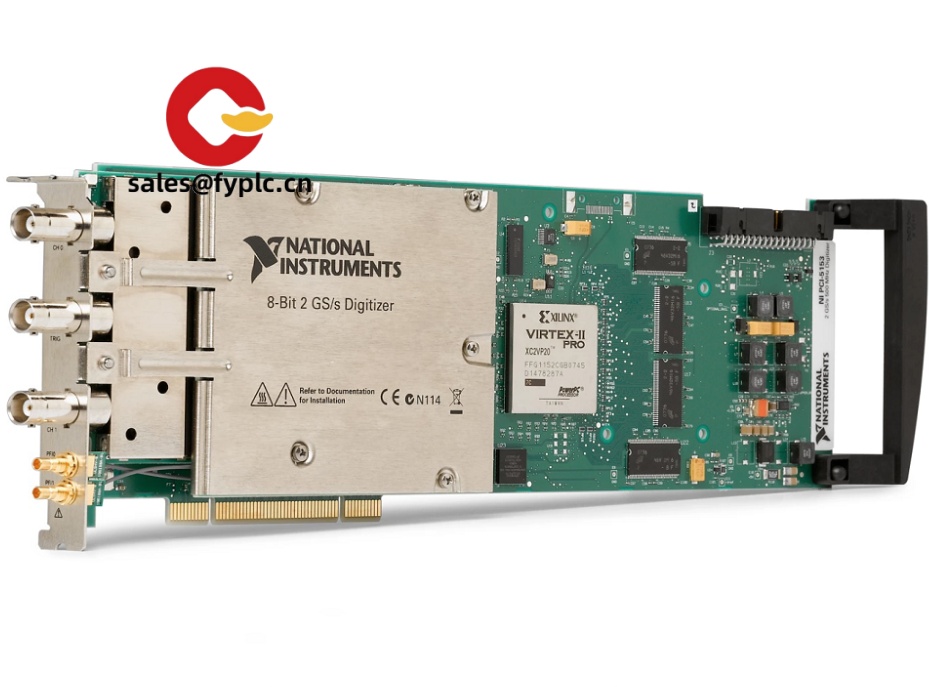
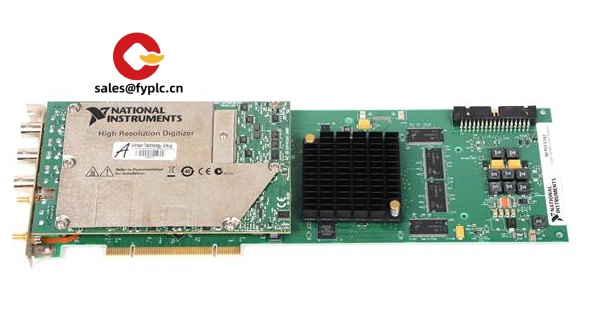
The National Instruments NI PCI‑5153 is a 2‑channel, 8‑bit, high‑speed digitizer that drops straight into a desktop PC’s PCI slot. It’s built for fast transient capture, RF and IF validation, and bench‑style oscilloscope debugging inside automated test systems. One thing I appreciate is how it balances bandwidth (typically 500 MHz) with clean triggering and deep memory options, so you can see short‑lived events without missing the detail. In many cases, teams use it to replace a benchtop scope when they need repeatable, code‑driven acquisition with NI‑SCOPE.
Order Placement Process and Guarantees
- Warranty: 365 days
- Delivery: 1 week if in stock; no more than one month at the latest
- Payment: 50% advance payment; full payment before delivery
- Express options: FedEx, UPS, DHL
Key Features
- 500 MHz analog bandwidth – Suitable for RF/IF validation, fast edges, and high‑speed digital lines where rise time matters.
- Up to 2 GS/s sampling – Typically 2 GS/s single‑channel and about 1 GS/s per channel when both are active, keeping timing tight on simultaneous captures.
- 2 analog channels + external trigger – Standard BNC I/O with flexible triggering to lock onto bursts and one‑shot events.
- 8‑bit vertical resolution – A practical balance for high‑speed work where timing and bandwidth are the priority.
- NI‑SCOPE driver support – Integrates with LabVIEW, Python (via NI APIs), C/C++ and .NET for automated testing and rapid scripting.
- Multi‑device sync (NI TClk) – You can synchronize multiple NI digitizers to scale channels without losing timing coherence.
- PCI bus integration – Installs in a standard desktop PC; no external power, making deployment comparatively simple.
From my experience, teams validating power amplifier envelopes and fast protocol edges (e.g., MIPI test points) find the PCI‑5153 snappy and predictable. A production test lead told me it “cut our per‑unit capture time by ~30%” once they moved from a benchtop scope to scripted NI‑SCOPE calls.
Technical Specifications
| Brand / Model | National Instruments PCI‑5153 |
| HS Code | 9030.20 (Oscilloscopes/oscillographs – classification used for high‑speed digitizers in many cases) |
| Analog Bandwidth | 500 MHz (–3 dB, typical for the 5153 variant) |
| Channels / Resolution | 2 analog channels, 8‑bit |
| Sampling Rate | Up to 2 GS/s (single‑channel); typically up to 1 GS/s per channel when both channels are enabled |
| Signal I/O | 2× analog inputs (BNC), external trigger (BNC); AC/DC coupling and 50 Ω / 1 MΩ termination options are commonly supported on this series |
| Reference / Sync | External reference clock support (10 MHz) and NI TClk for multi‑device synchronization (software‑timed configuration) |
| Onboard Memory | Up to hundreds of MB depending on the ordered memory option (varies by configuration) |
| Communication Interface | PCI (32‑bit), controlled via NI‑SCOPE driver |
| Power Requirements | Powered from the PCI bus; no external power supply needed |
| Operating Temperature | 0 °C to 50 °C (typical for NI PCI digitizers, use within a ventilated PC chassis) |
| Dimensions & Weight | Full‑length PCI board; standard slot bracket installation |
| Installation Method | Desktop PC PCI slot; secure bracket, connect BNC coax to DUT/fixtures; observe 50 Ω signal integrity practices |
Related or Supporting Products
- NI PCI‑5152 – Similar platform with a lower analog bandwidth (typically around 300 MHz), cost‑effective for mid‑speed work.
- NI PCI‑5154 – Higher bandwidth option (typically around 1 GHz) for faster edges and higher‑frequency RF capture.
- NI PCI‑5124 – 12‑bit alternative with lower max sample rate, chosen when amplitude detail (ENOB) matters more than bandwidth.
- Accessories – 50 Ω BNC coaxial cables, feed‑through 50 Ω terminators, 10:1/100:1 passive probes for higher voltages, and precision attenuators for front‑end protection.
Installation & Maintenance
- Environment – Use a clean, well‑ventilated PC chassis. Keep airflow unobstructed around adjacent slots; high‑speed cards benefit from cool intake air.
- Wiring & Signal Integrity – For best results, run 50 Ω coax, avoid unnecessary adapters, and terminate properly at the instrument or source. You might notice cleaner edges with short, high‑quality BNC leads.
- Grounding & Safety – Verify grounds before connecting DUTs. If measuring higher voltages, use appropriate probes/attenuators and respect the instrument’s input limits.
- Software & Drivers – Install the NI‑SCOPE driver and confirm recognition in NI MAX. From my experience, a quick self‑test in MAX catches most setup issues early.
- Routine Care – Periodically dust the PC chassis, check BNC connectors for wear, and review calibration intervals (typical annual schedules in many labs).
- Firmware/Driver Updates – Keep NI‑SCOPE and related runtime components current to ensure stability and new feature support.
Quality & Certifications
- Compliance – CE and RoHS typically applicable for NI boards; NI operates under ISO 9001 quality systems.
- EMC/Safety – Designed for use inside IT equipment; follow chassis EMC and grounding best practices.
- Manufacturer Warranty – NI devices of this class generally carry a 1‑year manufacturer warranty; extended calibration services are available in many regions.
Tip: If you’re moving from a benchtop scope to the PCI‑5153, start by mirroring your bench settings (bandwidth limit, coupling, termination) in NI‑SCOPE. It seems to minimize surprises when you compare waveforms side‑by‑side.


Reviews
There are no reviews yet.