
Description
NI PCI-8512 High-Speed CAN Interface (XNET) – 1-Port PCI Card for HIL, ECU Test, and Production Lines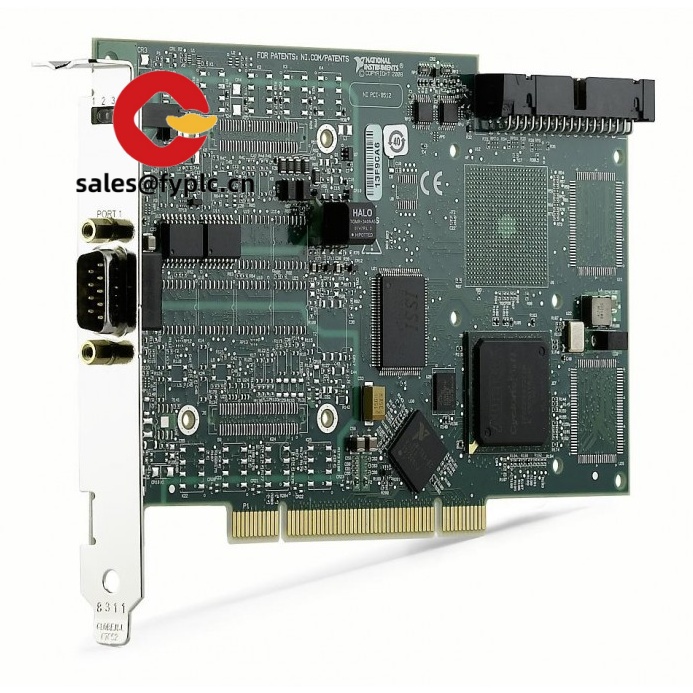
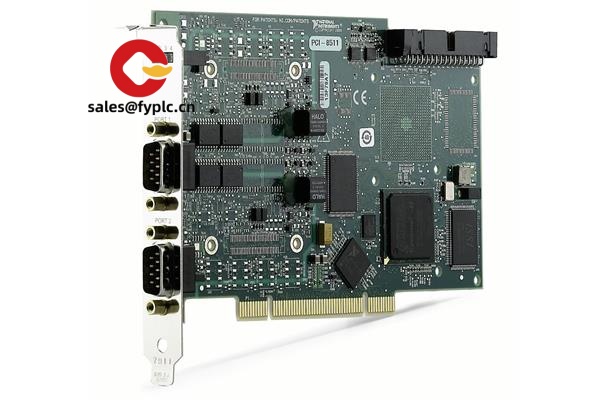
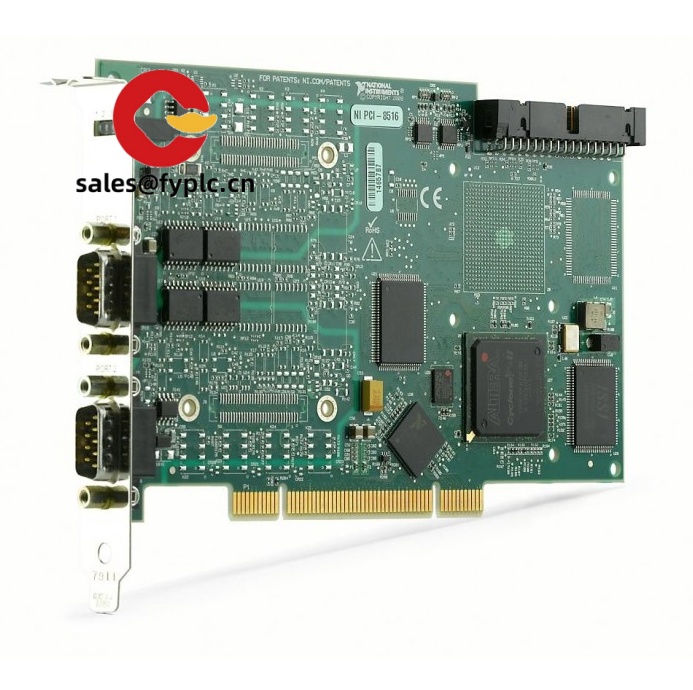
The NI PCI-8512 is a 1-port High-Speed CAN interface for standard PCI slots, built on the NI-XNET engine. From my experience, it’s the kind of board you drop into a workstation or industrial PC when you need deterministic CAN performance without babysitting CPU load—think HIL rigs, ECU reflash benches, end-of-line test, or long-duration bus logging. One thing I appreciate is how the XNET API keeps frame and signal handling fast and predictable, even at 100% bus load.
Typical uses include:
– reliable Classical CAN (ISO 11898-2) communication up to 1 Mb/s,
– synchronized multi-channel monitoring with precise timestamps,
– automated test sequences in LabVIEW, C/C++, or .NET,
– and robust production diagnostics where uptime matters.
Company’s Order Placement Process and Guarantees
- Warranty: 365 days
- Delivery: 1 week for in-stock items; no more than one month at the latest
- Payment: 50% advance payment; full payment before delivery
- Express options: FedEx, UPS, DHL
Key Features
- 1-Port High-Speed CAN (Classical) – ISO 11898-2 compliant, typically up to 1 Mb/s for ECU comms, diagnostics, and logging.
- NI-XNET hardware acceleration – High-throughput frame and signal I/O with deterministic queues; keeps host CPU overhead low.
- Robust timestamping – You might notice tighter timing alignment when correlating CAN with DAQ or HIL events.
- DB9 connectivity – Standard 9-pin D-Sub pinout makes it straightforward to hook into existing CAN harnesses.
- Driver & API support – Works with NI-XNET on Windows; straightforward integration with LabVIEW, C/C++, and .NET.
- Listen-only and bus monitoring modes – Helpful when validating networks without influencing traffic.
- Built for 24/7 test environments – In many cases, the PCI-8512 runs continuously in benches and EOL testers with minimal maintenance.
Technical Specifications
| Brand / Model | NI PCI-8512 (NI-XNET, 1-Port HS-CAN) |
| HS Code | 8471.80 (Units of automatic data-processing machines) |
| Bus Interface | PCI (32-bit, 5 V signaling, standard full-height bracket) |
| Power Requirements | Bus-powered from PCI slot; no external supply required |
| Operating Temperature | Typically 0 °C to 55 °C (non-condensing environment) |
| Signal I/O Types | 1 × CAN (ISO 11898-2, Classical CAN up to 1 Mb/s) |
| Connectors | 1 × 9-pin D-Sub (DB9) for CAN bus |
| Communication Interfaces | Host: PCI; Field: CAN (frame/signal I/O via NI-XNET) |
| Installation Method | Installs in a desktop/industrial PC PCI slot; bracket mounts to chassis rear panel |
| Driver & OS Support | NI-XNET driver; Windows support (LabVIEW, C/C++, .NET APIs) |
| Termination | 120 Ω bus termination required on the network (external, not onboard) |
Related or Supporting Products
- NI PCI-8512/2 – Two-port version of the same High-Speed CAN interface for higher channel density.
- NI PCIe-8512 – PCI Express variant; similar functionality with a modern bus interface and improved host bandwidth.
- NI PCI-8513 – 1-port Low-Speed/Fault-Tolerant CAN for body and comfort networks (ISO 11898-3).
- NI PCI-8514 – LIN master/slave interface for body electronics and actuator networks.
- NI PXI-8512 – PXI form factor for modular HIL and automated test racks.
- DB9-CAN cabling and breakout – Shielded DB9-to-DB9 cables, DB9-to-terminal adapters, and external 120 Ω terminators.
Installation & Maintenance
- PC/cabinet requirements: Standard PCI slot with adequate clearance; provide ventilation to keep internal air temperature within the specified range.
- Wiring and topology: Use twisted-pair, shielded CAN cable with a linear bus topology; apply 120 Ω termination at both ends only. Avoid star networks in most cases.
- Grounding & ESD: Bond cable shields at a single reference point to reduce ground loops; handle the board with ESD care during installation.
- Software setup: Install the NI-XNET driver before powering the PC with the card fitted. Configure databases (DBC, Fibex) and mappings in NI-XNET or LabVIEW projects.
- Routine upkeep: Keep connectors clean, periodically check cable strain relief, and update NI-XNET to a stable revision that matches your OS image. No periodic calibration is typically required.
Quality & Certifications
- CE conformity and RoHS compliance for typical NI boards in this family
- Designed for EMC reliability in industrial test environments
- Manufacturer’s limited warranty typically 1 year (varies by region and purchase terms)
If your application targets Classical CAN with tight timing and long duty cycles, the PCI-8512 seems to be one of the safer choices—especially when you want a stable software stack and mature tooling behind it.

Reviews
There are no reviews yet.