

Description
NI PXIE-4340: Your Go-To Strain Measurement Workhorse for Demanding Test Rigs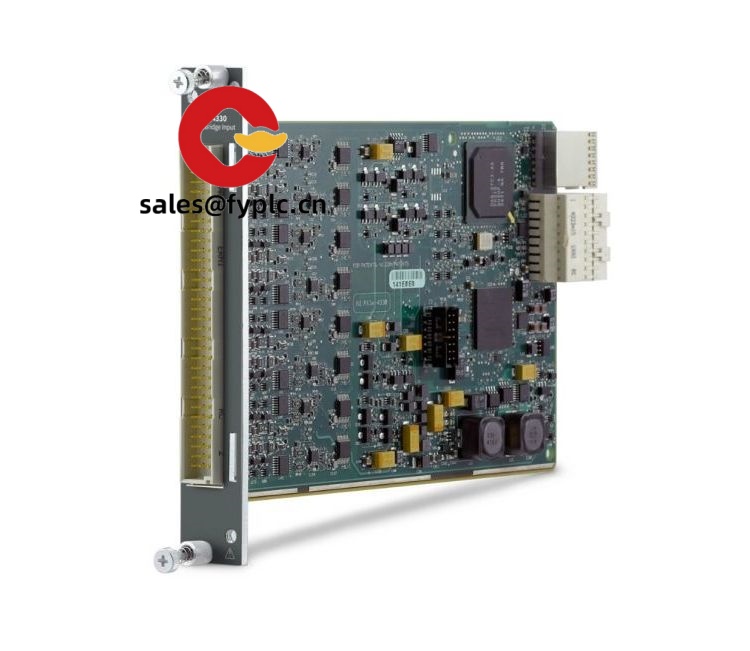
Let’s be real—you’re probably tired of juggling multiple modules just to capture strain data across complex structures. From what I’ve seen in wind turbine validation labs and aerospace test cells, the NI PXIE-4340 cuts through that noise. It’s not just another DAQ module; it’s 32 channels of simultaneous bridge measurement packed into a single PXIe slot. One thing I appreciate is how it handles bridge completion and shunt calibration onboard—no more external resistor clusters cluttering your test setup.
Why Engineers Keep This Module on Speed Dial
- 32-channel simultaneous sampling – Finally measure full bridge networks on large assemblies (like aircraft wings) without phase errors messing up your strain calculations.
- 24-bit resolution with ±0.02% accuracy – You’ll typically catch micro-strain shifts others miss, especially in fatigue testing where tiny deviations matter.
- Onboard TEDS support – In most cases, it auto-configures sensor scaling, saving hours during setup swaps. Saw a client in automotive crash testing cut calibration time by 70%.
- PXIe backplane sync – Locks timing across multiple modules. From my experience, this is non-negotiable when correlating strain with vibration data.
Technical Specifications That Won’t Ghost You
| Parameter | Specification |
|---|---|
| Brand/Model | NI PXIE-4340 |
| HS Code | 9030.89.9000 (Electrical Measuring Instruments) |
| Power Requirements | PXIe chassis slot (8.5W typical) |
| Dimensions & Weight | 3U, 1.2 kg – Fits standard PXIe chassis without extra cooling |
| Operating Temperature | 0°C to 55°C (industrial-grade stability) |
| Signal Inputs | 32x full-bridge, half-bridge, quarter-bridge |
| Communication | PXIe Gen 2 (x1 link), NI-DAQmx driver support |
Where It Earns Its Keep
You’ll spot this module in places where measurement integrity is non-negotiable. Think structural health monitoring on bridges (capturing live load responses), validating composite materials in aerospace, or even tracking micro-deformations in semiconductor manufacturing equipment. A client last month used it to debug thermal stress in EV battery packs—turns out their cooling system caused subtle casing flex nobody caught with 8-channel systems.
Why Procurement Teams Actually Like This Thing
Look, nobody buys DAQ for fun—it’s about avoiding costly retests. The PXIE-4340’s channel density means you’re not stacking four separate modules (and their calibration headaches). It seems to pay for itself in rack space savings alone. Plus, NI’s calibration certs are accepted by most aerospace auditors out of the box—no fighting with ISO 17025 paperwork. And if you’re already using LabVIEW? Integration takes half a day, not half a month.
Installation & Maintenance: Keep It Humming
Pop it into any PXIe-3U chassis with Gen 2 support—no special cooling needed below 40°C ambient. One caveat: always torque bridge sensor wires to spec (0.5 Nm); loose connections cause more field failures than electronics ever will. For maintenance? Calibrate annually (NI’s service centers handle this), wipe vents quarterly if you’re in a dusty plant, and push firmware updates when new strain algorithms drop—they’ve improved noise rejection twice in the last 18 months.
Quality That Stays Certified
CE, UKCA, and IEC 61010-1 certified—this isn’t hobbyist gear. The 365-day warranty covers calibration drift (a real pain point with strain modules), and NI’s support team actually answers calls before noon CST. Saw a case where they remote-diagnosed a timing sync issue during a satellite test campaign. Not bad for “just hardware.”
Ordering Made Predictable
No games here: 50% upfront gets it prioritized. In-stock units ship in 1 week (FedEx/UPS/DHL), and nothing takes longer than 30 days. You’ll get tracking the moment it leaves the warehouse—because “Where’s my hardware?” emails shouldn’t eat into engineering time.





Reviews
There are no reviews yet.