
Description
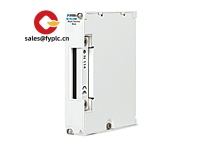
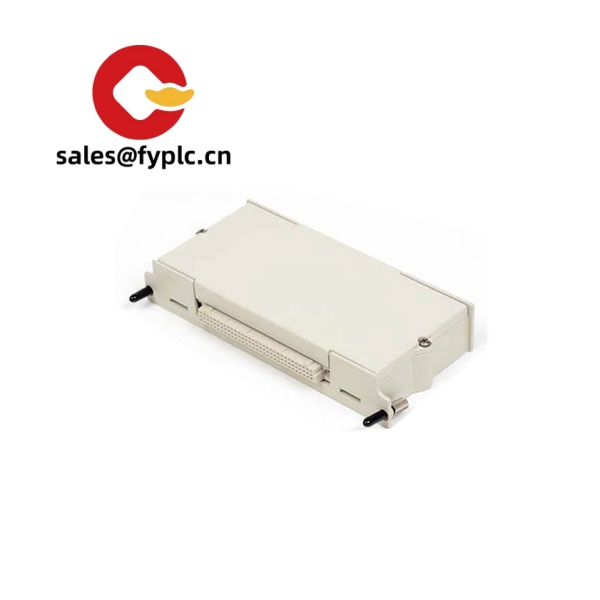
NI PXIe-5122 High-Resolution 100 MS/s Digitizer for PXI Express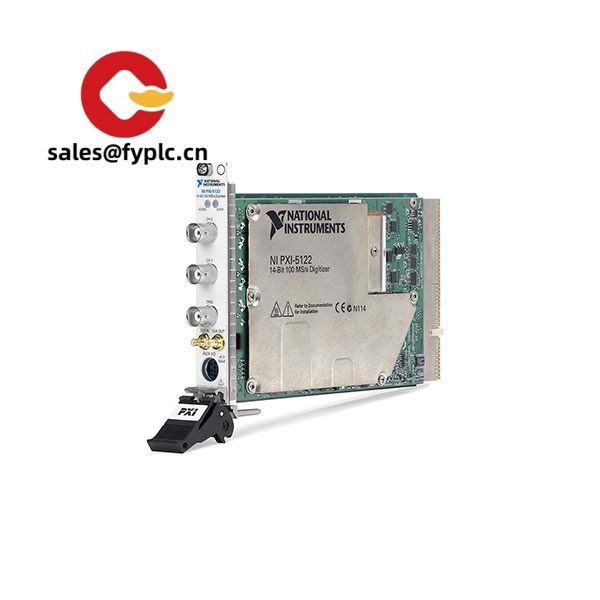
The NI PXIe-5122 is a two‑channel, 14‑bit digitizer that typically runs up to 100 MS/s with about 100 MHz analog bandwidth. From my experience, it’s a solid choice when you need clean, high‑fidelity captures in automated test systems—think sensor characterization, IF/RF baseband analysis, transient recording on power electronics, or mixed‑signal validation where timing correlation matters. You might notice that it balances resolution and speed nicely, so you don’t have to overbuy a faster, noisier scope card just to get reliable data.
Order Placement Process and Guarantees
- Warranty: 365 days
- Delivery: 1 week if in stock; no more than one month at the latest
- Payment: 50% advance payment, full payment before delivery
- Express: FedEx, UPS, DHL
One thing I appreciate is how quickly teams can get this card into a PXI Express chassis, install NI‑SCOPE, and start acquiring data. In many cases, you can stream long records to the host over PXIe and still maintain deterministic triggering across multiple modules.
Key Features
- 14‑bit resolution, 2 simultaneous channels – Captures low‑level detail without sacrificing channel count.
- Up to 100 MS/s, ~100 MHz bandwidth – Suitable for IF/baseband work, precision step responses, and transient events.
- Selectable input impedance (50 Ω or 1 MΩ) – Match to RF paths or general‑purpose probes as needed.
- Flexible input coupling and ranges – AC/DC coupling with multiple voltage ranges for wide application coverage.
- Advanced triggering – Analog, digital, and configurable hysteresis for stable, repeatable captures.
- Multi‑module synchronization – NI‑TClk timing sync typically delivers tight alignment across several digitizers.
- PXI Express streaming – High‑throughput backplane for longer records or higher test throughput.
- Software support – NI‑SCOPE driver with LabVIEW, C/C++, and Python bindings for quick integration.
A test engineer I worked with summed it up simply: “We swapped in the PXIe‑5122 to get cleaner 14‑bit measurements on our sensor bench. Noise floor dropped, triggering got easier, and we didn’t change our code much.” That’s fairly typical.
Technical Specifications
| Brand / Model | National Instruments NI PXIe-5122 |
| Product Type | PXI Express digitizer, 2‑ch, 14‑bit, up to 100 MS/s |
| HS Code | 9030.20 (Oscilloscopes and oscillographs) |
| Power Requirements | Powered via PXI Express backplane; no external supply required |
| Dimensions & Weight | 3U, 1‑slot PXI Express module (standard PXIe form factor) |
| Operating Temperature | 0 °C to 55 °C (typical PXIe operating range) |
| Signal I/O | 2 analog inputs; AC/DC coupling; selectable ranges; 50 Ω or 1 MΩ; trigger I/O; reference clock I/O |
| Communication Interfaces | PXI Express backplane; NI‑SCOPE driver for LabVIEW, C/C++, Python |
| Installation Method | Installs in a PXIe chassis peripheral slot; secured with front‑panel screws |
Related or Supporting Products
- NI PXIe-5124 – 12‑bit, higher sample rate class; a fit when you need more speed than the 5122 but can trade some resolution.
- NI PXIe-5162 – 10‑bit, multi‑GS/s digitizer; better for very fast edges and RF bursts, lower resolution than 5122.
- NI PXIe-5114 – 8‑bit, mid‑range MS/s; cost‑effective alternative when 14‑bit precision isn’t required.
- PXIe Chassis & Controllers – e.g., NI PXIe-1082 chassis and NI PXIe-8880 controller for high‑throughput streaming and sync.
- Probing & Cables – 50 Ω BNC coax or appropriate adapters to match your fixture; use 1 MΩ probes for high‑impedance nodes.
Installation & Maintenance
- Environment – Mount in a PXIe chassis that meets airflow specs; keep intake/exhaust clear for proper cooling.
- Slot choice – Use a standard PXIe peripheral slot; for multi‑module sync, keep modules in adjacent slots to simplify cabling.
- Wiring – For 50 Ω sources, use matched coax and terminate correctly; for 1 MΩ probing, mind bandwidth limits and noise pickup.
- Grounding – Avoid ground loops; in many cases, coupling and range selection can help stabilize triggers.
- Software – Install NI‑SCOPE and verify device recognition in NI MAX before deployment; keep drivers current.
- Calibration – Factory calibration interval is typically 1–2 years depending on quality requirements; schedule periodic checks.
- Cleaning – Power down, remove the module, and use dry air to clear dust; do not use solvents on the front panel.
- Firmware/Driver updates – Check release notes; updates can improve stability and streaming performance.
Quality & Certifications
- Certifications: CE and RoHS compliant; designed for EMC performance per EN 61326‑1 (typical for NI PXIe modules).
- Manufacturing: Produced under ISO 9001 quality systems.
- Warranty: 365‑day coverage through our order terms; manufacturer’s standard policy is typically one year where applicable.

Reviews
There are no reviews yet.