
Description
NVIDIA A100 PCIe – Data center GPU for AI training, inference, and HPC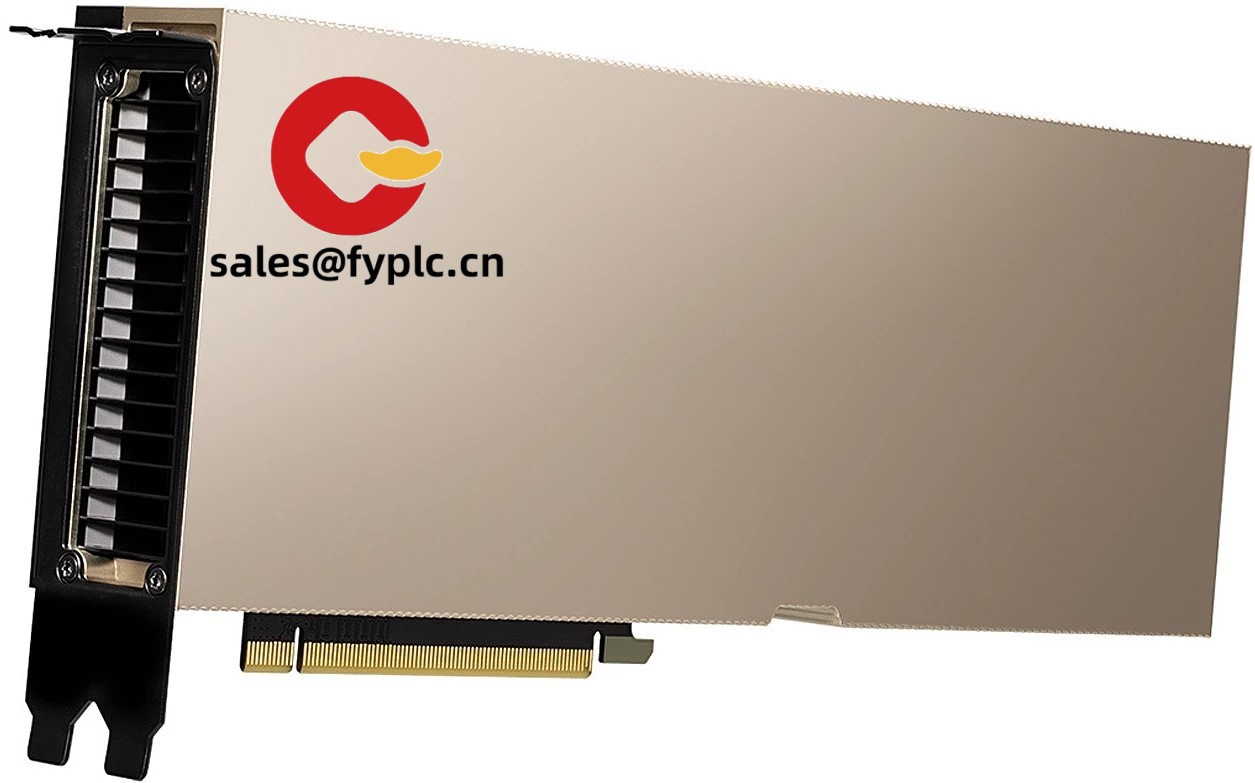
The NVIDIA A100 PCIe brings the Ampere architecture to standard servers, giving you high-density compute for AI and HPC without changing your rack design. From my experience, the PCIe version is the practical choice when you need flexible deployment across multiple nodes, plus the option to carve the GPU into smaller, isolated instances with MIG for mixed workloads. You might notice that teams typically standardize on A100 PCIe when they want predictable performance in 1U/2U servers and easy scaling with PCIe Gen4 x16 bandwidth.
Our Order Placement Process & Guarantees
- Warranty: 365 days (supply-side warranty). Manufacturer’s warranty may vary by region and reseller channel.
- Lead time: In-stock items typically ship within 1 week; no more than one month at the latest.
- Payment: 50% advance payment; full payment prior to delivery.
- Express options: FedEx, UPS, DHL.
Key Features
- Ampere Tensor Core architecture – Optimized for AI training and inference, HPC math, and data analytics on a single platform.
- MIG (Multi‑Instance GPU) – Partition a single A100 into up to seven isolated GPU instances, ideal for mixed, latency-sensitive workloads.
- HBM memory up to 80GB – High-bandwidth HBM2/HBM2e with ECC for large models and memory-bound tasks.
- PCIe Gen4 x16 – High-throughput host connectivity; straightforward integration into mainstream x86 and Arm servers.
- Data center form factor – Full-height, full-length, dual-slot passive card designed for server airflow and 24/7 duty cycles.
- Enterprise software stack – CUDA, cuDNN, NCCL, TensorRT, and NVIDIA AI Enterprise/vGPU support (license dependent).
- Secure and manageable – Telemetry, ECC, and driver-level isolation typically make fleet ops more predictable.
Technical Specifications
| Brand / Model | NVIDIA A100 PCIe (40GB or 80GB variants) |
| HS Code (reference) | 8471.80 (Units of automatic data processing machines) |
| Power Requirements | Typical board power: ~250 W (40GB) or ~300 W (80GB); 12 V DC via PCIe slot and auxiliary power (connector style depends on server OEM) |
| Dimensions & Weight | Full-height, full-length (FHFL), dual-slot passive; approx. 267 mm (L) × 111 mm (H) × 40 mm (T) |
| Operating Temperature | Server-dependent; typically aligns with data center inlet air 18–27°C (ASHRAE A1) with adequate airflow |
| Signal I/O Types | Internal compute accelerator; no external display outputs; host interface only |
| Communication Interfaces | PCIe Gen4 x16; sideband I2C/SMBus for management/telemetry (platform dependent) |
| Installation Method | FHFL dual-slot PCIe add-in card; passive-cooled; requires qualified server airflow and proper retention/brackets |
Application Fields
Teams typically deploy A100 PCIe where they need consistent throughput and easy fleet expansion:
- Deep learning training and inference (NLP, CV, generative models) with MIG for multi-tenant clusters
- HPC and scientific computing (CFD, FEA, molecular dynamics, weather, energy)
- Data analytics and ETL acceleration (Spark RAPIDS, SQL offload, feature engineering)
- Virtualized GPU environments (vGPU) for AI development workspaces and secure multi-user workloads
- Financial modeling and risk analytics where FP64/FP32 throughput and ECC are critical
A customer recently told us, “MIG on A100 PCIe let us collapse three inference nodes into one box without missing SLAs,” which matches what we generally see in production rollouts.
Advantages & Value
- Reliability – Data center-grade design, ECC memory, and mature drivers help reduce unplanned downtime.
- Compatibility – Works with major server brands (x86/Arm) and the standard NVIDIA software stack; easy to slot into PCIe Gen4 platforms.
- Cost efficiency – MIG consolidates smaller jobs onto a single GPU, in many cases cutting node counts and license overheads.
- Future-ready – Broad framework support (CUDA ecosystem) with consistent performance scaling across clusters.
- Procurement flexibility – 40GB and 80GB options to match budget vs. capacity needs, plus straightforward spares strategy.
Installation & Maintenance
- Server & cabinet – Install in FHFL, dual-slot PCIe bays; use 19-inch cabinets with adequate front-to-back airflow and blanking panels to prevent recirculation.
- Power & wiring – Ensure auxiliary GPU power leads match your server’s recommended connector type and rating; verify PSU headroom for peak draw.
- Airflow & thermals – Passive A100 requires the OEM airflow guide/shroud; keep filters clean and maintain target inlet temperature (typically 18–27°C).
- Driver & firmware – Use current NVIDIA data center drivers; schedule periodic driver/firmware updates to maintain stability and security.
- Monitoring – Track thermals and utilization via NVML/DCGM; set alerts for throttling, ECC events, and power excursions.
- Safety – Power down and discharge before handling; use ESD protection; secure the card with retention brackets in high-vibration racks.
Quality & Certifications
- Certifications – CE, FCC, and RoHS compliance are typical for data center add-in cards; UL recognition for safety is commonly observed on assemblies.
- Manufacturing quality – Produced under ISO 9001 quality systems by the OEM and authorized manufacturing partners.
- Warranty – Our supply warranty is 365 days. OEM warranty terms may differ by channel; we can align with your procurement policy on request.
Recommended Supporting Components
- PCIe Gen4 x16 riser kits and FHFL retention brackets matched to your server model
- High-current GPU power harnesses (8‑pin, server‑specific) and cable managers
- Airflow shrouds/ducts for passive GPUs in 1U/2U chassis (OEM kit)
- NVIDIA AI Enterprise or vGPU software licenses for managed, virtualized environments
- High-speed NICs (e.g., NVIDIA ConnectX series) for GPUDirect RDMA and multi-node scaling



Reviews
There are no reviews yet.