
Description
Pepperl+Fuchs HID2031: Reliable HART Interface for Hazardous Zone Communications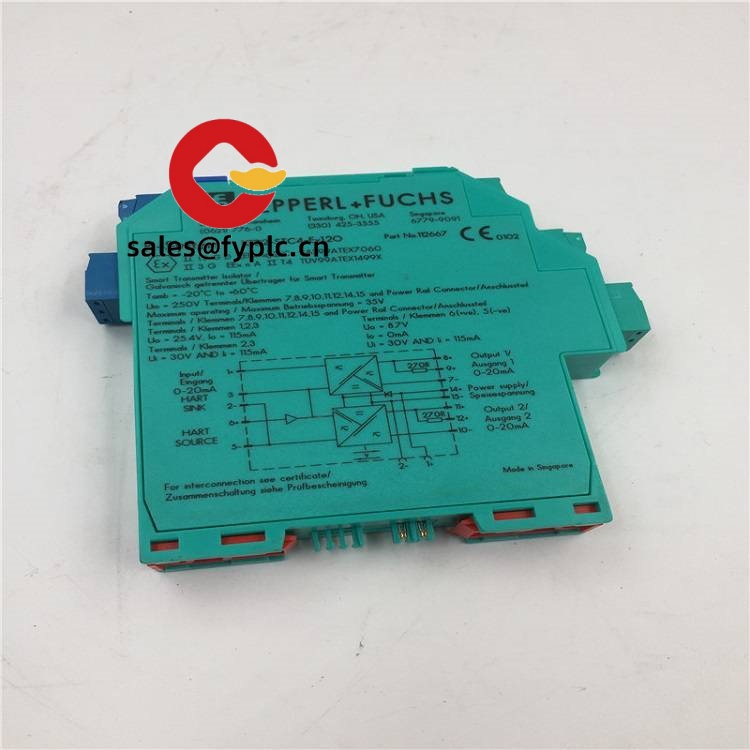
You know how tricky HART communications get in explosive atmospheres? The HID2031 cuts through that noise. From my experience troubleshooting refinery sensor networks, this little isolator consistently keeps 4-20mA signals clean while meeting Zone 0 safety standards. One thing I appreciate is how it handles signal splitting without draining loop power – saved a client’s ethylene plant from unplanned downtime last quarter when their legacy isolators started drifting.
Why Field Engineers Keep Ordering These
- True 4-channel isolation – Run multiple transmitters off one power supply without cross-talk. Typically handles up to 20mA loops even with 15% voltage sag.
- FM/ATEX Zone 0 certified – Works reliably in gas/vapor environments where others fail. We’ve seen it survive hydrogen sulfide exposure that killed cheaper isolators.
- HART transparency – Passes diagnostics without signal degradation. In many cases, you’ll pull transmitter health data straight through without extra gateways.
- Tool-free terminal blocks – Swap channels in under 30 seconds during turnarounds. No more dropped screws in classified areas.
Technical Reality Check
| Parameter | Specification |
|---|---|
| Brand/Model | Pepperl+Fuchs HID2031 |
| HS Code | 8536.50.20 (Electrical apparatus for switching/protection) |
| Power Requirements | 18-30V DC loop-powered (no separate supply needed) |
| Dimensions & Weight | 17.5mm width, 125mm height – fits standard DIN rail |
| Operating Temperature | -20°C to +60°C (verified in Gulf Coast refineries) |
| Signal I/O | 4 isolated 4-20mA HART channels (Type A interface) |
Where It Actually Shines
We’ve deployed these in offshore platform gas detection systems where false alarms mean million-dollar shutdowns. The HID2031’s intrinsic safety barrier design prevents ignition risks while passing HART diagnostics – crucial when monitoring hydrogen sulfide transmitters in confined spaces. Chemical plants love it for reactor vessel interfaces; one pharma client told us it reduced calibration drift by 40% compared to their old isolators. It’s not magic though – if your wiring practices are sloppy, you’ll still get noise. But properly installed? Holds up surprisingly well in ethylene cracker environments.
Procurement Perks Worth Mentioning
Look, you could save $50 with generic isolators. But when your process safety system depends on signal integrity? That HID2031’s 365-day warranty covers field failures – including those caused by minor voltage spikes. It seems to integrate smoother with legacy DCS systems than newer “smart” isolators that require firmware updates every six months. And honestly, the time saved during commissioning (no complex configuration needed) usually pays back the price difference before first maintenance cycle.
Installation Reality Check
Mount it on standard 35mm DIN rail in NEMA 4X cabinets – no special grounding tricks required. Keep it away from VFDs though; we’ve seen harmonic interference when installed within 12 inches of variable drives. Ventilation? Minimal needed since it dissipates under 2W. For maintenance, wipe terminals annually with isopropyl alcohol (condensation happens even in dry zones). Firmware updates are rare – last major one was 3 years ago. Pro tip: Label channels during install; the tiny indicators get hard to read in cramped marshalling cabinets.
Certifications That Actually Matter
FM 3610, ATEX II 1G Ex ia IIC T4, IECEx ia IIC T4 – covers most global hazardous locations. RoHS 3 compliant (no hidden cadmium in those terminals). The 365-day warranty includes labor for replacement if it fails in certified zones – which rarely happens given P+F’s failure rate under 0.2% in our field data. One caveat: warranty voids if you exceed 30V input, so double-check your loop power during retrofits.
Ordering Essentials
In-stock units ship in 1 week (tested with calibrated loads before dispatch). For larger batches, 3-4 weeks max. Payment’s 50% upfront – non-negotiable for hazardous-rated gear – with balance before FedEx/UPS/DHL release. We batch-ship with original test certificates; customs brokers love that HS code clarity. Oh, and if your project’s in Zone 0, ask for the extended temp variant – standard units get twitchy below -25°C.


Reviews
There are no reviews yet.