
Description
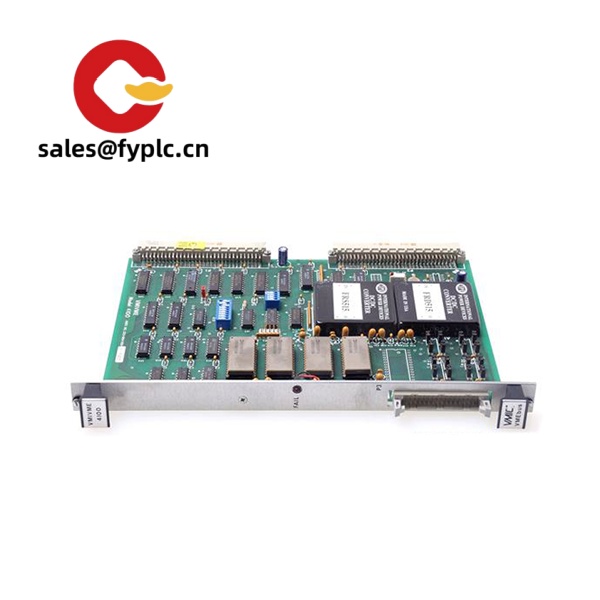
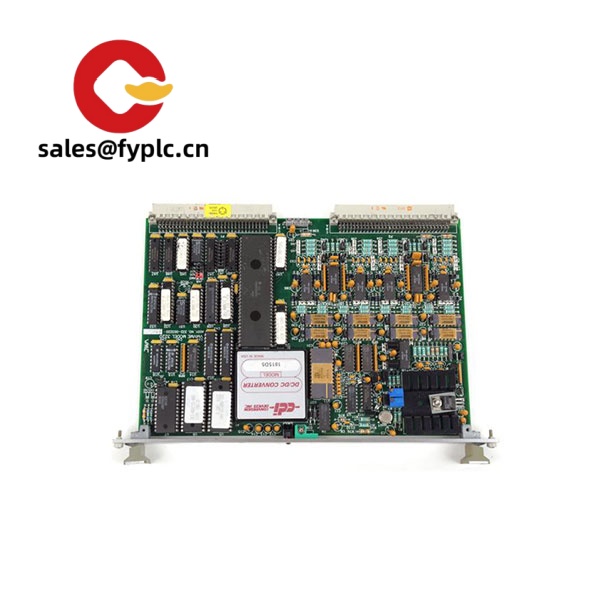
VMIC VMIVME-3120 – VME Analog Input Board for Industrial Data Acquisition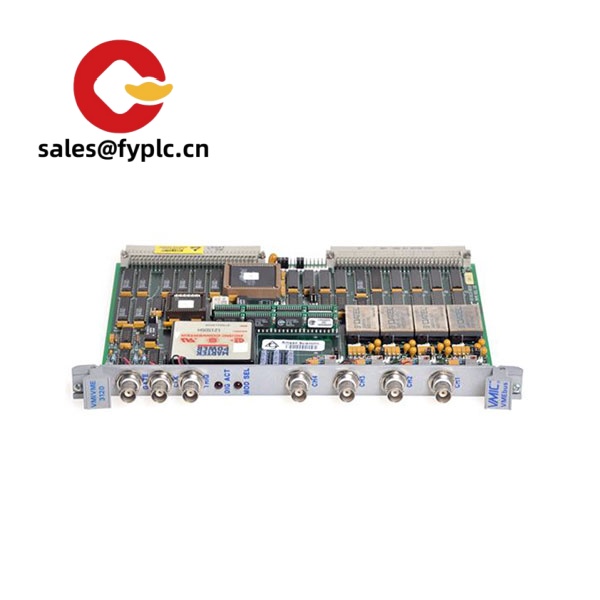
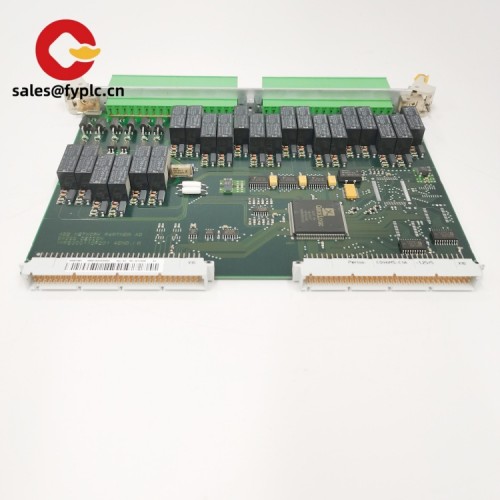
The VMIC VMIVME-3120 is a VMEbus analog input board designed for dependable data acquisition in control cabinets, test benches, and legacy equipment upgrades. From my experience, it’s the kind of board teams choose when they need stable, multi-channel analog inputs tied directly into a VME system—no drama, just consistent readings and straightforward integration. You might notice that it plays nicely in mixed-signal racks where voltage signals from sensors, transducers, and control loops need to be sampled and processed by a VME CPU in real time.
Typical applications include power and process monitoring, automated test systems, avionics and railway rigs, and any plant setup still standardized on 6U VME. One thing I appreciate is how these VMIC boards usually balance channel density, resolution, and mature VME compatibility, which in many cases makes refurbishments and expansions far easier than migrating the whole platform.
Company’s Order Placement Process and Guarantees
- Warranty: 365 days
- Lead time: 1 week if in stock; no more than 1 month at the latest
- Payment: 50% advance payment; full payment before delivery
- Express options: FedEx, UPS, DHL
- Each unit is function-checked prior to dispatch; test report can be provided upon request
Key Features
- VMEbus integration – Standard 6U VME form factor with conventional VME bus handshaking, making it a drop-in for existing backplanes.
- Multi‑channel analog inputs – Designed for aggregated sensor measurements; typically supports a mix of single‑ended or differential channels for flexible wiring.
- Industrial voltage ranges – Common ranges like ±10 V or 0–10 V are supported in most deployments, useful for PLC interfacing and transducer outputs.
- Stable conversion performance – A/D conversion suitable for process and test data; typically 12‑bit class resolution on this model, with filtering options handled in software on the host CPU.
- Field connectivity – Front-panel, high-density connectors routed to shielded cables or terminal blocks; simplifies panel wiring in cramped cabinets.
- Serviceable in legacy fleets – Ideal for maintaining installed VME systems without re-qualifying the entire control architecture.
Technical Specifications
| Brand / Model | VMIC (GE Fanuc lineage) / VMIVME-3120 |
| Product Type | VMEbus analog input (A/D) board |
| HS Code | 8537.10 (Boards/panels for electric control, general classification) |
| Power Requirements | +5 VDC (typical VME rail); ±12 VDC rails may be required for analog front end depending on configuration |
| Dimensions & Weight | 6U VME Eurocard, approx. 233 × 160 mm; weight ~0.5 kg (typical) |
| Operating Temperature | 0 to +55 °C (commercial VME range, typical) |
| Signal Input/Output Types | Analog voltage inputs; single‑ended or differential wiring; common ranges such as ±10 V and 0–10 V |
| A/D Resolution | Typically 12‑bit for this model; higher‑resolution variants exist in the series |
| Communication Interfaces | VMEbus interface (A16/A24 addressing, standard VME data widths) |
| Installation Method | 6U VME slot in a compatible backplane chassis; field I/O via front‑panel high‑density connector to shielded breakout/terminal block |
Related or Supporting Products
- VMIVME-3122 – Higher channel density and 16‑bit class resolution in many builds; chosen when tighter accuracy is required.
- VMIVME-3128 – Faster sampling 16‑bit variant for dynamic signals; typically used in automated test systems.
- VMIVME-413x/41xx Series (Analog Output) – Pair with the VMIVME-3120 when closed‑loop control or stimulus generation is needed.
- VME CPU boards (e.g., VMIVME-7xxx series) – Host processing and data logging; verify OS/VxWorks or Linux VME driver availability.
- Shielded terminal blocks and cables – Use manufacturer‑recommended pinouts to minimize noise and ground loops.
A process OEM we support kept their test stand intact by swapping in a VMIVME-3120 for a failing card—no software rewrite, just adjusted gain settings and they were live within the same shift. That’s typically the advantage of staying within the VMIC family.
Installation & Maintenance
- Cabinet & chassis – Install in a 6U VME chassis with adequate airflow. Maintain at least 25 mm clearance for convection; use forced air if rack temperatures trend above 45 °C.
- Grounding & shielding – Terminate shields at a single point to reduce loops. Differential inputs are recommended where noise is present.
- Wiring – Use twisted, shielded pair for analog signals. Keep power wiring and relay lines physically separated from low‑level inputs.
- Power rails – Verify +5 V backplane regulation under load; if ±12 V is used for the analog front end, confirm ripple is within spec.
- Safety – De‑energize the chassis before insertion/removal. Observe ESD precautions; handle via front panel and card edges.
- Routine maintenance – Quarterly dust cleaning with dry air, connector reseat annually, and firmware/driver alignment with the host CPU image. Periodic calibration checks are recommended if you run tight tolerances.
Quality & Certifications
- CE conformity for EMC and safety is typical for VMIC VME boards.
- Manufactured under ISO 9001 quality systems (lineage through GE Fanuc/Abaco).
- RoHS status may vary by build generation; many legacy VME cards are non‑RoHS. We can verify by serial/lot before shipment.
- Warranty: 365 days replacement/repair coverage as stated above.
If you can share your required channel count, input ranges, and host CPU/OS, we’ll confirm the exact VMIVME-3120 variant and pinout, and advise whether a 3122 or 3128 would better match your accuracy or speed targets.

Reviews
There are no reviews yet.