
Description
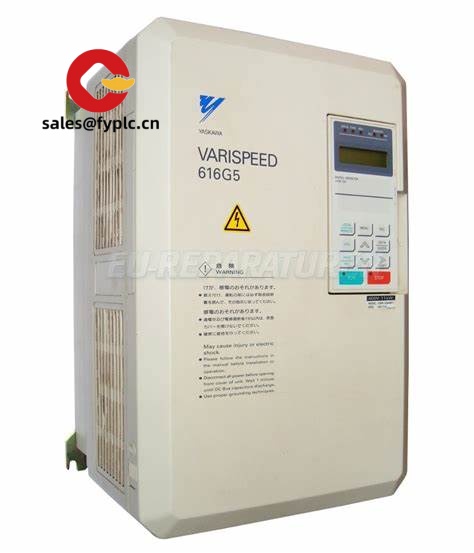
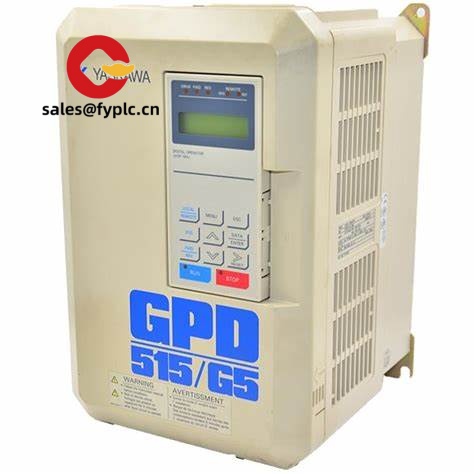
YASKAWA CIMR-HB4A0039 – Hoist/Crane Inverter Drive for Heavy-Duty Lifting Control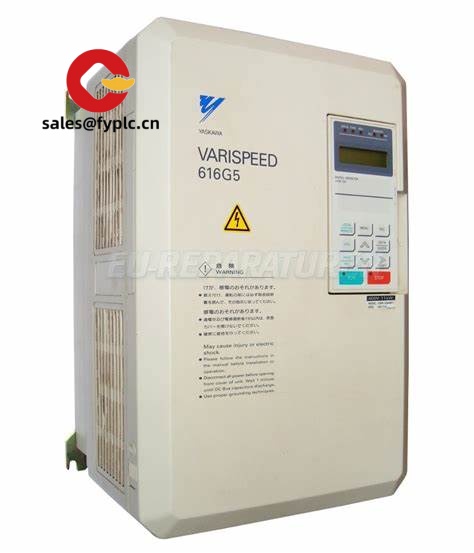
The YASKAWA CIMR-HB4A0039 belongs to the H1000 hoist series, designed specifically for cranes, winches, and lifting mechanisms that demand precise torque control and safe brake handling. From my experience, this 400 V class unit is a popular pick when you need stable low-speed torque, smooth load handling, and reliable brake sequencing under heavy duty cycles. You might notice that the “4A0039” code typically maps to a 3-phase 380–480 V model with around 39 A output, which in many cases corresponds to about 15 kW (HD) or 18.5 kW (ND) motor ratings at 400 V.
Order Placement Process and Guarantees
- Warranty: 365 days
- Lead time: 1 week if in stock; no more than 1 month at the latest
- Payment: 50% advance; full payment before delivery
- Express options: FedEx, UPS, DHL
Key Features
- Hoist-optimized brake control – Coordinated torque proving and brake sequencing reduce load slip during start/stop.
- High starting torque, stable low-speed operation – Sensorless or closed-loop vector control for smooth inching and precise positioning.
- Heavy-duty overload capability – Typically suited for crane duty cycles with frequent acceleration/deceleration.
- Safe, predictable lowering – Dynamic braking support and torque limits to handle overhauling loads.
- Flexible I/O and fieldbus – Standard RS‑485 (Modbus RTU) with options for PROFINET, EtherNet/IP, PROFIBUS, and more.
- Robust protection – Overcurrent, overvoltage, motor overload, and stall prevention suited to demanding sites.
- Energy and maintenance savings – Reduced mechanical brake wear and smoother motion, often cutting downtime.
Technical Specifications
| Brand / Model | YASKAWA CIMR-HB4A0039 (H1000 hoist series) |
| HS Code | 8504.40 (Static converters – AC motor drives) |
| Power Requirements | 3‑phase 380–480 VAC, 50/60 Hz (400 V class) |
| Output Rating | Approx. 39 A; typically ~15 kW (HD) / ~18.5 kW (ND) at 400 V |
| Operating Temperature | ‑10 to +40 °C without derating (typical); up to +50 °C with derating and proper ventilation |
| Signal I/O Types | Programmable digital inputs/outputs; analog 0–10 V and 4–20 mA; relay outputs; encoder/pulse interface (optional) |
| Communication Interfaces | RS‑485 Modbus RTU (standard); options for PROFINET, EtherNet/IP, PROFIBUS‑DP, DeviceNet, CANopen |
| Installation Method | Panel/cabinet mount (book-style); vertical orientation with required clearances |
| Dimensions & Weight | Frame-size dependent for this rating; exact outline/weight available on request |
Application Fields
This model is tailored for lifting duty. Typical applications include overhead bridge cranes, gantry cranes, hoists and monorails, winches, stage lifting, steel mill maintenance cranes, container handling, and marine deck equipment. One thing I appreciate is how the drive handles overhauling loads during lowering; it tends to keep motion smooth without relying excessively on the mechanical brake.
Advantages & Value for Procurement
- Purpose-built for hoists – Less tuning time and fewer add-ons versus adapting a general-purpose drive.
- Compatibility – Works with standard 400 V hoist motors; supports encoder feedback when higher precision is needed.
- Reduced wear – Brake life typically improves thanks to torque proving and coordinated release/engage.
- Scalable networking – Add the fieldbus card you need without changing the drive platform.
- Serviceability – Straightforward parameter structure and accessible terminals help maintenance teams.
Installation & Maintenance
- Environment – Mount vertically in a well‑ventilated cabinet (IP54 cabinet recommended for dusty sites). Keep clearances per the manual and avoid direct heat sources.
- Power & wiring – Use appropriately rated input fuses/breakers, EMC-compliant cable routing, and shielded motor leads for long runs. Ground the drive to a low‑impedance earth.
- Braking resistor – For frequent lowering/rapid stops, connect a matched braking resistor bank. Many units at this rating support an internal chopper.
- Brake control – Wire the mechanical brake to the dedicated brake output and enable torque-proving parameters before releasing the brake.
- Encoder feedback (if used) – Keep encoder cables separated from power wiring; use proper shielding and 0V reference.
- Routine care – Periodically clean filters/heatsinks, check fan operation, back up parameters, and review logs. Firmware updates and capacitor checks are advisable during planned shutdowns.
- Safety – Lockout/tagout during service; verify motor direction unloaded; test brake sequence at low speed with no load first.
Supporting Components & Options
- Fieldbus cards: YASKAWA SI‑series options for PROFINET, EtherNet/IP, PROFIBUS‑DP, DeviceNet, CANopen
- Braking resistor banks sized for the 4A0039 rating (heavy-duty cycles)
- Input line reactors / EMC filters for harmonics and emissions compliance
- Incremental encoder kits and shielded encoder cables for closed-loop vector control
- External keypad and copy unit for quick parameter transfer across drives
Feedback from a maintenance supervisor on a port gantry crane: “Startup was straightforward. The brake release felt much cleaner than our older units, and inching the hook into position was noticeably smoother.”
Quality & Certifications
- Manufacturer compliance typically includes CE and UL/cUL; RoHS-conformant design
- Built for heavy-duty industrial environments with robust protection features
- Supplier warranty: 365 days from delivery
Reviews
There are no reviews yet.