
Description
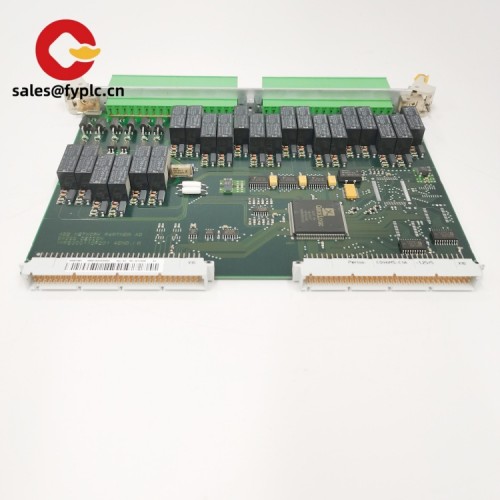
Yokogawa AAI143-H00A4S00 – HART Analog Input Module for FIO (CENTUM VP/CS 3000)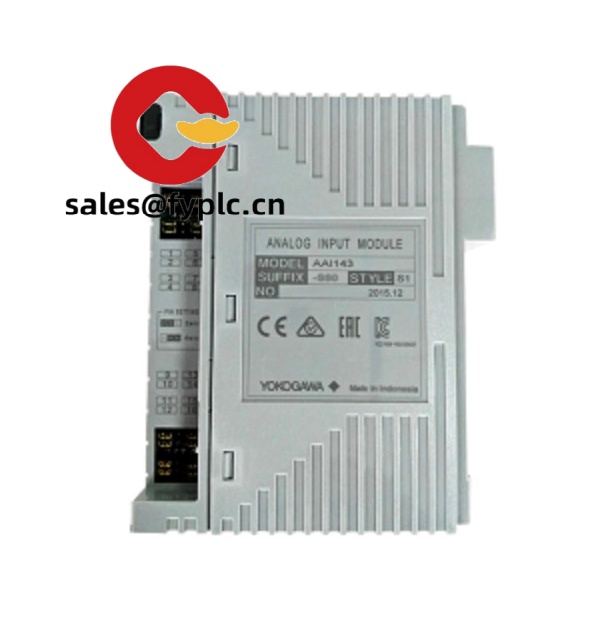
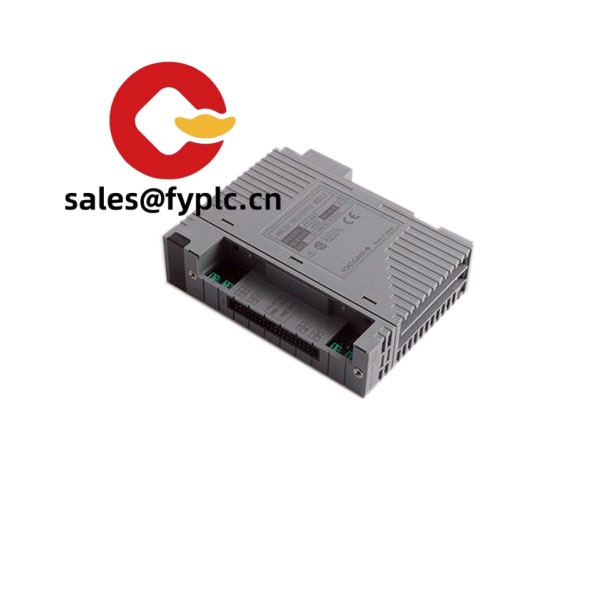
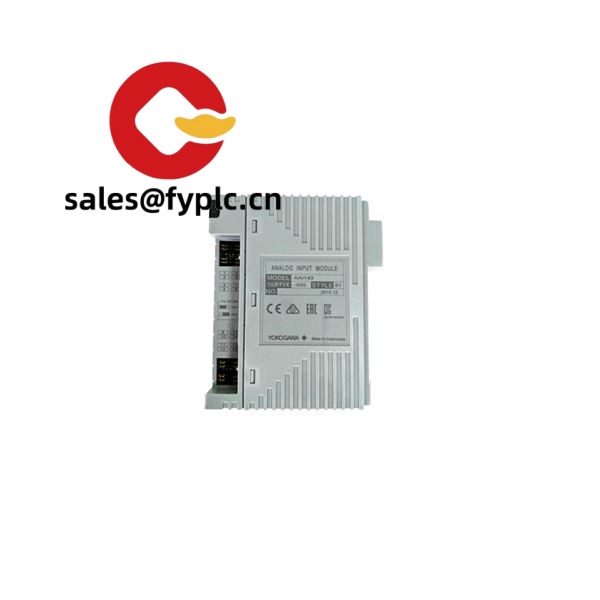
The Yokogawa AAI143-H00A4S00 is a multi-channel analog input module designed for the FIO subsystem used in CENTUM VP/CS 3000 control systems. From my experience, it’s the go-to choice when you need dense, stable 4–20 mA acquisition with HART capability and don’t want to compromise on long-term maintainability. You might notice that it sits neatly in the FIO baseplate and just works—typical Yokogawa behavior—quiet, predictable, and very tolerant of busy plants.
Order Placement Process and Guarantees
- Warranty: 365 days
- Lead time: Typically 1 week if in stock; no more than one month at the latest
- Payment terms: 50% advance payment; full payment prior to delivery
- Express delivery options: FedEx, UPS, DHL
Key Features
- HART-enabled 4–20 mA inputs – Streamlines device diagnostics and configuration through the control system, typically without extra multiplexers.
- High channel density – The AAI143 series is commonly used where many loops must fit in a compact footprint, reducing cabinet space and wiring effort.
- Stable, low-noise measurement – Designed for process plants; it appears to deliver repeatable readings even with long field cable runs.
- Backplane powered via FIO – No external power supply to the card; simplifies panel design and maintenance.
- Field-friendly status and diagnostics – From open-loop detection to channel fault indications, in many cases it shortens troubleshooting time.
- Seamless with CENTUM VP/CS 3000 – Works within Yokogawa’s FIO node architecture for consistent engineering, asset management, and spare parts strategy.
Technical Specifications
| Brand / Model | Yokogawa AAI143-H00A4S00 (FIO analog input module) |
| HS Code | 8538.90 (Parts suitable for use with apparatus of 85.37) |
| Power Requirements | Supplied via FIO backplane; no external field power needed for the module itself |
| Signal Input Types | 4–20 mA analog current inputs; HART pass-through supported on H-suffix variants |
| Typical Channel Density | High-density AI (commonly used for multi-loop panels) |
| Communication Interfaces | Backplane interface to FIO Node Unit (ESB/ER system architecture) |
| Operating Temperature | Typically 0 to 55°C (32 to 131°F) |
| Installation Method | Plugs into Yokogawa FIO baseplate within the Node Unit; DIN-rail or panel mount base depending on the FIO frame |
| Dimensions & Weight | Single-width FIO module form factor; approx. compact card size suitable for dense cabinets |
Application Fields
This module is typically deployed in process industries where 4–20 mA loops and smart field devices are standard. I see it most often in:
- Refining and petrochemical units – Tight loop density per rack and HART diagnostics for critical transmitters.
- Specialty chemicals and batch plants – Clean integration with asset management for quick turnaround maintenance.
- Power generation and utilities – Stable input capture, especially on long home-run cables.
- Water and wastewater – High channel count fits compact control rooms and prefabricated MCC rooms.
- Pharma and food – Where validated, repeatable measurement and device traceability matter.
Advantages & Value
- Proven reliability – In many cases, these FIO AIs run for years without drift complaints, which lowers lifecycle cost.
- Compatibility – Native fit with CENTUM VP/CS 3000 engineering tools and HART device management reduces integration effort.
- Space and wiring savings – High channel density translates to smaller cabinets and fewer terminal blocks.
- Maintainability – Clear diagnostics and straightforward replacement help keep shutdowns short.
- Supplier continuity – Yokogawa’s long product support windows simplify spares planning for regulated sites.
Installation & Maintenance
- Cabinet environment – Use a properly grounded cabinet with adequate ventilation; keep ambient within the stated temperature range.
- Wiring practices – Use shielded twisted pairs for 4–20 mA loops; land shields at one end to avoid ground loops.
- HART considerations – Maintain loop impedance in the recommended window so handhelds and AMS/DCS can communicate reliably.
- Module handling – Fit into the correct FIO baseplate slot; de-energize or follow the system’s online replacement procedure if supported.
- Routine maintenance – Periodic terminal inspection, cleaning of dust, and verification of loop health; schedule firmware updates when advised by Yokogawa.
- Calibration – Transmitters do the calibration; the card typically needs only periodic verification via loop checks during turnarounds.
Supporting Components (Common Pairings)
- Yokogawa FIO Node Units (e.g., ANB-series) – Provide the backplane power and ESB/ER system interface.
- FIO terminal boards – Screw or spring-clamp types for clean field terminations and easy loop testing.
- HART handhelds/asset management – For device configuration, valve diagnostics, and loop health analytics.
One thing I appreciate is how quickly technicians get comfortable with this card. A maintenance lead told me they swapped an AAI143 in a live unit during a planned window and had loops healthy in minutes—no chasing strange offsets or noise. That kind of predictability tends to show up on the balance sheet over time.
Quality & Certifications
- Certifications: Typically CE marked; UL/CSA listings and RoHS conformity are commonly available for Yokogawa FIO modules.
- Manufacturing quality: Built under ISO-certified quality systems, aimed at long field life in industrial environments.
- Warranty: 365 days from delivery as stated above.
Note: The AAI143-H00A4S00 designation identifies a specific option set within the AAI143 family. If you’re matching an installed base, sharing the exact suffix with your inquiry typically ensures pin-for-pin and behavior-level compatibility.

Reviews
There are no reviews yet.