
Description
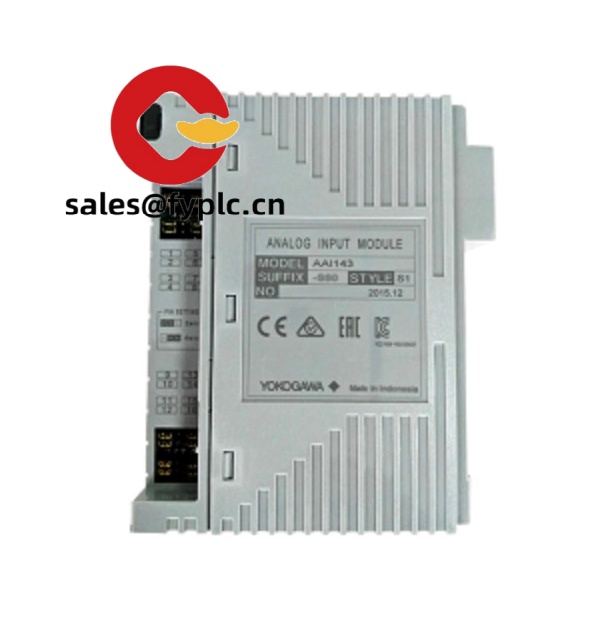
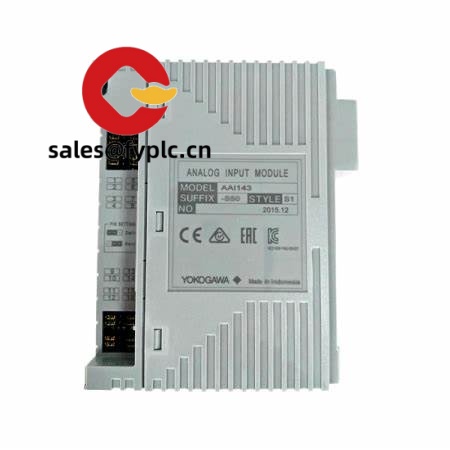
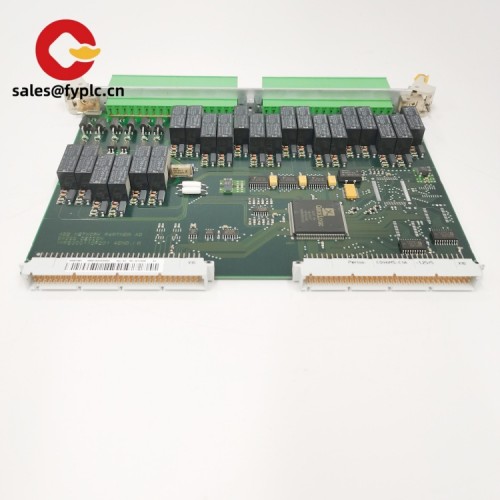
Yokogawa AAI143-S00 – Analog Input Module for CENTUM VP/CS 3000 FIO Systems
The Yokogawa AAI143-S00 is a Field I/O (FIO) analog input module typically used to bring 4–20 mA process signals into CENTUM VP/CS 3000 systems. From my experience, it’s a practical drop-in for brownfield expansions and a safe choice for maintenance teams standardizing on Yokogawa’s FIO platform. The “S00” is a style code that identifies the hardware revision, helping with one-for-one replacements in installed bases.
You might notice that it works seamlessly with Yokogawa node units and baseplates, so engineering effort stays low—especially when you’re adding points or swapping a faulty card during a shutdown. In many cases, loop-powered transmitters will use external 24 VDC, while the module itself is powered from the FIO backplane through the node unit.
Order Placement Process & Guarantees
- Warranty: 365 days
- Delivery: 1 week if in stock; no more than one month at the latest
- Payment: 50% advance payment; full payment prior to delivery
- Express options: FedEx, UPS, DHL
Key Features
- Analog current input for process signals – Typically supports 4–20 mA transmitters used across process plants.
- FIO backplane integration – Plugs into Yokogawa FIO baseplates and communicates via the node unit (e.g., ANB10/ANB11), which keeps the cabinet layout consistent.
- Point density suitable for expansions – A practical option when you need to add AI points without reworking the system architecture.
- Engineering consistency – Uses standard Yokogawa configuration practices; minimizes revalidation effort in validated environments.
- Service-friendly – In many cases, supports online replacement procedures on FIO, reducing downtime when swapping a card.
- Stable measurement with filtering – Designed for clean AI capture in industrial environments; typically paired with proper shielding and grounding at the terminal board.
Technical Specifications
| Brand / Model | Yokogawa AAI143-S00 |
| HS Code | 853890 (Parts for electrical control equipment) |
| Power Requirements | Powered via Yokogawa FIO backplane through the node unit; field loop power typically supplied externally by 24 VDC. |
| Operating Temperature | Typically 0 to +50°C (consult system manual for exact rating) |
| Signal Input/Output Types | Analog current input, commonly 4–20 mA; range options may depend on the selected terminal board. |
| Communication Interfaces | FIO backplane interface to node units (e.g., ANB10/ANB11); no external fieldbus ports on the module itself. |
| Installation Method | Plug-in module on Yokogawa FIO baseplate; field wiring via Yokogawa terminal board/cable assembly depending on cabinet design. |
| Dimensions & Weight | Standard single-width FIO plug-in form factor (compact; suited for dense cabinet layouts). |
Note: Specific channel counts and exact ranges vary by Yokogawa option and terminal board pairing. If you share your existing card list or engineering data, we can match it one-to-one.
Application Fields
- Oil & Gas and Petrochemicals – Bringing in flow, pressure, and level transmitters on production and refining units.
- Chemical & Specialty Materials – Stable analog capture for batch and continuous processes.
- Power & Utilities – Boiler, balance-of-plant, and water treatment analog loops.
- Water & Wastewater – Lift stations, clarifiers, and dosing skids where 4–20 mA is standard.
- Pharma & Food – When a like-for-like DCS spare keeps validation and documentation straightforward.
Advantages & Value for Procurement
- Form-fit-function compatibility – Seems to be the easiest path for maintenance teams to restore I/O quickly with minimal engineering change.
- Lower project risk – Using the OEM-form FIO card helps avoid unexpected behavior in validated or safety-critical areas.
- Inventory efficiency – One spare can cover multiple units on the same baseplate family, typically reducing stock levels.
- Support readiness – We can help verify compatibility with your node unit and terminal board list to prevent field surprises.
Installation & Maintenance Notes
- Cabinet & baseplate – Install on the appropriate Yokogawa FIO baseplate connected to a node unit (e.g., ANB10/ANB11). Keep adequate clearance for airflow and service access.
- Wiring practices – Use shielded twisted-pair for analog loops; land shields as per site grounding standards to minimize noise. External 24 VDC loop power is typically required for 2-wire transmitters.
- Safety – De-energize field loops before landing or moving conductors. Follow site LOTO and the Yokogawa maintenance manual when performing online card replacement.
- Routine upkeep – Periodically verify channel scaling/range in the engineering station; check terminal tightness and look for corrosion or moisture. Keeping firmware aligned with your system revision usually avoids nuisance diagnostics.
Quality & Certifications
- Manufactured under Yokogawa quality systems (ISO 9001 at the corporate level).
- CE compliance typically applies within the FIO system context; RoHS conformity is commonly available for this product family.
- UL/CSA availability may depend on the specific system configuration and terminal board; share your exact build for confirmation.
- Backed by a 365-day warranty from our side for the supplied unit.
Customer remark: “We replaced an AAI143-S00 one-for-one on a crude unit during a short outage. No rework on logic, and the loop checks were clean. It saved us a day we didn’t have.”
Related Components (for a complete setup)
- Node Units: ANB10 / ANB11 series – provides FIO backplane power and communication.
- Terminal Boards & Cables: Yokogawa FIO terminal board assemblies matched to analog input wiring (selection depends on loop type and cabinet layout).
If you share your existing card list (model codes and style numbers), we’ll check compatibility and confirm delivery from our stock or fastest source. That small step typically eliminates most project risk before you schedule any field work.

Reviews
There are no reviews yet.