
Description
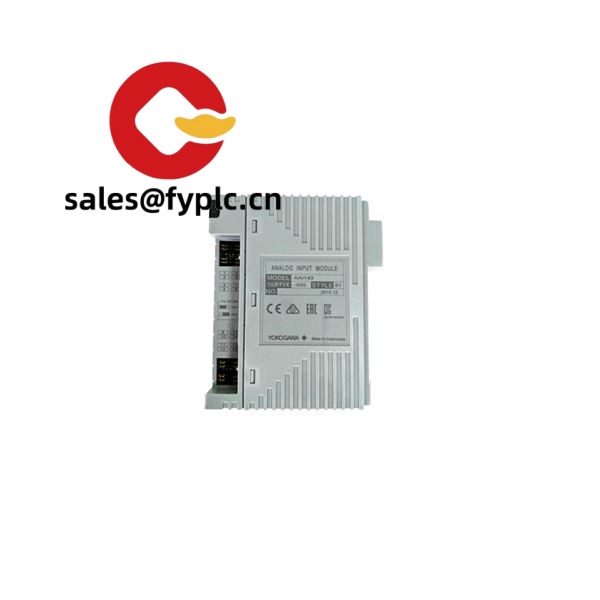
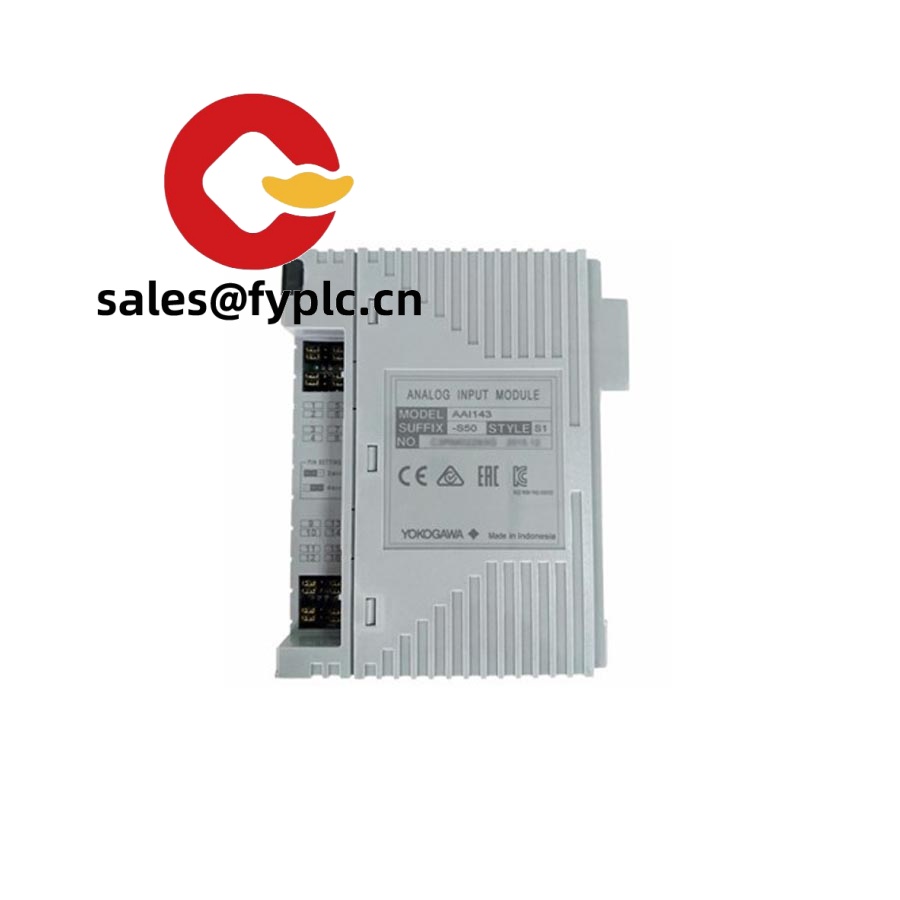
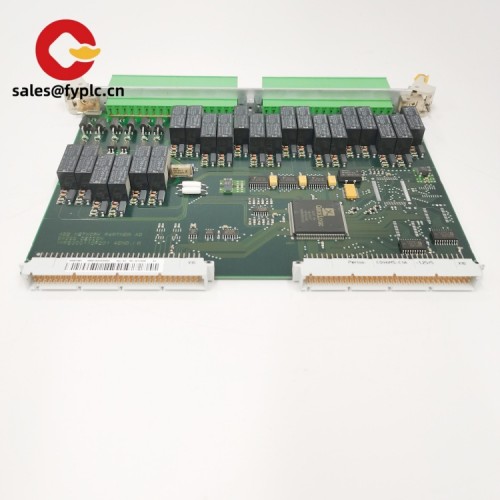
Yokogawa AAI143-S50 Analog Input Module – High‑density 4–20 mA AI for CENTUM VP/CS 3000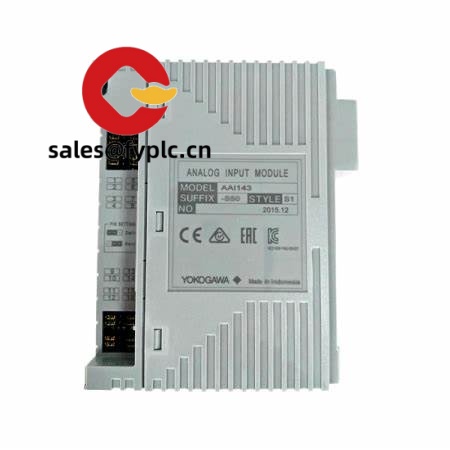
The Yokogawa AAI143-S50 is a high‑density analog input module designed for 4–20 mA process signals in CENTUM VP/CS 3000 control systems. From my experience, it’s the card you pick when you need to add a lot of AI points without expanding cabinet footprint—typical in brownfield revamps or incremental plant expansions. The “S50” style indicates a later hardware revision within the AAI143 family, which usually brings small reliability tweaks and broader compatibility across node units and terminal boards.
You might notice that it plays nicely with externally powered 2‑wire transmitters and standard 4–20 mA loops, making it straightforward to consolidate flow, pressure, level, or temperature transmitters into a compact slice of your I/O rack. One thing I appreciate is how it helps engineering teams keep marshalling simple while retaining Yokogawa’s stable input handling and noise immunity, which, in many cases, reduces troubleshooting time.
Our Order Placement Process and Guarantees
- Warranty: 365 days
- Delivery: Typically 1 week if in stock; no more than one month at the latest
- Payment: 50% advance payment; full payment prior to delivery
- Express options: FedEx, UPS, DHL
- Packaging: Anti‑static protection with shock‑resistant outer packing
- Traceability: Serial/lot numbers recorded for every shipment
Key Features
- High‑density 4–20 mA inputs – Consolidates many AI points into a single module, typically used to save cabinet space.
- Designed for CENTUM VP/CS 3000 – Integrates with Yokogawa FCS nodes for consistent configuration and diagnostics.
- Externally powered loops – Works seamlessly with standard 2‑wire/4‑wire transmitters; simplifies loop design in most cases.
- Robust signal handling – Stable input conditioning helps with noisy environments common in oil & gas and chemical plants.
- Compact footprint – Frees up rack space and reduces marshalling complexity compared with low‑density cards.
- Style S50 hardware – A later style variant for improved lifecycle alignment and replacement availability.
Technical Specifications
| Brand / Model | Yokogawa AAI143-S50 |
| Product Type | Analog Input Module for CENTUM VP/CS 3000 FCS |
| HS Code | 8538.90 (Parts suitable for switching/control panels) |
| Signal Input Type | 4–20 mA DC analog inputs (externally powered loops) |
| Channel Density | High‑density, commonly 16 channels on one module |
| Communication Interface | Internal I/O system bus to the Yokogawa FCS node |
| Power Requirements | Powered via I/O base/backplane; no separate module supply |
| Operating Temperature | 0 to 55 °C (typical for this series) |
| Dimensions & Weight | Approx. 130(H) × 27.4(W) × 130(D) mm; ≈0.2 kg |
| Installation Method | Plug‑in mounting to Yokogawa I/O base with matching terminal board; cabinet/DIN‑rail enclosure |
Application Fields
This module is typically deployed wherever many 4–20 mA transmitters need to be brought into a CENTUM node without growing the cabinet count:
- Oil & Gas – wellhead pressures, separators, flow metering skids
- Chemicals & Petrochem – reactor feeds, column differentials, utilities
- Power & Energy – boiler/HRSG loops, balance‑of‑plant measurements
- Water & Wastewater – level, turbidity, dosing control
- Pulp & Paper / Food – temperature and flow transmitters across lines
“We slotted AAI143‑S50 into an existing CENTUM rack and added 48 AI points with minimal rewiring. Commissioning was faster than expected, and the noise rejection was solid in our MCC corridor.” — Process Control Engineer, refinery expansion project
Advantages & Value
- Reliability – Yokogawa’s I/O build quality and conservative thermal design tend to hold up well in 24/7 plants.
- Compatibility – Works within existing CENTUM VP/CS 3000 architectures, so engineering teams can reuse standards.
- Cabinet savings – High‑density AI reduces racks and terminal marshalling, often cutting installation labor and panel cost.
- Serviceability – Clear channel diagnostics and standard loop handling usually mean quicker fault isolation.
- Supply assurance – S50 style version is broadly available, which helps with maintenance planning.
Installation & Maintenance
- Cabinet & mounting – Install on the specified Yokogawa I/O base/terminal board in a ventilated control cabinet; maintain clearance for airflow.
- Wiring – Use shielded twisted pairs for 4–20 mA loops; land shields to a single clean ground point. Keep signal cables away from high‑voltage runs.
- Loop power – Provide external 24 VDC loop power for 2‑wire transmitters; verify polarity and loop burden on each channel.
- Safety – De‑energize field loops before moving terminations. Follow site LOTO and ESD handling practices when replacing modules.
- Routine upkeep – Periodically check terminal tightness, inspect for corrosion, and validate critical loops. Firmware updates (if applicable to your node) should be scheduled via the engineering station.
- Spare strategy – Keeping one spare per rack or per 80–100 AI points tends to minimize downtime in most plants.
Quality & Certifications
- Manufacturer quality systems: ISO 9001 (typical for Yokogawa production facilities)
- Compliance: CE marking; UL recognition; RoHS alignment in many variants
- Warranty: 365 days from shipment
If you’re matching this AAI143‑S50 to an existing node, share your FCS type and terminal board details and we’ll double‑check channel density and wiring maps. That small step typically avoids surprises during I/O checkout.

Reviews
There are no reviews yet.