
Description
Yokogawa AAI543-H50 – HART-enabled 4–20 mA Analog Input Module for FIO-based DCS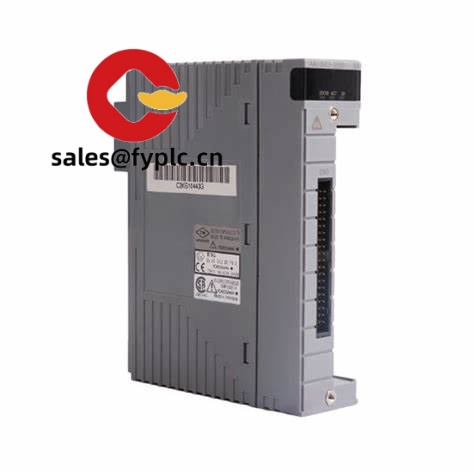
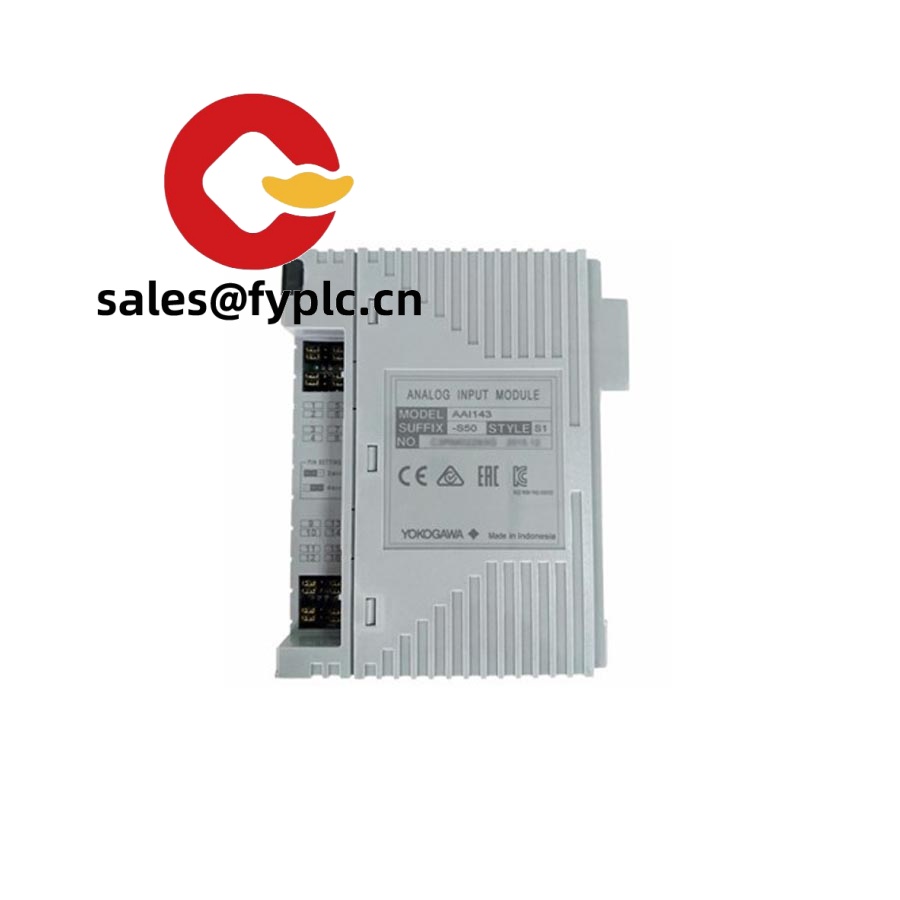
The Yokogawa AAI543-H50 is a high-density analog input module designed for Yokogawa FIO subsystems in CENTUM VP/CS 3000 architectures. It captures 4–20 mA process signals and, with the H50 option, passes HART data upstream so your asset management tools can interrogate field devices without extra wiring. From my experience, this is the go-to card when you need reliable current loops and want to keep HART diagnostics available for maintenance and tuning.
Our Order Process & Guarantees
- Warranty: 365 days
- Lead time: Typically 1 week if in stock; no more than one month at the latest
- Payment: 50% advance payment; balance due before delivery
- Express shipping: FedEx, UPS, DHL
Key Features
- 16-channel 4–20 mA inputs – High channel density to reduce cabinet footprint in I/O marshaling areas.
- HART pass-through (H50) – Enables device diagnostics and parameterization via host asset management, typically without extra multiplexers.
- Stable process acquisition – Designed for continuous process plants where steady, low-noise measurement is more valuable than exotic specs.
- Group isolation – Channels are generally non-isolated from each other but isolated as a group to the system; it helps with common plant grounding practices.
- Online replaceability – In many cases, you can swap the card in a running cabinet (subject to system redundancy and procedures), minimizing downtime.
- Seamless FIO integration – Works within Yokogawa’s FIO baseplates, node units, and Vnet/IP controller environment for straightforward engineering.
Technical Specifications
| Brand / Model | Yokogawa AAI543-H50 (FIO Analog Input, HART-enabled) |
| HS Code | 8538.90 (Parts suitable for use with switching/controlling equipment) |
| Power Requirements | Powered via FIO backplane from the node/base unit; no external module power required for inputs |
| Signal Input / Output Types | 16 × analog inputs (4–20 mA); HART pass-through supported (H50 option). Channels typically non-isolated from each other; group isolated to system. |
| Operating Temperature | 0 to 55 °C typical; 10–90% RH non-condensing |
| Communication Interfaces | Internal FIO backplane connection to the node interface; HART data routed to host for asset management through the control system |
| Installation Method | Plug-in unit for Yokogawa FIO baseplate; DIN-rail or panel-mounted cabinet per system guidelines |
| Approx. Dimensions & Weight | Standard FIO form factor (approx. 130 × 27 × 175 mm; ~0.2 kg) |
| Compatible Systems | Yokogawa CENTUM VP / CS 3000 with FIO subsystem |
Application Fields
You’ll typically see the AAI543-H50 in process plants where analog loops dominate and HART diagnostics are valuable:
- Oil & Gas: pressure, flow, and level transmitters with HART for remote diagnostics
- Chemicals & Petrochemicals: reactor temperature/pressure loops; valve positioners with HART feedback
- Power Generation: feedwater and steam loops, turbine auxiliaries
- Water & Wastewater: lift station pumps, filtration skids, and chemical dosing systems
- Pharma & Food: utility monitoring (CIP/SIP), where documented device health simplifies validation
Advantages & Value
- Lifecycle stability – Yokogawa I/O tends to remain supported for the long haul, which eases spares planning.
- Space and wiring savings – 16 channels per module reduces cabinet count; HART pass-through avoids separate multiplexers in many cases.
- Integration consistency – Drop-in fit with existing FIO node units and engineering tools; fewer hidden integration costs.
- Maintainability – HART data helps technicians pinpoint bad devices faster; you’ll usually cut troubleshooting time on instrument loops.
- Risk control – Online replacement options and group isolation practices reduce outages during service windows.
Installation & Maintenance Guidelines
- Cabinet setup – Install in a ventilated control cabinet; maintain clearance for airflow. Keep power and signal wiring segregated to limit noise.
- Grounding & shielding – Use single-point grounding as per plant standards. Shielded twisted pair for 4–20 mA runs typically improves stability.
- Loop impedance for HART – Ensure adequate loop impedance (commonly a 250 Ω resistor in the loop) so HART communication remains reliable.
- Wiring checks – Verify polarity on current loops and label channels. You might notice nuisance issues disappear after a clean re-termination.
- Routine care – Periodic loop verification/calibration, clean dust from the cabinet, and keep the control system firmware/engineering tools up to date.
- Spares strategy – In many cases, keeping at least one spare AAI543-H50 per cabinet section shortens MTTR during unplanned events.
Quality & Certifications
- Conformity: Typically CE-marked; cULus recognition is common for FIO modules; RoHS-compliant in most markets
- Warranty: 365-day warranty from us; manufacturer policies may vary by region
- Traceability: Units are usually supplied with identifiable model codes and revision details for site documentation
Field feedback, typical scenario:
“We replaced mixed vendor HART multiplexers by routing device data through the AAI543-H50. Commissioning got simpler, and technicians now pull diagnostics straight from the DCS workstation. Downtime during changeovers seems to be lower, especially with the online swap process.”

Reviews
There are no reviews yet.