
Description
YOKOGAWA ALE111-S50 – Vnet/IP Ethernet Interface Module for FIO/CENTUM VP Nodes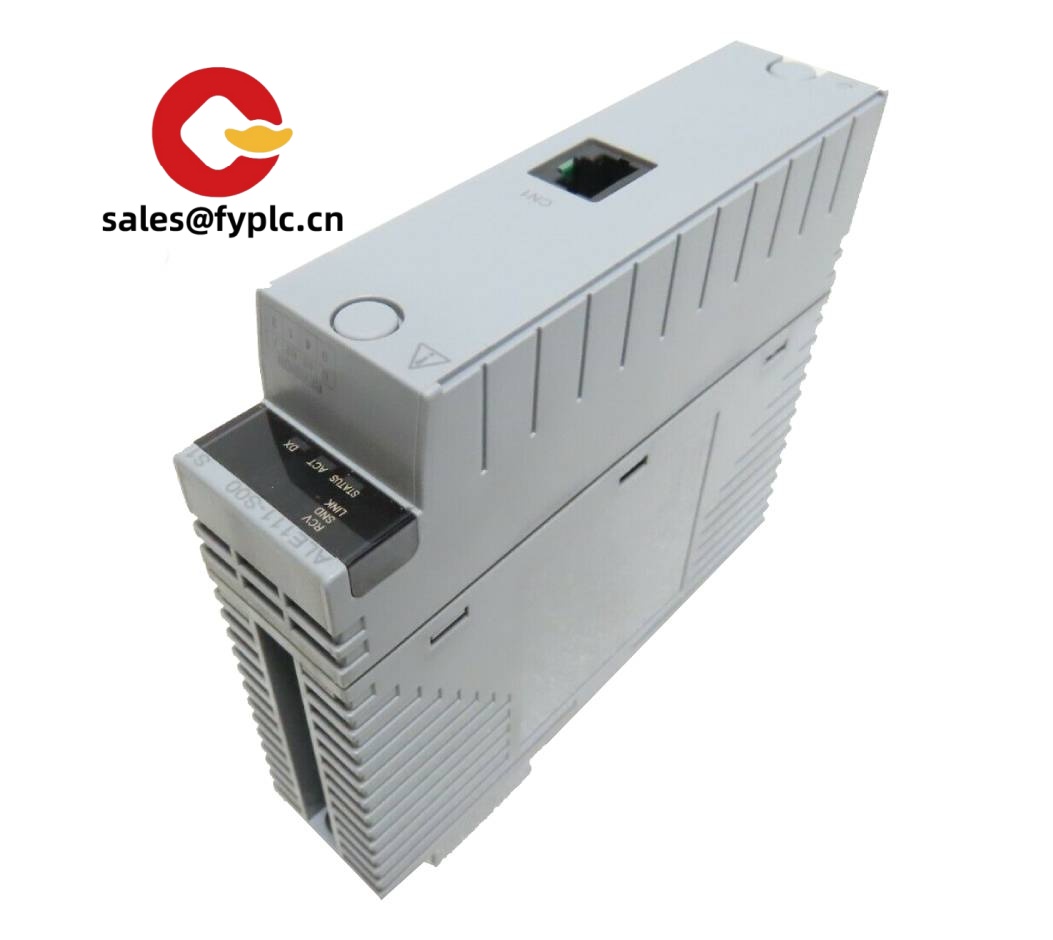
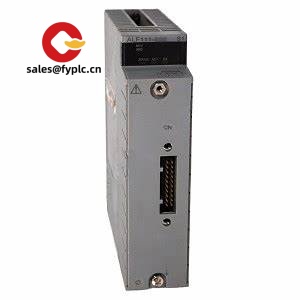
The YOKOGAWA ALE111-S50 is a communication interface module commonly used to connect Field I/O (FIO) node units to the Vnet/IP control network in CENTUM VP and, in many cases, ProSafe-RS environments. From my experience, it’s chosen when plants want a stable, redundant Ethernet path between the I/O subsystem and the controller network without adding third-party switches or custom adapters. You might notice that most users install it in standard FIO bases (like ANB-series node units) to get plug-in, single-slot connectivity with minimal configuration.
Order Placement Process and Guarantees
- Warranty: 365 days
- Delivery: 1 week for in-stock items; no more than one month at the latest
- Payment terms: 50% advance payment; full payment prior to delivery
- Express options: FedEx, UPS, DHL
Key Features
- Vnet/IP connectivity – Provides the network interface typically used to link FIO node units to YOKOGAWA’s deterministic control network.
- Redundant network ports – Usually supports dual RJ45 ports (A/B) for network redundancy; switchover is seamless in most cases.
- Single-slot FIO form factor – Slides into the FIO base unit, keeping cabinet layouts clean and serviceable.
- Stable timing for process control – Designed for low-jitter communications suitable for closed-loop control over Vnet/IP.
- Status LEDs – Front indicators for link/activity and module health make diagnostics faster for on-site technicians.
- Field-proven with CENTUM VP – Commonly deployed in brownfield DCS upgrades where network determinism and reliability matter.
Technical Specifications
| Brand / Model | YOKOGAWA ALE111-S50 |
| HS Code (reference) | 8538.90 (Parts suitable for industrial control equipment) |
| Power Requirements | Backplane powered by FIO base unit; typical single-slot consumption (no external power needed) |
| Dimensions & Weight | Single-slot FIO module; typically around 110 × 35 × 130 mm; approx. 0.3 kg |
| Operating Temperature | 0 to 55 °C (32 to 131 °F) typical for FIO modules; non-condensing humidity |
| Signal I/O Types | Ethernet (Vnet/IP) via RJ45; redundant A/B links |
| Communication Interfaces | RJ45 copper; typically 100BASE‑TX, full‑duplex; auto-negotiation as supported by revision |
| Installation Method | Plugs into FIO base (e.g., ANB-series node unit) mounted on DIN rail or panel |
| Typical Compatibility | CENTUM VP systems; frequently used with ProSafe‑RS FIO nodes depending on project design |
Application Fields
You’ll usually see the ALE111-S50 in process industries where DCS reliability is non-negotiable:
- Oil & Gas (refineries, gas processing) where redundant network segments are standard practice
- Chemicals and Specialty Chemicals with mixed safety/control architectures
- Power Generation and Utilities needing stable node communications
- Pharma & Food plants targeting deterministic I/O updates under validated configurations
A maintenance lead at a petrochemical site told me they swapped an ALE111 module in under 10 minutes during a planned window—the node rejoined Vnet/IP cleanly and the controller recognized it without touching the rest of the cabinet. That’s the kind of low-drama behavior teams appreciate.
Advantages & Value
- Reliability first – Redundant ports and proven Vnet/IP stack reduce unplanned downtime.
- Drop‑in compatibility – Fits standard YOKOGAWA FIO bases, keeping spares strategy simple.
- Lifecycle alignment – S50 hardware revision appears to be favored in many current upgrades and maintenance programs.
- Cost control – Minimizes cabinet hardware and engineering time versus external gateways or bespoke networking.
- Supportable – Easy to commission and troubleshoot with front LED diagnostics and standard YOKOGAWA tooling.
Installation & Maintenance
- Cabinet environment – Install in a clean, ventilated control cabinet; keep ambient within 0–55 °C and avoid condensation.
- Base unit – Mount into the appropriate FIO base (ANB-series). Ensure the backplane connector is clean and fully seated.
- Wiring – Use industrial-grade CAT5e/CAT6 for the RJ45 ports. Separate from high-voltage lines to limit EMI.
- Redundancy – Connect Port A and Port B to separate network paths/switches as per your site’s Vnet/IP design standard.
- Safety – De-energize the base before inserting/removing modules unless your procedure allows hot-swap and the system design supports it.
- Routine checks – Visual inspection of LEDs and connectors quarterly; clean dust with dry air; verify link redundancy failover.
- Firmware/config – Apply approved firmware only; back up node configuration before changes. In most cases, changes should be done during a maintenance window.
Quality & Certifications
YOKOGAWA hardware typically carries CE and UL/cUL marks and is produced under ISO 9001 quality systems. RoHS compliance is common across recent revisions. Markings can vary slightly by production lot or region, so we can verify exact certificates against your project documentation on request.
Warranty: 365 days replacement/repair support per our sales terms.
Reviews
There are no reviews yet.