
Description
YOKOGAWA ANB10D-425CU2N – Dual‑Redundant Vnet/IP Field I/O Node Interface for CENTUM VP / ProSafe‑RS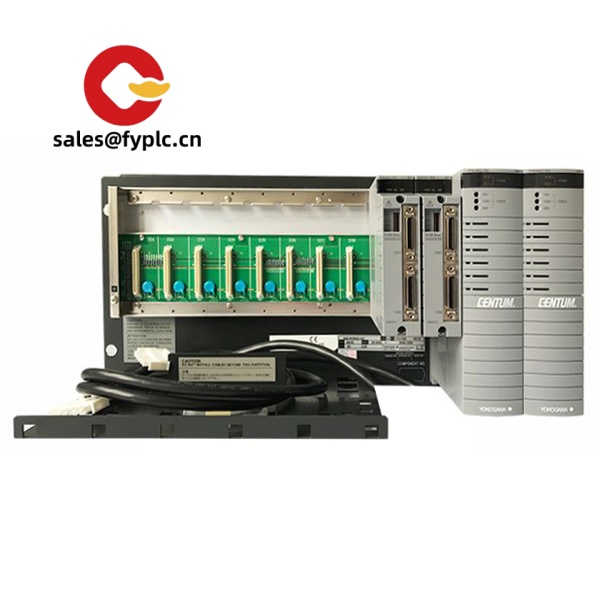
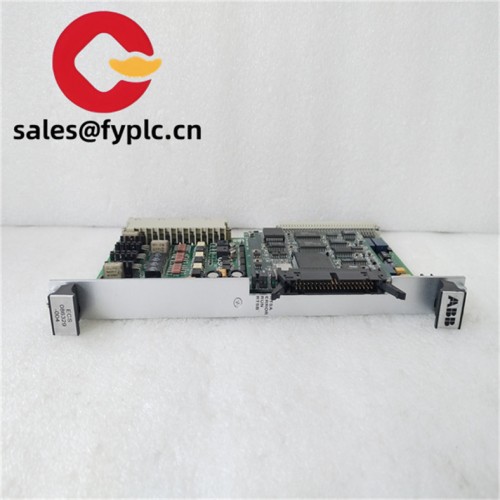
The YOKOGAWA ANB10D-425CU2N is a Field I/O node interface unit designed for Vnet/IP networks. In practical terms, this module sits at the front of a Yokogawa FIO stack and bridges your remote I/O to the control network with dual‑redundant Ethernet. From my experience, plants choose the ANB10D when they want rock‑solid communication, easy expansion of FIO modules (AI, AO, DI, DO, HART-capable cards), and minimal disruption during maintenance.
You might notice that the “D” in ANB10D typically indicates a dual configuration, and the build code “-425CU2N” appears to be a factory option set often associated with coated/industrial variants suitable for harsher environments and redundant networking. That’s exactly what many brownfield upgrades need when they’re standardizing on CENTUM VP or coordinating remote I/O under ProSafe‑RS.
Order Placement Process & Guarantees
-
- – Warranty: 365 days from delivery
-
- – Delivery: 1 week if in stock; no more than 1 month at the latest
-
- – Payment: 50% advance payment; full payment prior to delivery
- – Express options: FedEx, UPS, DHL
Key Features
- Dual‑redundant Vnet/IP – Two independent 100BASE‑TX paths help ensure bumpless switchover during cable, switch, or segment failures.
- FIO ecosystem support – Works with Yokogawa FIO modules (AI, AO, DI, DO, pulse, and HART pass‑through), so expansion is straightforward.
- High availability design – Redundancy at the network layer; supports redundant power and module strategies depending on the chosen FIO base.
- Diagnostics & status LEDs – Clear front indicators for power, link, and health; speeds up troubleshooting in most cases.
- Industrial temperature range – Built for control cabinets in process areas where temperature swings are common.
- Coating option (build‑code dependent) – Conformal coating seems to be included in this variant for better resistance to humidity and corrosive gases.
- Seamless integration – Naturally fits CENTUM VP architectures and can be used alongside ProSafe‑RS remote I/O topology rules.
Technical Specifications
| Brand / Model | YOKOGAWA ANB10D-425CU2N |
| HS Code | 8537.10 (Boards, panels, consoles for electric control, ≤1000 V) |
| Power Requirements | 24 VDC nominal (typically 19.2–28.8 VDC range) |
| Operating Temperature | 0 to 55 °C (typical industrial range) |
| Communication Interfaces | Vnet/IP dual 100BASE‑TX (RJ‑45), redundant network paths; backplane interface to Yokogawa FIO base |
| Signal I/O Types (via FIO) | Analog Input/Output, Discrete Input/Output, Pulse; HART pass‑through with HART‑capable FIO modules |
| Redundancy | Dual network ports; supports redundant power and I/O strategies depending on base configuration |
| Installation Method | Mounts on Yokogawa FIO base plate; cabinet/panel installation, commonly in 19″ racks with sub‑panel |
| Form Factor | Compact, lightweight NIU for high‑density FIO stacks (base‑mounted) |
Application Fields
This model is typically selected in distributed control systems where uptime is critical and remote I/O needs to scale cleanly:
- Oil & Gas – wellhead skids, compressor stations, pipeline block valves with redundant comms.
- Chemicals & Petrochemicals – process units requiring HART diagnostics and mixed AI/DI densities.
- Power Generation – balance‑of‑plant I/O and turbine auxiliary systems over Vnet/IP.
- Water & Wastewater – distributed lift stations and treatment basins with cabinet‑level redundancy.
- Pharmaceuticals – validated environments where coated hardware helps with humidity and cleaning agents.
Advantages & Value
- Reliability under network faults – Dual Vnet/IP paths reduce nuisance trips and help maintain control loops during maintenance.
- Compatibility – Plays nicely with Yokogawa FIO modules, CENTUM VP engineering tools, and typical ProSafe‑RS remote I/O layouts.
- Lifecycle economy – Standardized spares across units and coated options can cut unplanned downtime and field service visits.
- Easy expansion – Add I/O slices without rethinking the network side; engineering time stays predictable.
- Support – Availability of documentation, firmware, and field‑proven configurations shortens FAT/SAT cycles.
A quick customer story: a maintenance lead at a midstream facility told us their ANB10D nodes “rode through” a switch firmware upgrade with zero loop interruption—seems small, but it saved them a night shift and a temporary bypass procedure.
Installation & Maintenance
- Cabinet & mounting – Install on a Yokogawa FIO base plate fixed to a grounded sub‑panel. Keep 25–40 mm side clearance for airflow and service.
- Power wiring – Regulated 24 VDC supply; separate clean 24 VDC for control where possible. Use redundant feeds if the base supports it.
- Networking – Run two independent Ethernet paths to separate switches. Shielded Cat5e/6 recommended; follow plant EMC and grounding practices.
- Addressing & time – Assign IPs per site standard; enable SNTP on Vnet/IP to keep sequence‑of‑events aligned across nodes.
- Routine checks – Inspect LED status, verify link redundancy, review diagnostics during PM rounds. Keep ventilation filters and cabinet interiors clean.
- Firmware & documentation – Apply tested firmware only; back up configurations after changes. Label cables/ports to speed up any future swap.
Quality & Certifications
- CE compliant; UL/cUL listing and RoHS conformance commonly available for Yokogawa FIO hardware.
- Manufactured under ISO 9001 quality systems.
- Warranty: 12 months (365 days) from delivery.
If you’re matching an existing installed base, feel free to share your current node topology and FIO card list. I can cross‑check the ANB10D-425CU2N build code for coating and redundancy expectations so you don’t over‑ or under‑spec the replacement.

Reviews
There are no reviews yet.