
Description
Yokogawa NFAI143-H50 – Multi‑channel Analog Input Module for Reliable Plant I/O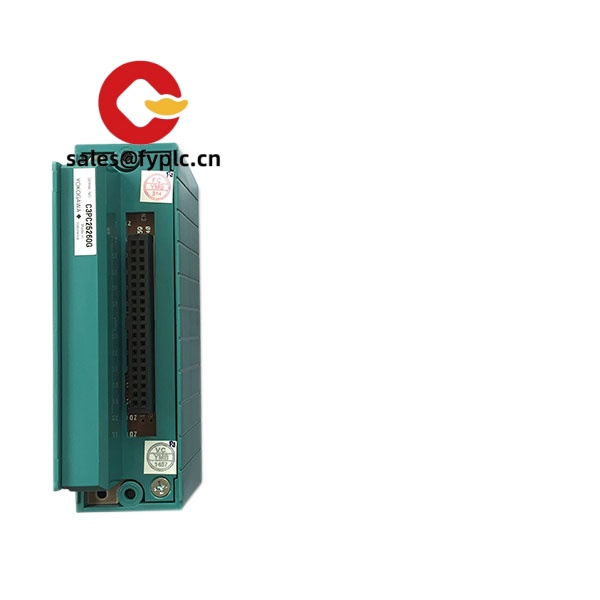
The Yokogawa NFAI143-H50 is an analog input module used in Yokogawa FIO-based systems to bring field signals like 4–20 mA and 1–5 V into your control or safety architecture. From my experience, it’s typically selected when you need compact, stable AI density with onboard diagnostics and clean integration into CENTUM VP or ProSafe‑RS remote I/O nodes. You might notice that the -H50 suffix points to a specific hardware build; in many cases, these builds align with defined installation standards or project specs.
Company’s Order Placement Process and Guarantees
- Warranty: 365 days
- Delivery: 1 week if in stock; no more than one month at the latest
- Payment: 50% advance payment; full payment before delivery
- Express options: FedEx, UPS, DHL
Key Features
- Multi-channel analog input – Suited for dense AI collection; commonly used for 4–20 mA and 1–5 V instruments across process areas.
- Stable measurement performance – Designed for steady, low‑noise input handling; typically 16‑bit class resolution in this family for precise trending.
- Built-in diagnostics – Channel status and module health indicators help maintenance pinpoint wiring issues or device faults faster.
- Backplane integration – Communicates over the Yokogawa FIO backplane; the node interface takes signals to the controller network without extra wiring fuss.
- HART pass‑through (project dependent) – Many NFAI14x builds support HART data pass‑through; with -H50 it’s best to confirm the exact option set in your BOM.
- Compact cabinet footprint – Fits standard FIO baseplates, keeping cabinets tidy and leaving room for expansion.
- Industrial temperature range – Suitable for control cabinets in typical plant environments, from clean rooms to MCC rooms.
Technical Specifications
| Brand / Model | Yokogawa NFAI143-H50 |
| HS Code | 853890 (Parts suitable for industrial control panels/modules) |
| Power Requirements | Backplane supplied from 24 VDC system via FIO baseplate; module consumption typically ≤ 5 W |
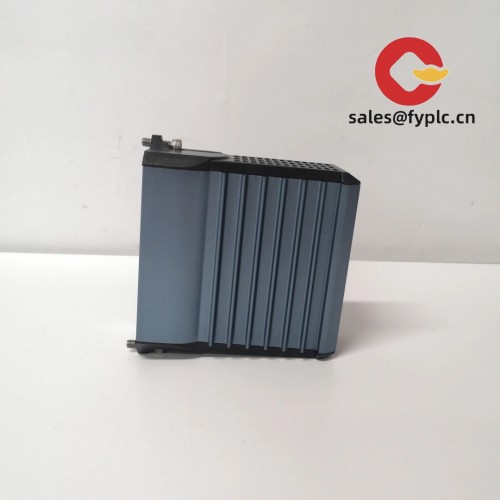
| Dimensions & Weight | Approx. 130 (H) × 27 (W) × 130 (D) mm; ~0.2 kg (typical FIO form factor) |
| Operating Temperature | 0 to 55 °C; 5–95% RH non‑condensing (typical cabinet installation) |
| Signal Input/Output Types | Analog inputs, multi‑channel (often 8 or 16 depending on terminal block option); 4–20 mA and 1–5 V; typical 16‑bit class A/D |
| Communication Interfaces | FIO backplane to node interface (ESB/ER bus to system network); HART pass‑through availability depends on build/system configuration |
| Installation Method | Mounts on Yokogawa FIO baseplate in a control cabinet; field wiring via terminal block adapter; cabinet grounding per IEC/UL practices |
Related or Supporting Products
- Yokogawa NFAI141 – Analog input module in the same family; commonly different channel count or options compared with NFAI143-H50.
- Yokogawa NFAI143 (other -Hxx builds) – Alternative hardware builds (e.g., different diagnostic or HART options). Useful when matching existing installed base.
- Yokogawa ANB10D / ANB20D – Remote I/O node units for FIO; host the I/O modules and interface to the system network.
- Terminal block adapters (FIO series) – Project‑specific terminal blocks for clean field wiring and faster module swap.
- Yokogawa AAI141 – Earlier/parallel AI module family used in certain CENTUM architectures; not a drop‑in but often considered in brownfield comparisons.
One thing I appreciate is how easily these modules slot into existing FIO racks—most teams keep a spare on the shelf and perform a swap during a short maintenance window. A customer in a utilities plant told us they replaced an NFAI‑series AI card and verified channel scaling in under 10 minutes using their standard engineering tool.
Installation & Maintenance
- Cabinet & environment – Install on a Yokogawa FIO baseplate inside a ventilated cabinet; keep ambient 0–55 °C and avoid high vibration zones.
- Wiring practices – Use shielded twisted pair for analog signals; ground shields at one end to minimize noise. Separate analog from high‑voltage cables.
- Terminal blocks – Match the terminal block adapter to your channel count and signal type; label loops clearly for faster commissioning.
- Calibration & checks – Periodically verify loop accuracy with a traceable 4–20 mA source; re‑torque terminals during scheduled outages.
- Firmware & configuration – When applicable, keep firmware aligned with your node interface revisions; document channel scaling and HART settings.
- Hot swap discipline – In most cases, modules can be replaced with the node powered; follow site MOC and Yokogawa procedures to avoid nuisance trips.
Quality & Certifications
- CE and RoHS compliance; UL/CSA certifications typically available for the FIO family
- Manufactured to Yokogawa’s industrial quality standards with documented traceability
- Warranty provided by us: 365 days
If you’re matching an installed base, share your existing node model and the terminal block part number. That small detail usually confirms channel density and whether the -H50 build aligns with your project’s HART or diagnostic requirements.

Reviews
There are no reviews yet.